Falling Down Is Part Of The Process

When we step into a new chapter—filled with intention, purpose, and growth—we often expect things to go smoothly. We’re showing up, doing the work, making better choices… shouldn’t that mean we’re past the hard parts?

Not quite.

Falling down is part of the process. Always has been. Always will be.

I’ve learned more from my falls than I ever have from my wins. Those stumbles gave me new tools, revealed blind spots, and taught me that even when there isn’t a clear solution, I’m strong enough to get back up again.

Falling isn’t failure—it’s feedback.


Setbacks Aren’t Stop Signs

It’s easy to feel discouraged when things don’t go the way we hoped.

When you’re working so hard to be better, live authentically, and move forward, setbacks can feel personal. It’s frustrating. It’s deflating. But here’s the truth: setbacks don’t mean you’re off track—they mean you’re on it.

Every fall is an opportunity to pause, reflect, and ask:

  • What did this moment teach me?

  • What was my part in it?

  • What new tool or insight can I take forward from here?

If everything went perfectly all the time, we wouldn’t learn much. We wouldn’t build strength. And we definitely wouldn’t develop the resilience we need for long-term growth.


Every Fall Is Just Information

Let’s take the drama out of the fall.

Not every stumble is a crisis. Not every setback is a disaster. Sometimes it’s just a signpost that says: Not this way. Try another.

When we start to look at our missteps as information—not identity—we take back our power.

A fall doesn’t mean you’re broken. It means something needed your attention.

Maybe you weren’t doing what you needed to do.
Maybe you missed a red flag.
Maybe the lesson was simply about learning how to stand back up.

Whatever the reason, the fall isn’t the end. It’s just part of the path.


Falling Forward with Intention

Some of the most painful moments in my life were the result of my own choices—or lack of action. But with each one, I had a decision to make: let the fall define me, or let it refine me.

If we ignore what the fall is trying to teach us, it’s likely we’ll end up back in that same spot—only this time it’ll hurt more, because we’ll know better.

But if we take the time to reflect, gather what we need, and move forward differently, we turn what was once a painful experience into a stepping stone toward something better.


Keep Showing Up

The key isn’t avoiding every fall. That’s impossible. The key is learning how to rise, gather the lesson, and keep moving.

No matter how hard you fall, you can get back up.
No matter how lost you feel, you can find your way again.

Eventually, you’ll recognize the patterns. You’ll learn where the pitfalls are. And you’ll start to navigate the path with more confidence.

Falling doesn’t mean you’re failing. It means you’re growing.
And growth is never a straight line—it’s a beautifully messy journey.


SLAY Reflection

Let’s reflect together, SLAYER:

  • S: What’s your usual reaction when you fall—do you give up or get curious?

  • L: Can you recall a setback that led to growth or a better decision later on?

  • A: How can you start viewing setbacks as information rather than personal failure?

  • Y: What’s one fall you can reframe today as a stepping stone instead of a stopping point?


Call to Action: Join the Conversation

I’d love to hear from you.
When was the last time you fell, and what did it teach you?
Share your story in the comments. Let’s cheer each other on.

And if you know someone who feels defeated by a recent fall, send this to them.
Sometimes, all we need is a nudge.


Peaceful Warrior

I was sitting across from someone the other day who was wearing a cap that said Peaceful Warrior. I watched him, and he certainly did look like a warrior—he was a solid guy—but he also looked grounded, and, as advertised, peaceful.

It reminded me how, as we walk our paths and go to battle each day—fighting for ourselves and those we love—we often don’t do it peacefully. We may start out that way, but once we get caught in the charge of action, the adrenaline, we lose that peace. We lose our serenity. And, often, we lose ourselves to anger, rage, or fear.

The idea of being peaceful among chaos is beautiful. Like a Matrix-style calm, where the action slows around us and we remain still and focused. While we can’t physically create that, we can spiritually and mentally.

So how do we keep the peace in our daily lives, with chaos all around?


Manage Our Fear

Fear sets us into overdrive. It removes calm and peace, puts us into reaction mode, and blinds us to what’s real. To find peace, we need to manage our fears. Remember—fears are not facts. Stick to what’s true. Stay present. Focus on what you can do in each moment to move forward.


Keep Our Intentions Pure

Do things because you want to, not for what they’ll get you or how they’ll make you look. That’s the way of a peaceful warrior. Focus less on the outcome and more on the reasons behind your actions and the journey itself.


Let Go of Old Ideas

Past experiences or old beliefs can limit what we can accomplish. We are evolving every day. Let go of the past. Believe in who you are becoming. When you do, limitations fall away and new possibilities open up.


Avoid Over-Scheduling

We juggle a lot, but when we over-schedule, we lose peace and scramble for control. We risk losing sight of who we’re working to be. Set realistic goals. Focus on each task. If you can’t finish it all today, that’s okay—tomorrow is another chance.


Win or Lose, You Win

Stop framing everything as a win or loss. The fact that you’re trying is a win. If things don’t go as planned, that’s a lesson. Maybe it wasn’t supposed to go your way that day. Now it’s your turn to handle it in a way that builds your growth.


Don’t Judge Your Thoughts

Negative or surprising thoughts will pop up. They’re not your truth unless you let them be. Notice them, ask yourself why they’re there, and let them go. Often, these thoughts come when we’re in H.A.L.T.—hungry, angry, lonely, or tired. Check in with your self-care when negativity creeps in.


SLAY OF THE DAY: Reflect & Rise

  • Do you think of yourself as a peaceful warrior? If yes, why? If not, why not?

  • Are there things you can tackle peacefully and some not? List what you can, and what you cannot. Why do you struggle with the ones on your not list?

  • What can you do to change that?

  • How can you practice being a peaceful warrior, even on the tough days?

  • What will it take for you to lose peace, then find it again—and not let that loss be a loss but a lesson?


Call to Action: Join the Conversation

I’d love to hear from you.
What’s one way you can step into your power as a peaceful warrior today?
Share your story in the comments. Let’s support each other in finding peace.

And if you know someone who’s navigating chaos right now, send this to them.
Sometimes, a little encouragement is all we need to rediscover our peace.

Be The Mountain, Not The Weather

I was talking to someone the other day. They were struggling with something, and before he finished sharing, he said, “I know, I need to be the mountain and not the weather.”
It made me smile.

Yes, we should all be the mountain.


Solid vs. Shifting

The mountain is solid. It has a strong foundation. Nothing is moving a mountain—it stands tall.

The weather, on the other hand, comes and goes. It shifts and swirls. It can change completely in a day, be unreliable, unstable, surprising, and even destructive. Sure, there might be days when having the force of the weather sounds tempting—when it feels like release—but in the long run, what we need is to be the mountain.

So, how do we become more like the mountain and less like the weather?


Be Flexible

It might sound strange to say a mountain should be flexible, but building your own solid foundation means being open and adaptable.

I’ve written before about the importance of staying teachable. To remain teachable, we have to stay flexible—open to new ideas, perspectives, and information. It’s great to have convictions, but it’s also essential to listen to other viewpoints. You never know when you might learn something that shifts your understanding or reaffirms your stance.

Stay flexible. Look at situations from all angles. Make sure your perspective rests on solid ground.


Give Yourself Permission

Be confident in your decisions. Allow yourself to try new things—without waiting for approval.

Too often, we look to others for validation when we should be checking in with ourselves. If it makes you happy, inspires you, or fills you with joy, do it. It doesn’t matter if others understand or approve. This is your life.

Give yourself permission to change. To grow. To become.


Find Forgiveness

Let go of what no longer serves you. Release the grudges, the regrets, the “should-haves” that weigh you down.

Forgive others for what they did—or couldn’t do. More importantly, forgive yourself. For not knowing better. For not making the best choice in a moment. We’re all human, and none of us gets it right all the time.

Holding on to past hurts chains us to the past. Letting go frees us to move forward.


Be Mindful

With forgiveness comes mindfulness.

When we practice mindfulness, we make choices that serve us—decisions that help us grow, strengthen our self-esteem, and build true confidence.

Stay present. Stay grounded.


Find Love and Gratitude

When we move through each day with love in our hearts and gratitude for what we have, we make better decisions.

Walking in love and gratitude keeps us centered in spirit, not ego. And it’s from this space that we find true peace—a peace that can’t be shaken by life’s storms.


Engage in Life

This is the result of it all.

When we practice these principles, we become more engaged in life. We care for ourselves and nurture relationships with others. Our world expands as we open ourselves to new experiences and connections.

We become the mountain—steady, solid, unwavering—no matter what storms may come. And we know the sun will always rise again.


SLAY OF THE DAY: Reflect & Rise

Do you see yourself more as the mountain or the weather? Why?
Can you think of moments when you’ve been both? What triggered the shift?
What gets in your way of standing solid?
What can you do today to strengthen your foundation and embrace your inner mountain?
What action will you take to give yourself permission to grow, change, and forgive?


Call to Action: Join the Conversation

I’d love to hear from you.
What does being the mountain look like in your life? How do you stay grounded through storms?
Share your story in the comments. Let’s support each other’s growth.

And if you know someone who could use a little extra grounding today, send this to them.
Sometimes, just knowing we have the power to stand steady makes all the difference.

Living With Unsolved Problems

We all have them—those lingering problems we just can’t figure out. Maybe it’s a situation where someone won’t discuss or engage with us to find a solution. Maybe it’s something completely out of our control. Whatever it is, these unresolved issues can eat away at us.

For years, I let those problems take control of me. I thought I had to solve everything, to my own satisfaction. I couldn’t let things go. It literally drove me crazy, trying to force solutions where sometimes, there weren’t any. I didn’t know how to accept what was or give myself permission to move on. Back then, moving on and acceptance were not even part of my vocabulary.

But I’ve learned something.


Prefer to listen? The Audio Blog version is available here.


Acceptance Is the Key

Acceptance truly is the key to so many of our problems. Things often don’t look or feel the way we think they should—or the way we want them to—and sometimes, there’s just no way to change that.

For those of you who just recoiled at that idea, this blog is especially for you.

Nothing—absolutely nothing—is worth surrendering your peace of mind for, especially if it’s just to prove a point or make sure you’re right. That imaginary scorecard we sometimes carry around? It’s a heavy burden that robs us of our serenity.

For me, it became a matter of life and death. The things I fought so hard to control couldn’t be solved by me alone. When I finally let go and accepted that, my world expanded. I was able to look outside myself for new possibilities—and I found them.


Some Problems Just Can’t Be Solved—At Least Not Now

Sometimes, there’s no solution to be found. Maybe the situation has reached a standstill, or someone has passed, or circumstances just don’t allow for resolution in this moment.

But here’s the thing: letting something go now doesn’t mean a solution won’t present itself later.

I always say, “Never say never.” I’ve seen miracles in my own life where solutions appeared to problems I thought were impossible to solve.

Find peace with what you can’t solve today. Stay open to the possibility of resolution down the road—but don’t wait for it. Trust that if a solution is meant to appear, it will, when the time is right. Time has its own schedule, and we can’t rush it. Let it do its thing while you continue to live yours.

Protect Your Peace

There will always be things in life we can’t control or solve. If we want to live a happy life, it’s up to us to find peace and acceptance around those things. Do what you can to figure things out—but know when to walk away. Your peace of mind is worth far more than a forced solution.

Sometimes, no solution is the solution. At least for now.


SLAY OF THE DAY: Reflect & Rise

Do you have a hard time letting things go?
Do you feel like you need to solve everything?
How do those unsolved problems affect your peace of mind?
What would happen if you accepted that some things can’t be solved—right now?
How could that acceptance set you free?


Call to Action: Join the Conversation

I’d love to hear from you.
What’s one problem you’re ready to stop forcing—and let time or acceptance handle?
Share your story in the comments. Let’s cheer each other on.

And if you know someone struggling with unresolved problems, send this to them.
Sometimes, just hearing “It’s okay to let go” makes all the difference.

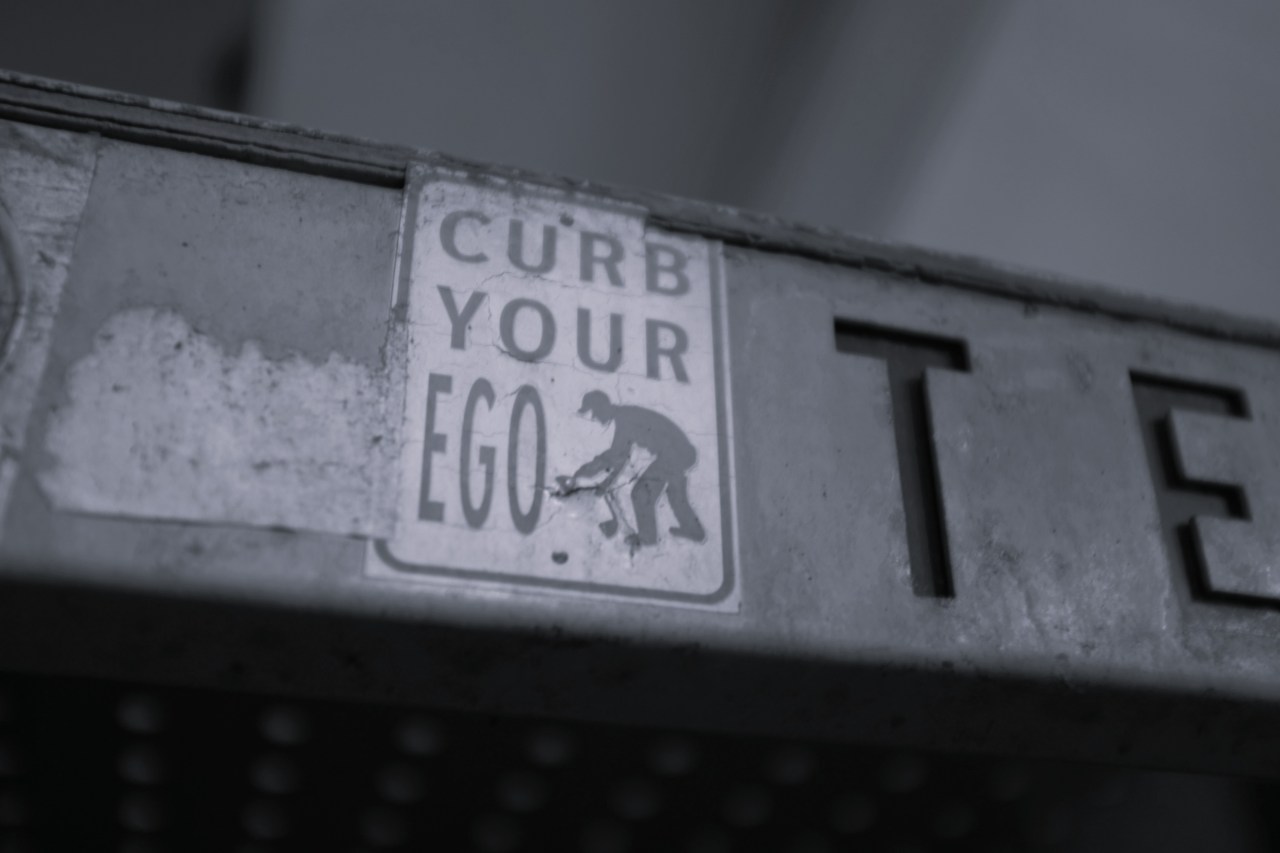
The Detachment Of Ego

I was reminded the other day how sneaky the ego can be. It shows up when we least expect it, whispering tales of inadequacy, pushing us to do more, be more, prove ourselves—sometimes even at the cost of our well-being.

For so long, I let my ego lead the way. Even in my darkest moments, when I felt broken and unworthy, my ego clung to its illusion of control. It told me I was too good to admit defeat, too strong to ask for help, too proud to let anyone see me vulnerable. I may have felt like a failure, but I was going to be the most impressive failure you’d ever met.

Even today, when I’m in a better place, my ego tries to step in. It tells me I should be doing more, having more, being more. It convinces me to push harder, to disregard my needs, to ignore the quiet voice inside me that speaks of self-care and balance.

Ego latches on to everything—an achievement, a relationship, a dream, an idea. It clings and demands recognition. But when we practice detachment, we loosen its grip.


Prefer to listen? The Audio Blog version is available here.


Letting Go of the Ego’s Hold

Detachment isn’t easy. From an early age, we’re taught to chase results: the prize at the end of the race, the grade at the top of the paper, the validation that makes us feel worthy. But what if we measured success not by accolades, but by the intention behind our actions?

Every day brings its own challenges. We wake up with different energy, different emotions, and different capacities. Instead of holding ourselves to impossible standards, what if we simply did our best each day and called that enough?

The ego might shudder at the thought. But here’s the truth: Detachment is where we find freedom.


How to Practice Detachment

  • Notice Your Thoughts: Pay attention to the chatter in your mind. When do feelings of inadequacy or comparison creep in? How do they affect your body and mood?
  • Separate Ego from Facts: The ego loves drama. It makes disappointments feel like disasters. Step back and look at the facts. Are you really failing, or just feeling a setback?
  • Release Expectations: Stay present. Let go of rigid expectations about how things should unfold. Embrace uncertainty as part of the journey.
  • Check In with Yourself: Pause, breathe, and listen to what’s truly happening inside. Meditation, walks, journaling, or quiet reflection can help.
  • Allow Mistakes: Perfection is an illusion. Mistakes are opportunities for growth. When you stumble, see it as a step forward, not a setback.

Freedom to Just Be

When we detach from the ego’s grip, we give ourselves permission to live authentically. We stop measuring our worth by external markers and start appreciating our effort, our resilience, and our humanity.

SLAY on.


SLAY OF THE DAY: Reflect & Rise

  • Do you place unrealistic expectations on yourself to always win or be the best? Why?
  • How do these expectations serve you—or harm you?
  • What can you do today to practice detachment and self-compassion?
  • Are you influenced by others’ expectations? How can you shift your focus inward?
  • When you fall short, how do you treat yourself? How can you show yourself more grace?

Call to Action: Join the Conversation

I’d love to hear from you.
What helps you step back from your ego’s grip and embrace detachment?
Share your thoughts in the comments. Let’s lift each other up.

And if you know someone struggling with self-worth and expectations, send this to them.
Sometimes, all it takes is a reminder: you are enough.

If You Don’t Bend, You’ll Break

I used to think being stubborn made me strong.
I wore my “wood-head” nickname like a badge of honor, proud that no one could get me to change my mind once it was made up. I believed my rigidity protected me.
But what it really did was keep me stuck.
I was unyielding, closed off, and resistant to change. And eventually, I broke.
I hit the floor, empty and out of options. My stubbornness wasn’t strength—it was a wall between me and growth, between me and peace.


Turning Stubbornness into Strength

When I finally made the choice to walk a better path, I realized I could channel that same stubbornness into something good.
I learned to use it to push through the tough days, to hold myself accountable, and to keep moving forward even when old behaviors tried to pull me back.
Instead of fighting against myself, I started fighting for myself.


The Power of Flexibility

Life is always changing, tossing curveballs our way. If we cling to what’s familiar, we stay stuck. But when we’re willing to bend, to try a new direction, we create space for something better.
Flexibility doesn’t mean giving up your values—it means recognizing when it’s worth letting go, shifting perspective, or simply approaching something with a fresh mind.
It’s about learning to move with grace and openness, discovering that the “new way” might just be the better way.


Breaking Free from the Safe Zone

Being stubborn felt safe. It gave me a sense of control. But it also kept me from experiencing new opportunities, relationships, and growth.
Have you ever pretended to “try” something new, just to prove it wouldn’t work? I did that too. But I’ve learned that true trying means approaching with a positive, open heart, willing to embrace whatever outcome arises.


SLAY OF THE DAY: Reflect & Rise

  • Are you stuck in your ways of how things should be done? Why do you think you are?

  • What do you think will happen if things aren’t done your way?

  • Is this something that threatens your well-being, or just your comfort zone?

  • Can you think of a time when you tried something new, and the result was a positive surprise? How did that feel?

  • This week, I challenge you to bend—try something new, or approach something familiar in a different way.

  • Write them down. See how many new things you can add to your list, and then reflect on the results.


Call to Action: Join the Conversation

I’d love to hear from you.
What’s one thing you’ll try differently this week?
Share your story in the comments. Let’s inspire each other to be flexible and open to new possibilities.

And if you know someone stuck in their old ways, send this to them.
Sometimes, a nudge is all it takes to start bending in the right direction.

SLAY on.