
If You Don’t Let the Past Die, It Won’t Let You Live

There was a time when my past followed me everywhere.

Not physically, of course. But emotionally, mentally, and spiritually, it was always there. Old memories, regrets, mistakes, and moments I wished had gone differently replayed in my mind like a story that never reached its ending.

For a long time, I believed holding on to those memories was important. I told myself I needed to remember them so I would never repeat them. I believed revisiting those moments meant I was learning from them.

But eventually I realized something.

I was not learning from my past.

I was living inside it.

And when we stay emotionally rooted in yesterday, we miss the life unfolding right in front of us.


Prefer to listen? The Audio Blog version is available here.


The Past Is Meant to Teach, Not Trap

Our past experiences matter. They shape who we are, what we value, and how we see the world.

The lessons we learn from difficult moments can make us stronger, wiser, and more compassionate.

But there is a difference between learning from the past and carrying it everywhere we go.

When we replay old mistakes constantly, relive painful conversations, or keep punishing ourselves for choices we can no longer change, the past stops being a teacher.

It becomes a prison.

And prisons are not where growth happens.


I Had to Learn to Release My Story

For years, I defined myself by parts of my past that I was not proud of.

I held onto moments where I felt I had failed, hurt someone, or lost control of my life. Those memories felt like permanent labels attached to who I was.

Letting go of them felt dangerous. It almost seemed like forgetting meant I was ignoring responsibility.

But I slowly began to understand that releasing the past does not mean pretending it never happened.

It means allowing it to be what it was. A moment in time. Not the identity I would carry forever.

When I stopped reliving those moments and instead focused on who I was becoming, something shifted.

I finally felt free to grow.


Holding On Keeps Old Pain Alive

When we refuse to let the past rest, we keep the emotions connected to it alive.

Regret. Anger. Shame. Resentment.

Those emotions continue to influence how we see ourselves and others. They shape our reactions, our confidence, and our willingness to trust.

In many ways, holding onto the past can recreate the pain again and again.

We suffer from events that are no longer happening.

And that suffering prevents us from fully experiencing the present.


Forgiveness Creates Space for Living

One of the most powerful ways to release the past is through forgiveness.

Sometimes that forgiveness is directed toward another person. Sometimes it is directed toward ourselves.

Self-forgiveness can be especially difficult because we often believe we should have known better, done better, or handled things differently.

But growth means recognizing that we were operating with the awareness we had at the time.

Forgiveness does not erase responsibility. It allows healing to begin.

And healing makes space for a different future.


The Present Deserves Your Attention

Life only happens in one place.

Right now.

The conversations we have today, the choices we make today, and the people we become today shape the direction of our lives far more than any memory from years ago.

When we release our grip on the past, our energy returns to the present moment.

We begin to see opportunities we once overlooked. We become more open to connection, creativity, and possibility.

And we stop measuring our worth against moments that no longer exist.


Growth Requires Forward Movement

Letting the past rest is not about denial. It is about direction.

We acknowledge what happened. We take responsibility where it is needed. We learn from it.

Then we move forward.

Growth cannot occur when we are emotionally anchored to yesterday.

It happens when we allow ourselves to evolve.

Every new decision we make has the power to shape who we become next.

And that future deserves our attention far more than the past deserves our attachment.


Release What No Longer Serves You

Your past may explain parts of your story, but it does not have to control the rest of it.

The mistakes, heartbreaks, and regrets you carry do not define the person you are becoming.

They are chapters. Not the entire book.

Let them teach you.

Let them inform you.

But do not let them imprison you.

Because if you refuse to let the past die, it will keep you from living the life waiting for you now.

SLAY on.


SLAY Reflection

S — See the Weight
What parts of your past do you still carry emotionally today?

L — Look for the Lesson
What did those experiences teach you that can guide you moving forward?

A — Allow Forgiveness
Is there someone you need to forgive, including yourself, to release that weight?

Y — Your Next Step
What would your life feel like if you allowed the past to stay where it belongs?


Call to Action: Join the Conversation

I’d love to hear from you.
Have you ever experienced a moment where letting go of the past helped you finally move forward?

Share your story in the comments. Let’s cheer each other on.

And if you know someone who might need this reminder, send this to them.
Sometimes, all we need is a nudge.
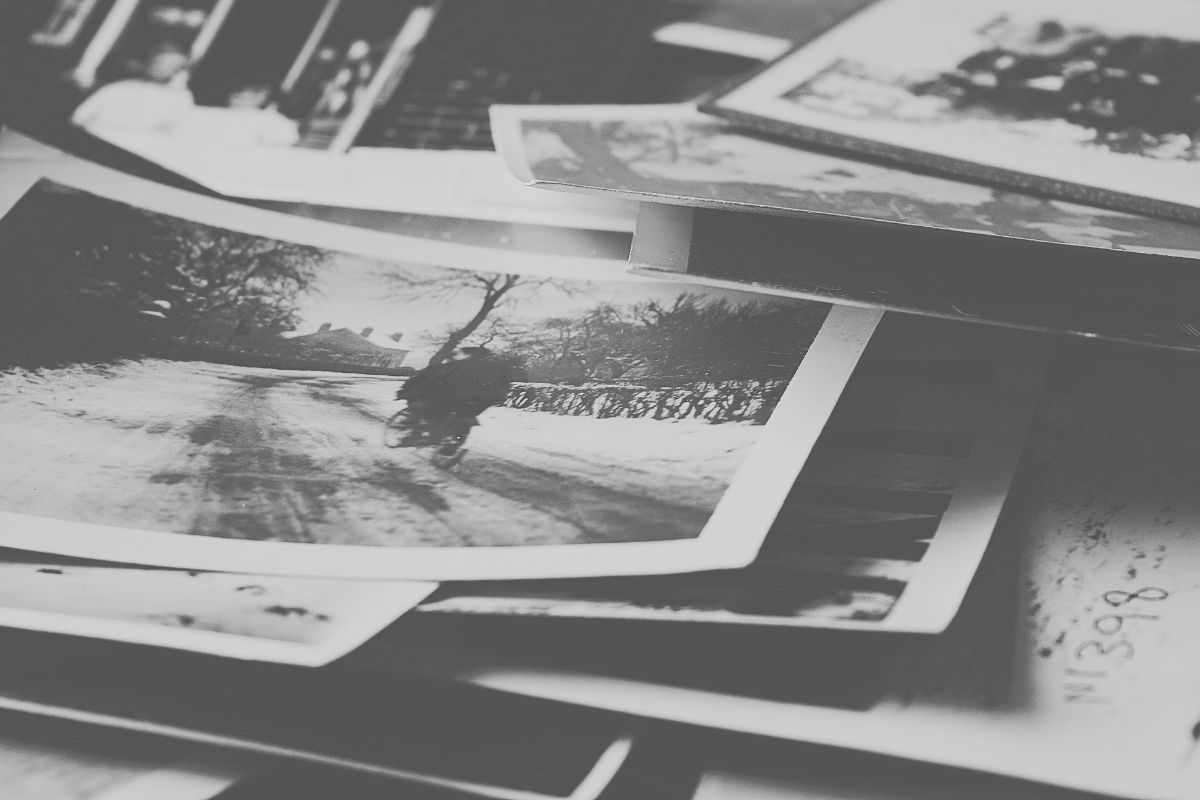
The Stories From Our Past

Before I began my recovery journey, I lived by stories that weren’t mine. I believed I was different. Less-than. Unworthy of good things. And I made decisions from that place—choosing people and situations that reinforced the story I was already telling myself.

Even the small things stuck. A dismissive comment. A look. A joke that hit too close to home. I internalized those moments and built my identity around them. And as I kept repeating those stories to myself, I gave them power. I let them define me.

When I finally sought help for my mental health, one of the first exercises I was given was to write down all the things I believed about myself. Most were negative. Then came the harder part: asking if those things were actually true.

It turned out, most of them weren’t. They were stories I had inherited. And I had the power to release them.


Telling a New Story

Doing the work—challenging those false beliefs—wasn’t easy. But with time, support, and a lot of self-reflection, I began to rewrite the script.

I started telling myself the truth.

That I’m capable. That I’m worthy. That I’m more than enough.

The stories from my past didn’t disappear. But they no longer control me. Today, I use them as tools. When those old narratives resurface, I pause. I ask myself: Is this true? Is this helping me grow? Is this a story I want to keep?

And if the answer is no, I let it go.

Instead, I choose to tell stories of healing. Of courage. Of growth. I choose relationships that reflect the truth of who I am, not the lies I once believed.

You get to choose your story, too.

SLAY on.


SLAY Reflection: What Story Are You Living?

  • Are you holding onto any stories from childhood that no longer serve you?
  • Who or what shaped those beliefs—and are they actually true?
  • What have those stories cost you in your adult life?
  • What’s one belief you could rewrite today?
  • What story would you rather live—and what’s one small step you can take toward it?

Call to Action: Join the Conversation

I’d love to hear from you.
What’s one story from your past you’re ready to rewrite?
Share your story in the comments. Let’s cheer each other on.

And if you know someone who’s still living by an old story that isn’t serving them, send this to them.
Sometimes, all we need is a reminder that we’re the ones holding the pen.

We Accept The Love We Think We Deserve

For most of my life, I believed I was unlovable.

Not just hard to love—unworthy of it.

I didn’t like myself, let alone love myself, so when someone claimed to love me, I didn’t trust it. If someone’s love felt genuine, it made me uncomfortable. I feared they’d eventually discover the “ugly truth,” so I kept one foot out the door—just in case. Even after I began to learn how to love myself, I still accepted love that was far below what I knew I deserved.

Because deep down, I didn’t believe I could ever have the kind of love I truly wanted.

That belief kept me stuck in relationships that weren’t healthy. They weren’t safe. And they weren’t loving. But it was only through experiencing pure loveone grounded in mutual respect, connection, and emotional honesty—that I finally learned what I truly deserved.

And more importantly, I believed I could have it.


Love Begins Within

It’s hard to receive real love when you don’t feel it for yourself.

Sure, there are times we begin to heal through the way someone else sees us. But more often than not, if we don’t believe we’re worthy, we’ll sabotage anything good that comes our way.

To let love in, love has to live inside us first.

If fear, shame, or self-hatred are taking up residence, there’s no room for love to grow. Love doesn’t thrive where it’s unwelcome. But when we begin to care for ourselves, nurture our hearts, and see our worth, love becomes a natural extension of that inner work.

It becomes the lens we filter everything through.

If what we say, do, or allow in our lives doesn’t align with love—it has to go.


What We Accept Reflects What We Believe

When we truly love ourselves, we become more compassionate toward others. Our energy shifts from scarcity to abundance. From needing love to sharing it.

And the more love we put out, the more love finds us.

That kind of love? It’s not desperate or dependent. It’s full. It’s expansive. It shows up with open hands, not clenched fists. And when it arrives, we can receive it—not because we’re perfect, but because we’ve finally stopped questioning whether we deserve it.

You do.


You Are Love

There are many paths to love.

Sometimes we have to hit rock bottom to find our way back to it. Other times, we’re inspired by love we witness in others. But the more we cultivate and share love, the more it grows—and the more it sustains us when life gets hard.

Because love is more powerful than fear, shame, or anything trying to hold us back.

You are love at your core. That has always been true—even if you forgot for a while.

Feed that love. Honor it. Share it with someone who needs it today.

SLAY on.


SLAY OF THE DAY: Reflect & Rise

  • Do you love yourself? Why or why not?

  • If you do, what do you love most about yourself?

  • If not, what beliefs stand in your way?

  • What’s one small, loving thing you can do for yourself today?

  • What kind of love are you accepting right now—and is it aligned with what you deserve?

Start by naming one reason you’re lovable. Hold it in your heart. Add to it every day until you believe it.


Call to Action: Join the Conversation
I’d love to hear from you.
What helped you finally believe you were worthy of real love?
Share your story in the comments. Let’s cheer each other on.

And if you know someone who’s settling for less than they deserve, send this to them.
Sometimes, all we need is a reminder of who we truly are.

You Can’t Change The Past, But You Can Change How It Affects You

There is no going back.

No rewinding. No editing. No alternate ending where we made the perfect choice every time. The past is fixed. It happened. And for a long time, I let mine define me.

Before I began this healing journey, I used my past as proof that I was a victim. I told those stories in ways that supported that narrative. Sometimes I wanted sympathy. Sometimes I wanted validation. Sometimes I wanted an excuse for behavior I knew was not aligned with who I truly wanted to be.

And here is the truth I eventually had to face.

In many of those situations, I had a role. Sometimes a small one. Sometimes a big one. But denying that kept me stuck. It kept me repeating patterns. It kept me living in yesterday instead of building today.

The moment I committed to honesty, especially with myself, everything began to shift.


Owning Your Story Changes Its Power

Taking responsibility is not about blame. It is about freedom.

When I stopped pointing outward and started looking inward, I began to see patterns. Choices I had made. People I had allowed into my life. Boundaries I had not set. Truths I had ignored.

At first, that realization was uncomfortable. I had built an identity around being wronged. Letting go of that identity felt like losing something familiar.

But what I gained was far greater.

Clarity. Growth. Self respect. And the ability to change.

Once you see your patterns, you can interrupt them.

And that is where transformation begins.


The Past Only Has The Power You Give It

I used to carry shame, anger, and frustration everywhere I went. Those emotions colored how I saw myself and others. They influenced my reactions. They shaped my expectations.

But when I started living more honestly, those emotions began to loosen their grip.

I learned to ask different questions:

What did I learn?
What would I do differently now?
What boundaries do I need moving forward?
What forgiveness is necessary for peace?

Sometimes forgiveness was for someone else. Sometimes it was for myself. Often it was both.

And slowly, the past stopped feeling like a prison and started feeling like a teacher.


Patterns Become Signals Instead Of Traps

One of the biggest gifts of reflection is recognition.

When you understand your patterns, familiar situations begin to feel different. You notice warning signs earlier. You pause before reacting. You make decisions with awareness instead of autopilot.

Early on, I often did not know what the “right” response was. So I learned something important.

Pause.

Life is not a game show. There is no prize for responding fastest. Taking time to think, to ask questions, or to seek guidance is not weakness. It is wisdom.

And with practice, better decisions become more natural.

That is growth in action.


Changing Today Rewrites Tomorrow

You cannot rewrite the past, but you absolutely shape what comes next.

When we act with honesty, integrity, and awareness, the weight of past mistakes lightens. They stop defining us because we are no longer repeating them.

We admit when we are wrong. We make amends when possible. We learn. We adjust. We grow.

And suddenly, the past becomes context instead of identity.

That shift is powerful.

It creates space for self respect. Confidence. Peace.


Healing Requires Compassion Too

Responsibility does not mean harsh self judgment.

Some experiences truly were outside our control. Some situations were painful, unfair, or confusing. Acknowledging that is part of healing too.

The key is balance.

Accountability where we had choice. Compassion where we did not.

Both are necessary for emotional freedom.

And both allow us to move forward without dragging the past behind us.


You Are Allowed To Outgrow Who You Were

This might be the most important part.

You are not required to remain the person you were during your hardest seasons.

Growth means evolution. Awareness means change. Healing means forward movement.

Your past informs you.

It does not imprison you.

And every day offers a chance to choose differently.


SLAY Reflection

Let’s reflect, SLAYER:

S: When you think about your past, what emotions come up most strongly?

L: What patterns or choices do you now recognize that you could approach differently today?

A: Where might forgiveness, either for yourself or someone else, create more peace in your life?

Y: What is one small action you can take today that reflects who you are becoming rather than who you were?


Call to Action: Join the Conversation

I’d love to hear from you.
How have you learned to reinterpret your past so it supports your growth instead of holding you back?
Share your story in the comments. Let’s cheer each other on.

And if you know someone who needs permission to move forward without being defined by yesterday, send this to them.
Sometimes, all we need is a nudge.