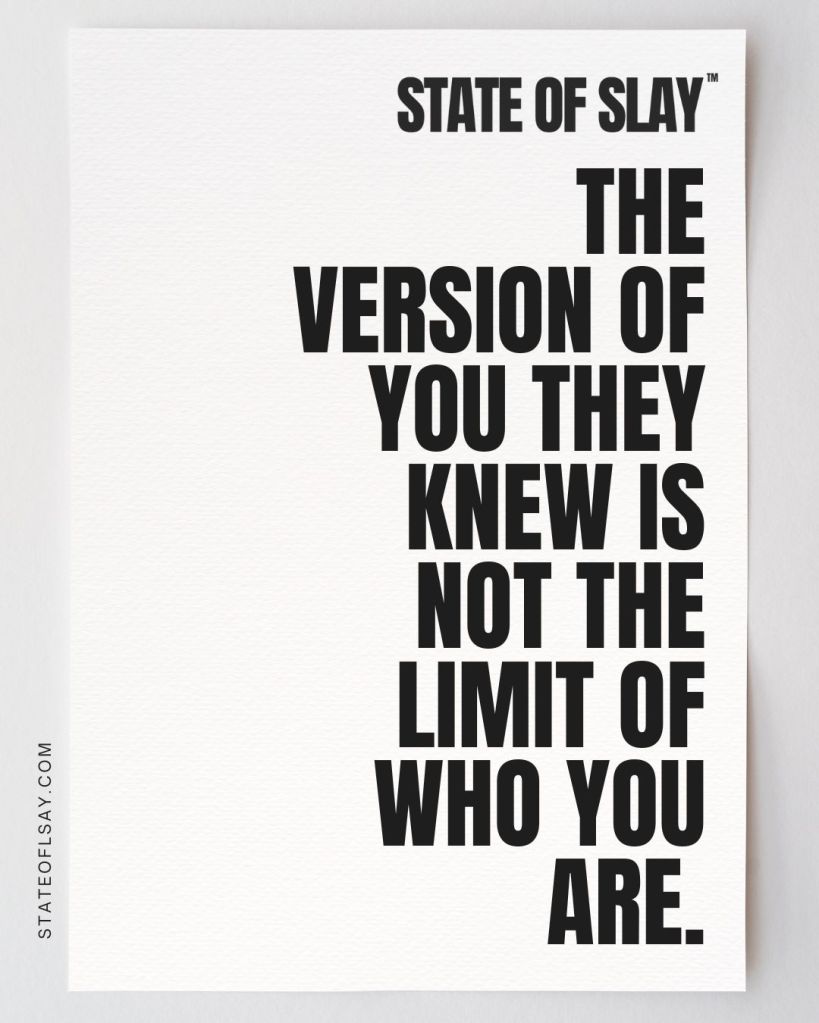
Growth does not always look dramatic. Sometimes it simply means stepping into a version of yourself that feels more honest, more aligned, and more grounded than before.
That shift can surprise people. Expectations adjust. Familiar dynamics change. And while that can feel uncomfortable at first, it is often a sign that you are moving closer to authenticity rather than further from connection.
This is your reminder to keep becoming who you are, even if it takes time for others to catch up.
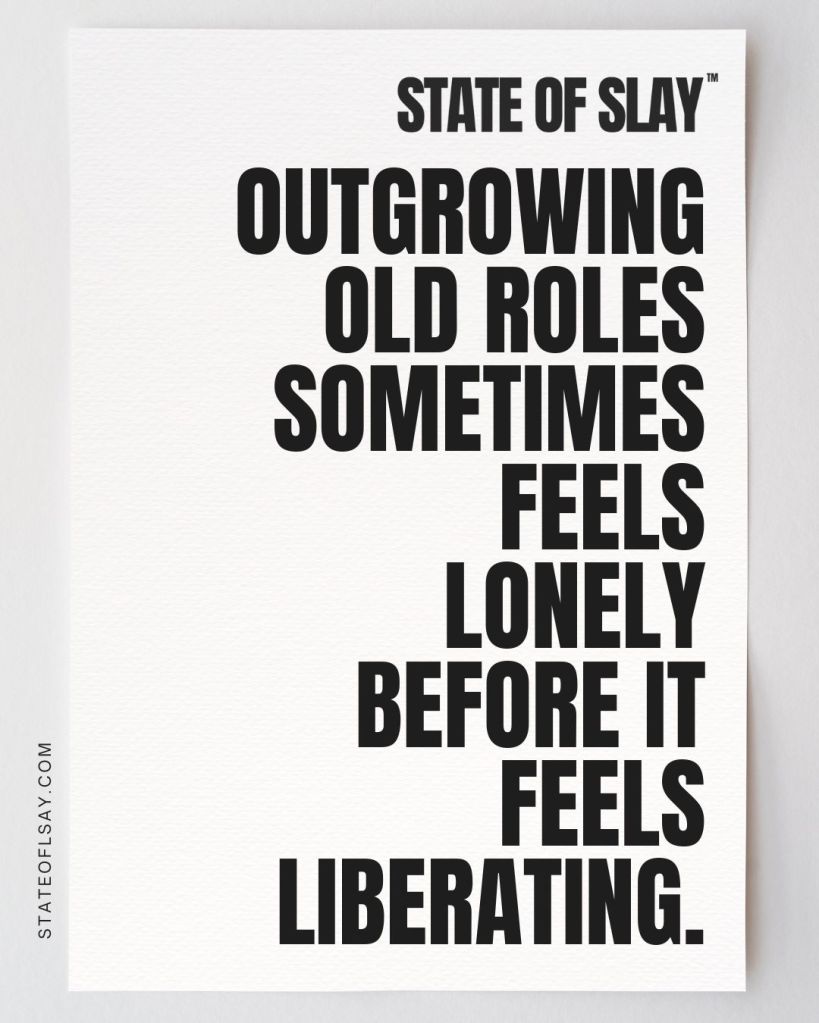
Sometimes personal growth shifts dynamics you did not expect. Roles evolve. Conversations change. Familiar patterns no longer fit the person you are becoming.
That adjustment period can feel isolating, even when the direction is right. Growth asks for courage before it offers comfort. But what feels unfamiliar today often becomes alignment tomorrow.
This is your reminder to trust growth even when it temporarily feels uncomfortable.
Fear doesn’t always arrive as chaos. Sometimes it shows up quietly — in overthinking, in hesitation, in the stories you tell yourself about what might happen.
You don’t stop living because something is happening. You stop living because you imagine it might.
And over time, those imagined outcomes begin to shape your choices, your risks, your voice, and your freedom.
Not every thought deserves authority. Not every fear deserves belief. Not every worry deserves a vote in your future.
This is your reminder toquestion the thoughts that limit you, challenge the fears that confine you, and choose movement over mental captivity.
We tell ourselves that if something hurts, it must cancel out what’s good. That if we’re grieving, we’re not allowed to feel grateful. That if we’re struggling, joy must be on pause.
But life doesn’t work that way.
Life is full of joy and pain — sometimes at the very same time.
And learning to hold both is one of the most honest forms of growth there is.
Prefer to listen? The Audio Blog version is available here.
The Myth That We Have to Choose One Feeling
Somewhere along the way, we learned that emotions should be tidy.
That we should “focus on the positive.” That pain means something is wrong. That joy must wait until everything is resolved.
So when joy shows up during a painful season, we question it. When pain appears during a happy moment, we feel guilty.
But emotions don’t operate in single lanes. They overlap. They coexist. They tell a more complete truth together than they ever could apart.
You don’t have to edit your experience to make it acceptable.
Joy Doesn’t Disappear Because Pain Exists
Pain does not erase joy.
It doesn’t invalidate it. It doesn’t cheapen it. It doesn’t mean you’re “not healed enough.”
Joy can live in the same breath as heartbreak. In the same season as loss. In the same moment as uncertainty.
Sometimes joy is quieter in those moments. More tender. More fleeting.
But it’s still real.
And allowing yourself to feel joy while hurting isn’t betrayal — it’s resilience.
Pain Doesn’t Mean You’re Failing at Life
When pain shows up, many of us immediately ask, What did I do wrong?
We assume pain is proof that we missed something. That we made the wrong choice. That we’re behind.
But pain is not a moral failing.
Pain is part of loving deeply. Of caring fully. Of being awake to your life.
A heart that feels pain is a heart that has been open.
And openness is not weakness — it’s courage.
Holding Both Is a Skill We Learn Over Time
Learning to hold joy and pain at the same time doesn’t happen overnight.
At first, we swing between extremes. We either numb ourselves to survive or cling to positivity to avoid the weight of what hurts.
But eventually, with self-trust and honesty, we learn balance.
We learn that it’s okay to laugh and cry in the same day. That gratitude doesn’t cancel grief. That healing isn’t the absence of pain — it’s the ability to live alongside it without losing yourself.
That’s emotional maturity.
Presence Is Where Both Can Exist
Joy and pain coexist most clearly when we are present.
Not rushing to fix. Not trying to escape. Not demanding clarity before it arrives.
Just being here.
Presence allows us to notice the warmth of a moment even when our heart is heavy. It lets us experience connection, beauty, and meaning without needing life to be perfect first.
You don’t have to resolve everything to feel something good.
This Is What a Full Life Looks Like
A full life isn’t one that avoids pain.
It’s one that allows all of it.
It’s joy with depth. Pain with purpose. Love with risk. Hope with honesty.
Trying to live without pain often shrinks our lives. But allowing both joy and pain expands them.
It makes us more compassionate. More grounded. More human.
You Don’t Have to Rush Through What You’re Feeling
If you’re in a season where joy and pain are showing up together, let yourself experience both without judgment.
You don’t need to explain it. You don’t need to justify it. You don’t need to choose.
You are allowed to hold complexity.
And in that complexity, you are not broken — you are alive.
SLAY Reflection
Let’s reflect, SLAYER:
S: Where in your life are joy and pain showing up at the same time right now? L: Which emotion do you tend to judge or suppress? A: How can you allow both feelings without trying to fix or rush them? Y: What might change if you trusted that holding both is part of living fully?
Call to Action: Join the Conversation
I’d love to hear from you. Have you ever experienced joy and pain at the same time — and what did that season teach you? Share your story in the comments. Let’s cheer each other on.
And if you know someone struggling to make sense of mixed emotions, send this to them. Sometimes, all we need is a nudge.
We all know the feeling—traffic that doesn’t move, a conversation that goes sideways, a plan that unravels in real time. Frustration builds, and before you know it, you’re simmering in anger, irritation, or resentment.
But here’s the truth that changed everything for me: frustration is always self-induced.
The outside world can invite us to be upset, yes—but we are the ones who accept the invitation.
When I first heard this idea, I bristled. Surely the rude driver, the unfair boss, the inattentive friend—they were the source of my frustration. But as I dug deeper, I realized the common denominator in every moment of anger was me. I was the one choosing to hold onto the irritation, the one letting it hijack my energy, the one letting the external world dictate my internal peace.
And that was the moment I understood: I can’t always control what happens, but I can always control whether or not I RSVP to frustration’s invitation.
The Hidden Cost of Accepting the Invitation
Frustration feels powerful in the moment. It gives us something to cling to, a sense of being “right,” or even righteous. But that power is fleeting, and the cost is high.
Every time we accept frustration’s invitation, we:
Drain our energy on things that don’t serve us.
Poison our mood, often for hours or days after the fact.
Damage relationships by reacting instead of responding.
Distract ourselves from solutions by obsessing over problems.
When I look back at my own life, I see how many days I lost this way—days spent stewing instead of living, days consumed by anger that did nothing but make me miserable. And all of it was preventable.
The truth? Frustration doesn’t come from what happened. It comes from the story we tell ourselves about what happened.
Pause Before You RSVP
The good news is that frustration is optional. Just because you’re invited doesn’t mean you have to attend.
Here’s what I practice today:
Notice the rise. That heat in my chest, that quickening of my thoughts—I know frustration is knocking.
Ask: Is this worth my peace? Nine times out of ten, the answer is no.
Choose my response. Instead of spiraling, I take a breath. Sometimes I literally step away. Sometimes I laugh at how small the trigger really is. Sometimes I pray.
Reframe. Instead of “Why is this happening to me?” I ask, “What is this showing me?” That shift turns frustration into information.
When I don’t RSVP to the invitation, I keep my power. I keep my peace. And I remember: the world doesn’t get to run my emotions—I do.
Frustration Reveals What We Value
Here’s the part most people miss: frustration isn’t all bad. It’s actually a teacher, if we’re willing to listen.
Frustration shows us what matters to us, what we expect, what boundaries may need adjusting. For example:
If traffic frustrates me, maybe it’s not about the cars—it’s about my lack of preparation or my need for control.
If someone interrupts me and I feel rage, maybe it’s pointing me to a wound around not feeling heard.
If I’m furious that a plan changed, maybe it’s about my deeper need for certainty and security.
When I stop blaming the outside world and start looking inward, frustration becomes less of a punishment and more of a flashlight.
It shines a light on the gap between my expectations and reality—and that’s where my work begins.
Choosing Peace Over Frustration
It’s not about denying your feelings. It’s about remembering that frustration is optional. You always have another choice:
You can let go. Not everything deserves a reaction.
You can laugh. Humor disarms frustration in a heartbeat.
You can learn. Ask what this moment is teaching you.
You can move on. Protect your energy by refusing to give it away.
When I practice this, I notice how much lighter my days feel. I have more energy for the things that actually matter. And maybe most importantly, I stop letting other people’s behavior write the story of my day.
Because at the end of the day, frustration is a story. And you get to decide whether or not you keep telling it.
Frustration Will Knock Again—Be Ready
Don’t get me wrong—I still get frustrated. I’m human. But now, instead of automatically reacting, I pause and ask myself:
Am I about to accept an invitation to frustration? Or am I going to choose peace instead?
That moment of awareness has changed my life. It’s not always easy, but it’s always worth it.
Frustration may knock, but peace is the one I let in.
SLAY Reflection
What situations frustrate you most often?
What expectations lie beneath that frustration?
Can you trace your frustration back to an old story, wound, or belief?
How does your day feel different when you choose not to engage with frustration?
What’s one way you can practice pausing before accepting frustration’s “invitation” this week?
S – Stop and notice when frustration rises L – Let go of the need to control what you can’t A – Align your response with peace, not anger Y – Yield to wisdom, not to the story frustration tells
Call to Action: Join the Conversation
I’d love to hear from you. What’s one frustration you’ve learned to stop accepting—and how did it free you? Share your story in the comments. Let’s cheer each other on.
And if you know someone who feels constantly hijacked by frustration, send this to them. Sometimes, all we need is a reminder that peace is always a choice.
Not every connection is meant to last—but every one leaves a mark. The people who enter your life are not all forever people. Some are lessons, others reminders. What matters most is how you choose to move forward from them.
This is your reminder to reflect on what you’ve learned, not just what you’ve lost.
I used to tolerate a lot. From other people. From myself.
I let things slide to avoid conflict. I ignored red flags because I didn’t want to make waves—or because I was too emotionally and mentally exhausted to face the truth. And so I allowed bad behavior to take up space in my life, even when it was actively hurting me.
But life isn’t meant to be tolerated. It’s meant to be lived. To be enjoyed. To challenge us, to teach us, and to help us grow.
When we start making excuses for the people, places, and patterns in our lives just so we can “get through” them, we’re not being brave—we’re betraying ourselves.
Tolerating the Things That Keep Us Down
When I was living in the dark, I let most things go—unless I was looking for a fight. And on the days I was angry at myself, I was often searching for someone else to blame.
I played the victim like it was my role in life. I pointed fingers outward instead of inward. And I tolerated behaviors in myself I knew deep down were harmful.
That was the first place I had to start when I began my recovery: What was I tolerating in myself that was keeping me sick?
Justifying What Needs to Go
I had made excuse after excuse for the choices I was making. One bad decision would snowball into another, and I would justify every one of them.
I ignored warning signs. I surrounded myself with people and situations that reinforced my belief that I wasn’t worthy of more. And I used those experiences as proof that I was a victim of life, rather than someone who had the power to change.
Even when good people showed up in my life, I didn’t know how to let them in. I had grown more comfortable with pain than with peace. And that realization was sobering.
From Tolerating to Choosing
As I got honest with myself, I began to see just how much of my pain I had been allowing. And once I saw it, I couldn’t unsee it.
So I took a stand.
First with myself—by refusing to continue the behaviors that hurt me. Then outward—by looking at every person, place, and pattern through the lens of self-love.
If it wasn’t helping me grow… If it wasn’t rooted in respect, support, or truth… It had to go.
Letting go wasn’t always easy. But every goodbye made more space for peace.
The Practice of Daily Self-Respect
Even now, as life moves fast and new challenges arise, I have to keep checking in. When I start tolerating things that don’t serve me, I feel it. The darkness creeps back in. The negative voices get louder. And I know—it’s time to realign.
Self-love isn’t a one-time decision. It’s a daily practice. And part of that practice is examining what you’re tolerating—and having the courage to release what no longer honors you.
SLAY Reflection: What Are You Still Tolerating?
What have you been tolerating in your life that feels heavy, harmful, or out of alignment? Why are you still holding onto it?
How have your own actions contributed to the pain or frustration you feel? What patterns need to be disrupted?
Are there people or relationships in your life that take more than they give? What would it feel like to set boundaries—or let them go?
What excuses have you made for staying in situations that don’t serve you? Where did those excuses come from?
What would change if you stopped tolerating what hurts you—and started choosing what heals you? What’s the first step?
Call to Action: Join the Conversation
I’d love to hear from you. What’s one thing you’ve tolerated for too long—and how are you ready to honor yourself by letting it go? Share your story in the comments. Let’s cheer each other on.
And if you know someone who’s carrying things they no longer have to, send this to them. Sometimes, all we need is a nudge.
I was talking with someone recently about truth— that raw, honest place inside where there are no walls, no masks, no pretending. That space where we allow ourselves to be vulnerable enough to let our truth speak to someone else’s truth.
That, to me, is the language of the heart: one heart speaking to another.
Before I Could Speak From the Heart
Before walking this path, I didn’t speak that language. I couldn’t. I was too afraid to let anyone see the real me.
I believed vulnerability was weakness. I was convinced that if you saw who I really was, you’d run. So I kept my heart closed. I played roles. I wore masks. I hid behind a version of myself I thought the world would accept.
But all that hiding left me feeling even more isolated. Even more alone. And the more I suppressed my truth, the more painful it became to carry it.
It took a long time to let that fear go. To open the door—even just a crack—and let the truth come through.
Surrender Is Where It Began
I had to surrender. Admit that my way wasn’t working. That my silence, my pretending, my performance—it was keeping me stuck. Sick.
That surrender became a turning point. The moment I let go of control was the moment I took my power back.
From there, I was told something that has stayed with me: You have to be rigorously honest if you want to get better.
No more pretending. No more hiding. No more playing small.
And that honesty? It wasn’t just about speaking truth to others. It was about telling the truth to myself. Every day. Even when it felt uncomfortable. Even when it was messy.
The Power of Speaking From the Heart
The more I spoke from the heart, the more comfortable I became living in that truth. And the more honest I was, the deeper my connections became.
But I won’t lie—it wasn’t always easy. There were still times I held things back, thinking I wasn’t ready to let them go. But each time I did, I felt the disconnection. The space it created. The wall it built between me and the people who loved me.
Now, I know better. When I’m not honest, I lose those connections. I lose myself.
Honesty—heart-led honesty—is what keeps me aligned, connected, and free.
Your Truth Is Beautiful
It can feel scary to speak from the heart. To show someone your truth. But that is the place where our most beautiful, powerful self lives.
Even when our truth is sad. Or messy. Or uncertain. If it’s honest, it’s real.
And when we speak from that place, we give others permission to do the same.
So open your heart. Speak your truth. Let your light guide you—and light the way for someone else.
SLAY on.
SLAY OF THE DAY: Reflect & Rise
Do you speak your truth—or do you hide behind what you think others want to hear?
What fears keep you from being fully seen?
Are those fears yours—or were they passed down to you?
How has sharing your truth helped you or someone else?
What would it look like to speak more from your heart—today?
The language of the heart is honest, raw, and real. When we speak it, we don’t just heal ourselves—we create space for others to heal, too.
Call to Action: Join the Conversation
I’d love to hear from you. What helps you speak the language of your heart? Share your story in the comments. Let’s cheer each other on.
And if you know someone who’s been afraid to share their truth, send this to them. Sometimes, all we need is permission to be real.
We all want people, places, and things to go our way. We imagine how life should look, how others should act—and when things don’t line up with that vision, we get unsettled. Sometimes we unravel.
But here’s the truth: If you need someone else to act a certain way so you can be OK… you’ve given away your power.
We cannot control the world around us. We can only control how we show up in it.
Control, Acceptance, and That False Sense of Safety
Back when I was living in the dark—emotionally, mentally, spiritually—my life felt completely unmanageable. I was spiraling, yet I still expected everything around me to bend in my favor. If things didn’t go how I wanted, I panicked. If people didn’t say or do what I thought they should, I spun out.
So I tried to control what I couldn’t: People. Places. Situations. Emotions. Outcomes.
Spoiler: It never worked. And it only made me feel worse.
When we tether our mental wellness to the actions of others, we’re setting ourselves up for disappointment, resentment, and chaos. True stability doesn’t come from control—it comes from acceptance.
Pause. Then Take Right Action.
Today, when I feel disturbed, I pause.
I ask myself:
What’s actually going on?
What do I need to do for me?
Is there any action to take?
Or is this something I need to let go?
That pause is everything.
Because if I haven’t checked in with myself—if I haven’t done the inner work first—any action I take outwardly might come from fear, ego, or unmet expectations.
Feelings aren’t facts. And reactions aren’t always truth.
I’ve learned that when I find my center—when I root myself in clarity and self-love—I no longer need everyone else to behave a certain way for me to be OK. I become OK because I’ve chosen to be.
You Are Not the Center of the Universe (And That’s a Good Thing)
Sometimes we resist change because it feels personal. Unfair. Uncomfortable.
But growth rarely happens in comfort. And what doesn’t feel good in the moment might be the very shift that leads to a better outcome—not just for us, but for the collective.
That’s humbling.
We’re not the center of the universe—but we are a part of something bigger. And when we stop trying to bend life to our will, we open ourselves up to learning, connection, and peace.
Your Peace Is Your Responsibility
Here’s what I know: No one else is responsible for your OK.
Not your partner. Not your friends. Not your boss. Not your timeline. Not your past.
You are.
When we find peace within ourselves, the chaos around us loses its power. We stop being reactive. We become responsive. We make room for grace. For learning. For love.
So don’t hand over your peace to anyone else. Take it back. Hold it close. Let that be your anchor.
SLAY on.
SLAY OF THE DAY: Reflect & Rise
Do you need others to act a certain way for you to feel OK?
How does that show up in your life?
Where do you think that need comes from?
How has that pursuit held you back or caused pain?
What could shift if you found your OK within yourself?
What practices help you find peace regardless of what’s happening around you?
Let go of the grip. Let in the grace. Find your center—then carry it with you, wherever you go.
Call to Action: Join the Conversation
I’d love to hear from you. How have you learned to find peace within yourself—especially when life around you is messy? Share your story in the comments. Let’s cheer each other on.
And if you know someone who’s struggling to feel OK in a world they can’t control, send this their way. Sometimes, we all need the reminder that we already have what we need inside us.