There are moments when the answer comes quietly and clearly.
A feeling. A knowing. A sense that something is not right or not aligned, even if you cannot fully explain why.
But then something else begins to take over.
Doubt creeps in. Logic starts trying to reshape what you felt. You begin to question yourself, soften the truth, or search for reasons to stay where you are.
What was once clear becomes complicated.
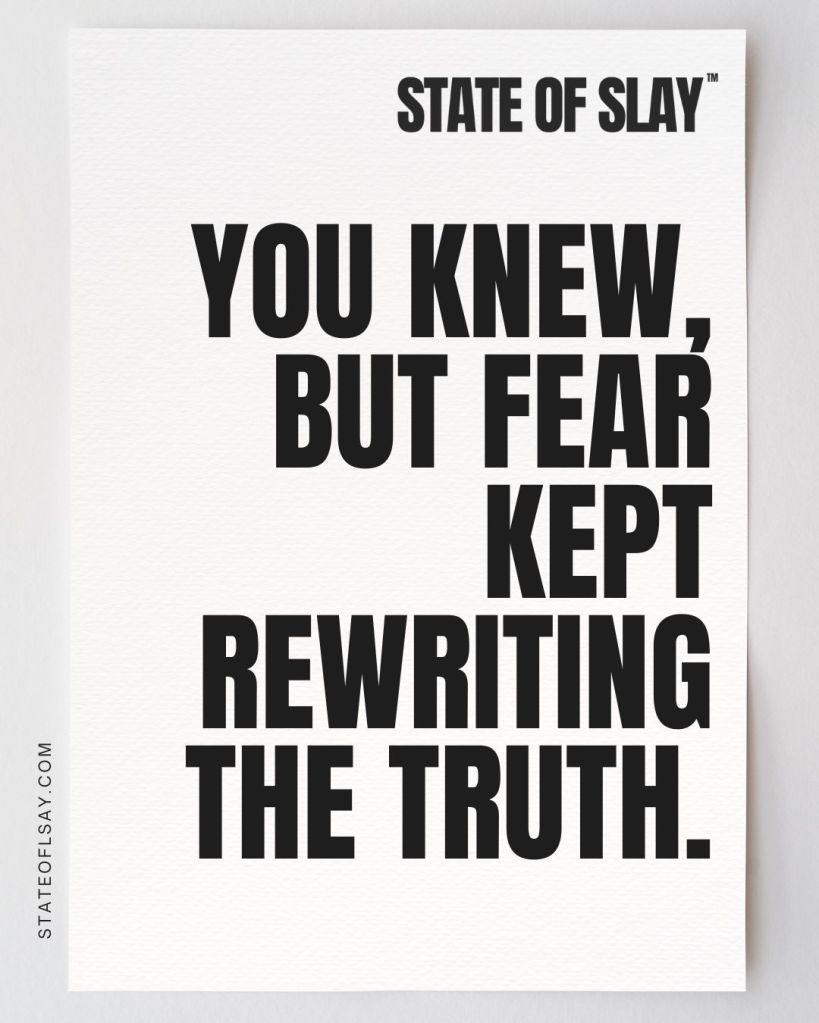
Fear has a way of doing that. It does not always shout. Sometimes it simply rewrites the truth in a way that feels easier to accept, safer to hold, or more comfortable to stay within.
Growth often begins with recognizing that the first feeling was not confusion. It was clarity.
This is your reminder to trust what you knew before fear had the chance to change the narrative.
Safer than saying what I really thought. Safer than expressing what I needed. Safer than risking how someone might respond.
So I stayed quiet.
I swallowed words that wanted to come out. I avoided difficult conversations. I convinced myself that keeping the peace was more important than speaking the truth.
But over time, that silence came at a cost.
Because every time I chose not to speak, I was choosing not to stand up for myself.
Prefer to listen? The Audio Blog version is available here.
Silence Does Not Protect You, It Hides You
It can feel like staying quiet keeps things stable.
No conflict. No discomfort. No immediate consequences.
But silence does not actually protect you.
It hides you.
Your needs go unmet. Your boundaries remain unclear. Your voice becomes smaller each time you choose not to use it.
And eventually, that silence turns into frustration. Resentment. Disconnection.
Not just from others.
From yourself.
I Had To Learn To Use My Voice
Speaking up did not come naturally to me.
There were moments when my heart would race, my hands would shake, and my thoughts would feel scattered. Even when I knew what I wanted to say, getting the words out felt overwhelming.
But I started small.
I spoke up in situations that felt manageable. I practiced expressing my thoughts without over-explaining or apologizing for them. I reminded myself that my voice mattered, even if it was not perfect.
And slowly, something began to shift.
The more I used my voice, the stronger it became.
Courage Does Not Mean Comfort
One of the biggest misconceptions about courage is that it feels confident.
Most of the time, it does not.
Courage often feels like fear.
It feels like uncertainty. Like vulnerability. Like stepping into something unknown.
But courage is not about feeling ready.
It is about acting anyway.
Speaking up even when your voice shakes is courage in its purest form.
Your Voice Is Part Of Your Identity
Your thoughts, your feelings, your perspective all matter.
When you silence them, you are not just avoiding a moment.
You are disconnecting from a part of who you are.
Using your voice is not about being loud or dominating conversations.
It is about being honest.
It is about allowing yourself to be seen and heard.
And that kind of authenticity creates deeper, more meaningful connections.
Not Everyone Will Receive It Well
This is important.
Speaking your truth does not guarantee that everyone will agree with you, understand you, or respond the way you hope.
And that can be uncomfortable.
But the goal of using your voice is not to control how others respond.
It is to honor yourself.
The right people will respect your honesty, even if they do not fully agree. And those who cannot may simply not be aligned with where you are going.
That clarity is valuable.
Boundaries Begin With Expression
You cannot have healthy boundaries without communication.
If people do not know what you need, what you are comfortable with, or what you expect, they cannot meet you there.
Speaking up creates clarity.
It defines what is acceptable and what is not. It allows you to participate in your relationships rather than quietly adapting to them.
And that participation is what creates balance.
You Do Not Need Perfect Words
This was something I struggled with.
I thought I needed to say things perfectly. That I needed to find the exact right words, tone, and timing.
But perfection is not required.
Honesty is.
Sometimes your voice will shake. Sometimes your words will not come out exactly as you planned.
And that is okay.
Because showing up imperfectly is still showing up.
And that matters more than saying nothing at all.
Every Time You Speak You Grow
Each time you choose to express yourself, you build confidence.
You strengthen your sense of self. You reinforce your value. You remind yourself that your voice deserves space.
And over time, what once felt terrifying becomes more natural.
Not because fear disappears.
But because your trust in yourself grows stronger than your fear.
SLAY Reflection
S — See the Silence Where in your life are you holding back from speaking your truth?
L — Look at the Fear What are you afraid might happen if you speak up?
A — Acknowledge Your Voice What is something you have been wanting to say but have not?
Y — Your Next Step What is one small way you can begin using your voice today?
Call to Action: Join the Conversation
I’d love to hear from you. Have you ever spoken up in a moment when it felt difficult, and what did that experience teach you?
Share your story in the comments. Let’s cheer each other on.
And if you know someone who needs the reminder that their voice matters, send this to them. Sometimes, all we need is a nudge.
Most expansion does not feel smooth at first. It feels uncertain, uncomfortable, sometimes even intimidating. That does not mean you are unprepared. It usually means you are stretching into new capacity.
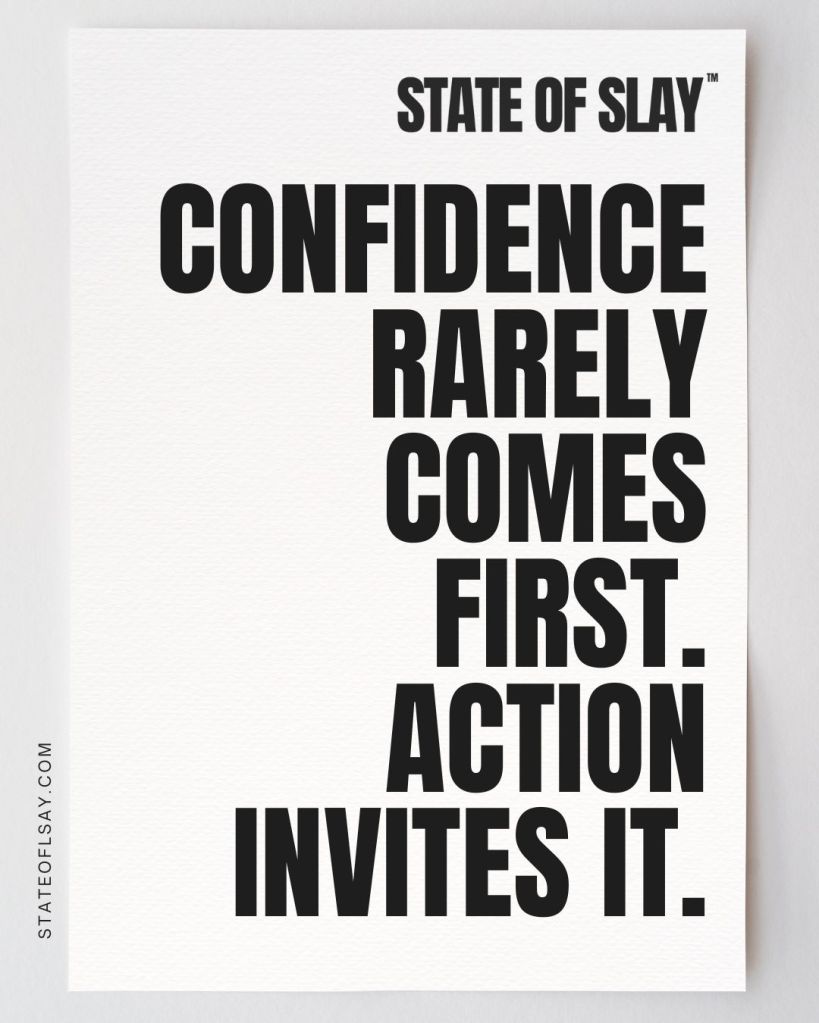
Confidence often follows experience, not the other way around. The moments that challenge you are frequently the ones that reveal what you are actually capable of.
This is your reminder to step toward what challenges you, not away from it.
We often wait for confidence before taking action, believing readiness should come first. But growth rarely works that way. Momentum builds through experience, not hesitation.
The first step may feel uncertain. The early attempts may feel imperfect. That is not failure — it is part of becoming capable. Confidence tends to grow quietly alongside effort, not ahead of it.
This is your reminder to begin even when certainty is not fully there.
Staying where you are can feel safe. Familiar. Predictable.
But over time, that stillness comes with a quiet cost — the weight of what you didn’t try, the ache of what you postponed, the version of yourself that never got the chance to step forward.
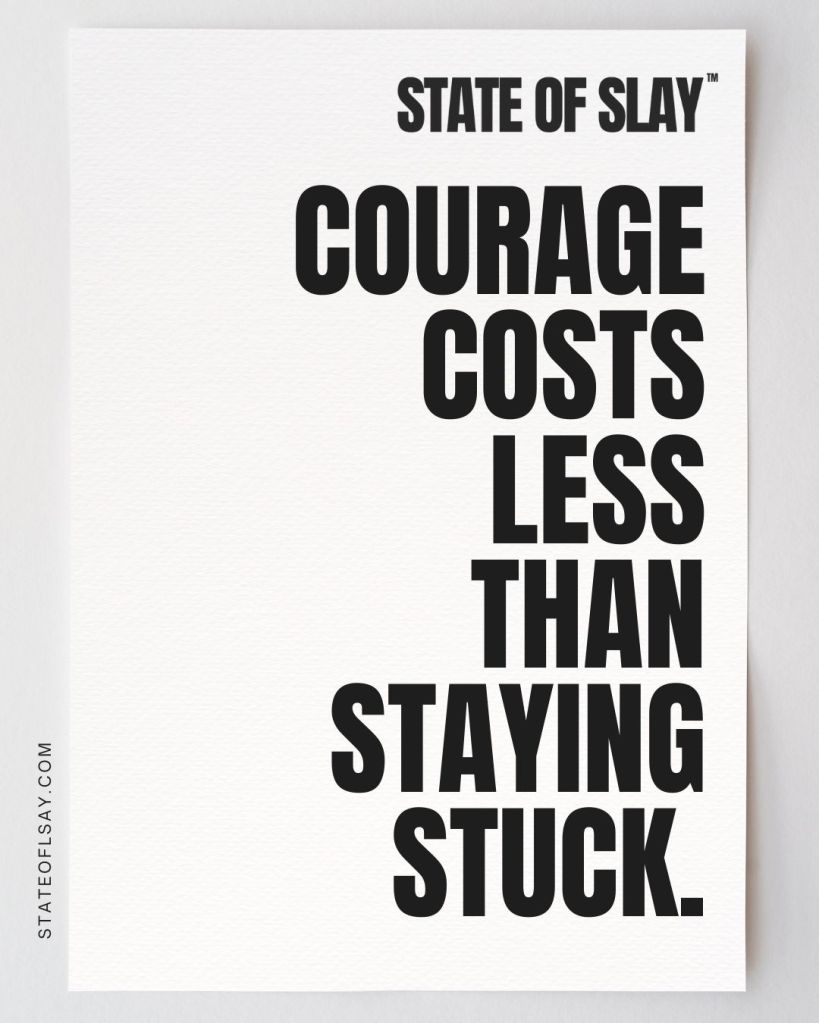
Courage doesn’t ask you to be fearless. It asks you to be willing. Willing to move before certainty arrives. Willing to choose growth over comfort.
Forward motion isn’t always loud or dramatic. Sometimes it’s one honest decision. One uncomfortable step. One moment where you stop waiting for permission.
This is your reminder: You don’t need to have it all figured out. You just need to stop standing still.
There’s a moment — quiet, subtle, easy to miss — when your life begins to shift. It’s the moment you finally stop pretending you already know. The moment you stop running from the truth. The moment you decide that not knowing is no longer scarier than staying stuck.
That moment is a question.
We don’t talk enough about how much courage it takes to ask one. Because asking a real, honest, soul-level question isn’t just seeking information — it’s opening a door you can’t close again. It’s admitting you want something different. It’s acknowledging that what you’ve been doing is no longer enough.
And for many of us, that is the hardest step of all.
Why We Fear the Questions We Need to Ask
We fear the answers, yes — but often, we fear the asking even more.
Because asking a question means:
I might hear something I don’t want to hear.
I might have to change.
I might be seen.
I might learn the truth.
So we avoid it. We distract ourselves. We pretend we’re fine. We convince ourselves we already know how it will go.
But avoidance is its own kind of prison. And silence is its own kind of answer.
When we refuse to ask the questions that could heal us, save us, free us, or grow us, we stay stuck in a life that feels too small for who we are becoming.
The Questions That Change Everything
Real transformation doesn’t come from having all the answers. It comes from being willing to ask the uncomfortable questions — the ones that scrape at the truth.
Questions like:
What am I afraid to admit?
What is this really about?
What am I pretending not to know?
What do I need?
What would I choose if I believed I deserved better?
These are the questions that crack things open. These are the questions that stop the cycle. These are the questions that begin your becoming.
And yes — they require courage. But courage isn’t the absence of fear. Courage is asking the question while your voice trembles.
Answers Don’t Arrive Without an Invitation
There’s a spiritual truth that I learned early in my healing journey:
You cannot receive answers to questions you’re too afraid to ask.
Life will not force clarity on you. Healing will not push its way in. Growth will not drag you forward.
You have to invite it.
You have to ask:
Why does this pattern keep repeating?
What part of me still needs to be healed?
What is this trying to teach me?
When you ask the question, the universe, your intuition, your higher self — whatever language you use — finally has somewhere to deliver the answer.
Asking the question is the knock on the door. The answer is what steps through.
Bravery Looks Like Curiosity, Not Certainty
We think bravery requires confidence. But most of the bravery in my life came in moments where I didn’t feel certain at all.
Bravery looked like:
sitting with someone and saying, “I don’t know how to fix this — can we talk?”
looking in the mirror and whispering, “Why do I keep hurting myself this way?”
asking for help long before I believed I deserved it
admitting I didn’t have control — and never really did
Questions are not weakness. Questions are self-respect. Questions are the beginning of wisdom.
The bravest people I know aren’t the ones with the answers — they’re the ones willing to keep asking.
You Deserve the Life That Lives Beyond the Question
There is a version of you waiting on the other side of one brave question.
A more grounded you. A more peaceful you. A more aligned, self-aware, self-honoring you.
But you cannot reach her — cannot step into her — if you’re unwilling to ask what needs to be asked.
Whether it’s a question about love, healing, boundaries, forgiveness, purpose, or truth, your life expands the moment you become brave enough to be curious.
Asking the question doesn’t guarantee the answer will be easy. But not asking guarantees nothing will change.
SLAYER, don’t let fear keep you from the clarity that could change your entire life.
Ask. Be curious. Be brave.
Your answers are waiting.
SLAY Reflection
What important question have you been avoiding — and why?
What fear shows up when you imagine asking it?
How might your life shift if you allowed yourself to seek clarity?
What question could help you break a repeating pattern in your life?
What small act of courage can you take this week to open the door to the answers you need?
S – Seek clarity instead of avoiding discomfort
L – Let curiosity lead you toward truth
A – Ask bravely, even when you’re afraid
Y – Yield to the wisdom that arrives when you open the door
Call to Action: Join the Conversation
I’d love to hear from you. What question are you finally brave enough to ask yourself? Share your story in the comments. Let’s cheer each other on.
And if you know someone who’s been afraid to seek the truth, send this to them. Sometimes, the right question is the beginning of a new life.
Fear has a way of creeping in when the lights are out—both literally and metaphorically. When we’re uncertain, overwhelmed, or vulnerable, our minds can convince us that the shadows hold monsters. And when we avoid shining a light on those fears—when we stuff them down, pretend they don’t exist, or try to outrun them—they only grow bigger, louder, and harder to face.
The truth? Fear feeds on silence and secrecy. When we leave it unchecked, it multiplies in the darkness of our minds. But when we turn on the light—through awareness, honesty, and courage—fear begins to shrink.
So if you think there’s a boogeyman around, it’s time to stop hiding under the covers. Flip the switch. Call it out. See it for what it is.
Darkness Is the Breeding Ground for Fear
Think about the last time you were afraid of something—really afraid. Chances are, it wasn’t the thing itself that scared you most. It was not knowing.
Not knowing what someone thought of you. Not knowing how a situation would turn out. Not knowing if you could survive the pain you were in.
The unknown is where fear lives. And the more we let our imagination run wild in that dark space, the more terrifying the “boogeyman” becomes.
But here’s the thing: most fears, when brought into the light, lose their power. Naming your fear is the first step in shrinking it. It’s not the monster under the bed—it’s your anxiety about failing, being rejected, or not being enough. Once you see it clearly, you can deal with it.
Shine the Light of Truth
When we start to shine a light on fear, it doesn’t mean the fear disappears overnight. But it does mean we stop letting it run the show.
For me, facing my fears meant getting rigorously honest with myself. I had to admit where I was scared and why. Sometimes it was rooted in old wounds or trauma. Sometimes it was tied to lies I had told myself for years. And sometimes, it was just the unknown of stepping into a new chapter.
The more light I brought in—the more I talked about my fears, wrote about them, or even prayed about them—the less they controlled me.
Fear thrives in the dark. Truth thrives in the light.
The Boogeyman Is Rarely What You Think
Most of the time, the “boogeyman” isn’t nearly as scary as we’ve built it up to be.
Maybe the conversation you’ve been avoiding brings clarity instead of rejection. Maybe the risk you’ve been afraid to take opens a door you never thought possible. Maybe the pain you’re carrying becomes lighter when you finally share it.
Fear wants you to stay in the dark. But your healing requires the light.
Flip the Switch
So how do you “turn on the light” when fear is looming?
Name it. Write down exactly what you’re afraid of. No filters.
Share it. Talk to someone you trust. Speaking fear out loud weakens it.
Challenge it. Ask yourself: is this fear based in fact, or in old stories?
Take one small action. Even the smallest step forward shines light into the dark.
The boogeyman can’t survive in the light.
So next time you feel fear creeping in, don’t stay stuck in the dark. Reach for the switch. Bring it into the open. Remind yourself: you are braver than the shadows.
SLAY Reflection
What fear have you been keeping in the dark?
How does avoiding it give it more power?
What would shining a light on it look like for you?
Can you trace your fear back to old wounds or beliefs?
What’s one small action you can take today to face it?
S – Stop letting fear grow in silence L – Let the light of truth guide you A – Acknowledge your fears instead of hiding them Y – Yield to courage, not the shadows
Call to Action: Join the Conversation
I’d love to hear from you. What fear did you finally bring into the light—and how did it change things for you? Share your story in the comments. Let’s cheer each other on.
And if you know someone who’s hiding from their “boogeyman,” send this to them. Sometimes, all we need is a light to remind us we’re not alone.
It’s easy to say yes when you feel prepared, qualified, and ready. But what about the yes that feels uncertain? The one that makes you pause and think, “Can I even do this?”
I’ve learned over the years that these are often the most important yeses—the ones that lead you somewhere you never expected, but exactly where you’re supposed to be.
For me, some of the best things in my life have happened because I said yes even when I wasn’t sure. Even when I doubted myself. Even when it was something I’d never done before.
Those yeses have taught me that courage often comes before confidence.
Saying Yes Before You Feel Ready (I Never Felt Ready Either)
If I had waited until I felt fully ready, I would have missed out on so many opportunities that shaped me.
There have been roles I’ve taken, projects I’ve joined, and events I’ve spoken at where my first instinct was, “Why me? I’ve never done this before.” But then I’d hear this little voice reminding me: “Just say yes. You’ll figure it out.”
And you know what? I always did. Maybe not perfectly. But growth never is.
Every time I said yes, I walked away with more than I expected—new skills, new friends, new perspectives. You become ready by doing. Not by waiting.
The Unexpected Gifts of Taking a Chance
Some of my favorite experiences started with a hesitant yes.
Saying yes to a random opportunity led me to discover a new creative passion.
Saying yes to a conversation with someone I barely knew turned into a meaningful friendship.
Saying yes to a project that felt way out of my league ended up teaching me things I didn’t even know I was capable of.
If I had stayed in my comfort zone, I would have missed out on all of it.
What I’ve learned is that sometimes, that scary yes is simply the universe nudging you toward something bigger.
When Yes Isn’t About the Destination
One thing I’ve come to believe is this: Not every yes is meant to be the grand finale. Sometimes, it’s just meant to get you moving.
There have been plenty of times when saying yes didn’t lead me exactly where I thought it would. But it got me out the door. It opened a new door. It connected me to people and places I wouldn’t have found otherwise.
Your yes doesn’t have to be perfect. It just has to be intentional. You’re not committing to a lifetime. You’re committing to the next step.
Brave Yes vs. Reckless Yes: Here’s How I Tell the Difference
Let me be real—I’ve said yes to things for the wrong reasons too. Guilt. People-pleasing. Fear of missing out.
Those yeses? They don’t feel good. They drain you.
But the brave yes? That’s the one that feels a little scary but also exciting. The one that stretches you in the right way. The one your gut says “this could be good for me” even if your brain is panicking a little.
Now, I pause and ask myself:
Am I saying yes because I’m afraid of disappointing someone?
Or am I saying yes because it aligns with who I’m becoming?
That pause makes all the difference.
Growth Lives on the Other Side of Yes
Every time I’ve stepped into something new, even when it terrified me, I’ve grown. Not just in skills or experiences, but in how I see myself.
By saying yes, I’ve learned to trust myself more. To know that I can figure things out. That even if I stumble, I’ll get back up stronger.
That’s what your best yes does—it helps you grow into the next version of you.
What’s Your Best Yes? Final Thoughts
Here’s what I want you to know: You don’t have to feel fully ready to say yes. You don’t have to know exactly how it will turn out.
Sometimes, your best yes is the one that simply gets you moving. The one that introduces you to a new part of yourself. The one that reminds you—you’re more capable than you think.
So, what’s the yes you’ve been hesitating on? It might just be the beginning of something amazing.
Your Turn: Reflect & Take Action
Now it’s your turn. Take a moment and think about these questions:
What opportunity have you been hesitating to say yes to because it feels outside your comfort zone? What’s really holding you back?
Think of a time when you said yes even though you were unsure. What did you gain from that experience?
What’s one small, brave yes you can give yourself this week? A chance to grow, connect, or simply show up differently.
How do you personally tell the difference between a reckless yes and a brave yes? What does your body or intuition tell you?
Who or what could benefit from you saying yes to yourself right now? Remember, your courage is contagious.
Call to Action: Join the Conversation
I’d love to hear from you. What’s the yes you’re ready to say, even if it scares you? Share your story in the comments. Let’s cheer each other on.
And if you know someone who’s standing on the edge of a yes, send this to them. Sometimes, all we need is a nudge.
Most of us have fears. It’s part of being human. But when we give too much focus and energy to fear, we risk becoming exactly what we fear most.
Fear can be sneaky like that. It creeps in, takes root, and grows stronger the more we feed it. Eventually, it can start to shape how we think, how we act, and even how we show up in the world—often without us even realizing it.
Fear can become a self-fulfilling prophecy. What we focus on, we feed. And what we feed, grows.
Fear Is an Invitation
I’ve written before about attracting the kind of energy we want in our lives. When we live in fear—or negativity—that’s often what ends up circling back to us.
It’s not magic. It’s not instant karma. It’s energy. It’s focus. It’s the silent agreement we make with our fears every time we let them lead.
When I was living in my illness, I was consumed by fear. It was everywhere—under the surface of every thought, every decision. And the more I ignored it, the more power it had. I didn’t want to face it, so I tried to numb it, outrun it, distract myself from it.
But fear doesn’t disappear just because we look away. It waits. It grows. And eventually, I started to become what I feared most.
When Fear Becomes Identity
I was aware of what was happening. And still, I didn’t stop it.
I fed my fears with avoidance, with negative thinking, with silence. And my fear evolved into a kind of paralysis—I couldn’t see a way out, and I wasn’t asking for one.
But then a different kind of fear showed up—the kind that keeps us safe. The kind that whispers, “You can’t keep going like this.” The kind that leads to action.
I was terrified of being judged, of being labeled “crazy,” of being too far gone to help. But I was also terrified of where my life was headed if I didn’t get help.
And that good fear? It won. I reached out. I asked for help. And for the first time, I found a door out.
Reclaiming Power Over Fear
I’ve learned that I don’t have to live in fear. I still feel it, yes—because again, I’m human. But I don’t live there anymore.
I’ve learned to acknowledge it when it shows up and then move through it.
Today, I focus on:
What I want to see in my life
What I hope for
What positive energy I can put into the world
I’ve built a spiritual connection that guides me and keeps me grounded. I stay open to signs and nudges from the universe. And I trust that fear is not something I have to surrender to. It’s something I can listen to—but not let lead.
Use Fear as a Signal—Not a Sentence
Fear can be a compass. Sometimes it points to the exact place where we need to do the most work.
Ask yourself:
What am I really afraid of?
What small action could I take to begin facing that fear?
What would it feel like to stop giving that fear so much power?
This is a challenging time. But it’s also the perfect time to focus on the good you want to create—for yourself, for your family, for your life.
You don’t have to become what you fear. You can choose something different.
You can choose to SLAY.
SLAY Reflection: How Are You Using Your Fear?
Do you tend to live in fear or let fear guide your decisions? What are you most afraid of right now?
Do you notice yourself becoming what you fear? What behaviors or beliefs might be feeding that?
What action could you take today to work through your fear—just one small step? What would shift if you took it?
How does fear affect your energy and mindset? What happens when you redirect your focus?
How can you bring more positive action into your life today? Where can you reclaim your power?
Call to Action: Join the Conversation
I’d love to hear from you. What’s one fear you’re ready to stop feeding, and what action can you take today to move through it? Share your story in the comments. Let’s cheer each other on.
And if you know someone who’s stuck in fear or letting it lead their life, send this to them. Sometimes, all we need is a nudge.
Looking back, there were many times I was afraid to be great. In my heart, I wanted it. In my mind, I believed I did, too. But in the moment—when it counted—something inside me would pull back. I would stop myself, sometimes even sabotage myself, just so I wouldn’t fully step into my potential.
And I always knew. There was a split second where I could’ve chosen differently—but I didn’t. Then I’d beat myself up for it. I’d use it as proof that I wasn’t good enough. That I didn’t deserve good things. That old narrative was strong, and I was the one keeping it alive.
When Self-Doubt Creeps In
So where does that fear come from? Why do we shrink from our own greatness?
For me, it was years of undiagnosed mental illness and deeply rooted self-hate. I was at war with myself—wanting things to change, but getting in the way of any progress. Even when opportunities came my way, I’d question if I deserved them. I’d back down, stay small, and then carry the weight of disappointment.
It wasn’t until I began my recovery that I finally started to shift. I learned to love myself. I stopped backing down from the things I wanted. And slowly, I stopped fearing success. Because success started to feel like something I was allowed to have.
Greatness isn’t arrogance. Greatness is owning your light. It’s showing up fully, knowing your worth, and letting yourself shine.
You Don’t Need Permission
Sometimes, we wait for others to validate our greatness. To give us permission. But your power doesn’t come from someone else’s approval. It comes from you.
If someone is uncomfortable with your greatness, that’s their work to do—not yours. Your job is to honor your gifts, pursue your goals, and keep showing up for yourself. Greatness isn’t just about what you achieve—it’s about who you become as you rise.
Today, I don’t let that little voice in my head stop me the way it used to. And when I do hear it, I know it’s not the truth. I’ve worked too hard to believe in myself—and I’m not giving that up.
You Were Made for More
We all have dreams. We all have something inside us that longs to grow, to thrive, to become. Don’t let fear—or old patterns—steal that from you.
Start where you are. You don’t have to know every step—just take the first one. Say yes. Trust that the path will reveal itself as you go. The more you honor your potential, the more your life will expand.
Be great. And while you’re at it, help others see their greatness, too.
SLAY on.
SLAY Reflection: Step Into Your Greatness
Do you believe you are great? If not, what’s holding you back from seeing it?
Have you ever talked yourself out of something you really wanted? Why?
What is one thing you’re great at—and do you celebrate it or downplay it?
How does it feel when you celebrate someone else’s success? Can you offer that same energy to yourself?
What’s one step you can take this week to move closer to your greatness?
Call to Action: Join the Conversation
I’d love to hear from you. What’s one way you’re ready to stop holding yourself back and fully own your greatness?
Share your story in the comments. Let’s cheer each other on.
And if you know someone who needs a reminder of their worth, send this to them.
Sometimes, all we need is permission to rise.