Slay Say

THE POWER OF CONTRAST

Not every influence shapes us through admiration. Some shape us through opposition. It’s in watching behavior we don’t want to repeat, words we won’t use, or choices we refuse to make that we find clarity in who we are.

This is the quiet gift of contrast—it sharpens our vision and strengthens our commitment to live differently.

This is your reminder: even painful examples can become powerful teachers.

SLAY on!

You Have to Learn to Grieve with Hope

Grief is something we don’t like to talk about. It feels heavy, uncomfortable, and sometimes unbearable. We’re taught to either rush past it, hide it, or drown in it—but rarely to sit with it. And yet, grief is not something we can outrun.

At some point in life, loss comes for all of us. It may be the death of someone we love, the end of a relationship, the fading of a dream, or even the loss of who we once thought we would be. Grief is not reserved for funerals—it shows up whenever life shifts in ways that take something from us.

But here’s the truth: while grief is inevitable, despair is optional. To heal, we must learn to grieve with hope.


Why Hope Matters in Grief

When you’re deep in grief, hope can feel like a foreign concept. It’s easy to believe that the sadness will never lift, that you’ll never feel joy again, that the hole in your heart is permanent.

But grief and hope are not opposites. They’re partners.

Grief acknowledges the depth of what you’ve lost. Hope whispers that loss doesn’t erase love, and pain doesn’t cancel the possibility of joy ahead.

Hope doesn’t mean ignoring the hurt. It means believing there is life beyond it.


Grieving Without Hope Keeps You Stuck

I know this firsthand. In the darkest times of my life, I thought I was honoring my pain by holding on tightly to it. I wore my grief like armor, convinced that letting go of it meant I was letting go of the person, the love, or the moment I had lost.

But the truth is, refusing to allow hope into grief only traps you in it. It keeps you circling the same pain, the same questions, the same regrets.

Grieving with hope doesn’t dishonor your loss—it honors your life. It allows you to carry your love forward without being consumed by the absence.


How to Grieve with Hope

So how do we actually do this? It’s not about rushing, forcing, or pretending. It’s about learning to make space for both grief and hope to coexist. Here are some ways to begin:

  1. Give Yourself Permission to Feel
    Stop labeling your emotions as “right” or “wrong.” If you need to cry, cry. If you need to sit in silence, sit. Grief has no timeline.
  2. Remember What Remains
    Focus on what the person, dream, or chapter gave you. Love, memories, lessons—those don’t disappear. They live in you.
  3. Look for Small Signs of Light
    It might be laughter that sneaks in unexpectedly. A sunrise. A song that reminds you of resilience. Hope often arrives quietly, but it always arrives.
  4. Talk About It
    Share your grief with someone safe. Silence feeds despair, but connection breeds healing.
  5. Let Grief Grow You
    Pain transforms us if we let it. Ask yourself: what is this teaching me about love, about myself, about what matters most?

Hope is Not Forgetting

One of the biggest fears in grief is that moving forward means forgetting. That by smiling again, you’re betraying the depth of what you lost. But healing doesn’t erase love. It carries it forward in a new way.

When you grieve with hope, you don’t deny the loss. You integrate it. You learn to live alongside it, and eventually, to allow joy to return without guilt.

Hope says: this hurts, and I can still live.


You’re Allowed to Carry Both

You can hold sadness in one hand and gratitude in the other. You can cry one day and laugh the next. You can miss what you lost and still build what’s ahead.

Grieving with hope doesn’t mean replacing the pain—it means refusing to let it be the only story.


SLAY Reflection

  1. What loss in your life still feels too heavy to carry?
  2. How might hope soften that grief without taking away its meaning?
  3. What do you fear you’ll “lose” if you allow yourself to heal?
  4. Can you remember a moment when light broke through your darkness?
  5. What’s one hopeful practice you can lean into this week—journaling, prayer, gratitude, connection?

S – Surrender to your feelings without shame
L – Let hope quietly sit beside your grief
A – Allow both pain and joy to exist together
Y – Yield to healing, trusting love will always remain


Call to Action: Join the Conversation

I’d love to hear from you.
How have you found hope in the midst of grief?
Share your story in the comments. Let’s cheer each other on.

And if you know someone walking through grief right now, send this to them.
Sometimes, hope begins with a reminder that they’re not alone.

Slay Say

THE WHISPER OF DESTINY

Some moments feel different. A place you can’t explain feels like home, a person feels familiar even though you’ve just met, or an opportunity seems to call your name. That pull isn’t random—it’s alignment.

These are the moments where your soul recognizes something your mind hasn’t caught up to yet. You don’t have to chase them or force them—they’re already written into your story, waiting for you to step into them.

Trust the pull. Trust the timing.

This is your reminder: not every connection needs logic—some need only recognition.

SLAY on!

Slay Say

THE POWER OF PATIENCE

You don’t always need to explain yourself to be understood. True clarity isn’t forced—it unfolds with time.

When we rush to defend our side of the story, we often drain our energy trying to convince others who have already decided what they want to believe. That battle isn’t yours to fight.

Instead, let your actions, your consistency, and your integrity speak for you. Time has a way of revealing what words cannot.

This is your reminder that truth doesn’t need protection—it needs patience.

SLAY on!

Slay Say

FORWARD IS THE ONLY DIRECTION

Standing still might feel safe, but it’s also where dreams go to die. Waiting for the perfect moment only delays the life that’s waiting for you to claim it.

Growth requires movement—sometimes messy, sometimes uncertain, but always forward. Each step, no matter how small, breaks the cycle of waiting and creates momentum.

If you’re longing for change, stop looking for it to arrive on its own. The shift begins with you—when you take action, however imperfect, toward what you want.

This is your reminder that movement is the bridge between who you are and who you’re becoming.

SLAY on!

Invisible to What Isn’t Love

There’s a quiet kind of power that comes from living in love, in truth, and in alignment with who you are. It doesn’t scream for attention. It doesn’t need to prove itself. It simply is. And when you settle into that place—your authentic place—you’ll notice something miraculous: the noise, the chaos, the lies, the drama, the things that used to pull you under, can’t even touch you anymore.

It’s like you become invisible to everything that doesn’t match your frequency.

That’s not magic. That’s alignment.


Love Is the Foundation

When I talk about love here, I don’t mean the hearts-and-flowers version of love that gets wrapped up in greeting cards or romanticized movies. I mean the kind of love that starts inside you—the radical, unconditional love that says:

  • I am worthy.
  • I am enough.
  • I don’t need to perform, please, or prove my value.

When you stand in that kind of love, you stop chasing after scraps of validation. You stop bending yourself into pieces just to keep others comfortable. You recognize that your energy, your time, your spirit are sacred.

And that love becomes your shield. Not a shield that hardens you, but one that keeps out anything that doesn’t reflect back respect, kindness, or reciprocity.


Truth Sets You Free

Living in truth can be terrifying at first. Many of us were taught to hide pieces of ourselves to stay safe, to keep the peace, or to earn approval. For years, I wore masks—smiling when I wasn’t okay, saying “yes” when everything inside me screamed “no,” bending my truth so others wouldn’t have to face theirs.

But here’s the thing: bending your truth breaks you.

When I finally began to speak honestly—about what I needed, what I felt, and what I believed—I was terrified people would leave. And you know what? Some did. But the ones who stayed? They were the ones who truly saw me.

Truth is a filter. It doesn’t cost you real love. It only costs you illusions.


Alignment Makes You Untouchable

Alignment is what happens when your actions, your words, and your values finally match. It’s when your “yes” means yes, your “no” means no, and your energy flows in the direction of your highest good instead of being drained by people-pleasing, perfectionism, or fear.

When you’re aligned, you don’t need to force anything. You don’t need to beg, explain, or overcompensate. You simply are, and that “being” is enough.

And here’s where the magic happens: the things that are not love, not truth, not aligned—they literally can’t find you anymore. They bounce off. The drama you used to get pulled into suddenly looks exhausting. The games people play feel irrelevant. The old triggers don’t stick because you’ve outgrown the version of yourself that needed to engage with them.

You become invisible to what’s beneath you, because you’re no longer on that frequency.


The Power of Choosing What You Align With

Here’s what I know for sure:

  • If you align with fear, fear will find you.
  • If you align with shame, shame will chase you.
  • If you align with love, truth, and integrity, only those things can stay.

It doesn’t mean life will be free of challenges. But it does mean you’ll have the strength, clarity, and resilience to meet them without losing yourself.

And it’s in that space that you realize: peace isn’t about controlling your surroundings—it’s about controlling your alignment within them.


How to Stay in Love, Truth, and Alignment

It sounds simple, but it’s a daily practice. Here are some ways I stay anchored when the world tries to pull me out of myself:

  1. Pause before reacting. Ask: Am I about to respond from fear, or from love?
  2. Check your motives. Are you acting to be seen, validated, or liked—or because it’s aligned with your values?
  3. Revisit your boundaries. If something drains you, it’s not aligned with your truth.
  4. Speak honestly. Even if your voice shakes. Even if it costs you approval.
  5. Choose peace over proving. You don’t need to convince anyone of your worth.

The Gift of Invisibility

Being invisible to what isn’t love, truth, or alignment isn’t about ignoring reality. It’s about being so rooted in your truth that lies can’t hook you. It’s about being so anchored in love that hate has nowhere to land.

It’s about being so aligned that drama looks for someone else to feed on—because you’ve stopped giving it energy.

And that, SLAYER, is freedom.


SLAY Reflection

  1. Where in your life are you still bending your truth to keep the peace?
  2. What practices help you return to self-love when you feel unworthy?
  3. Who or what drains your energy because it’s not aligned with your values?
  4. How does it feel when you fully act from alignment?
  5. What’s one area of your life where you can choose love, truth, and alignment this week?

S – Stand firm in your truth, even when it’s uncomfortable
L – Let love, not fear, be your guide
A – Align your actions with your values, daily
Y – Yield to your highest self and let the rest fall away


Call to Action: Join the Conversation

I’d love to hear from you.
What shifted when you chose to stay in love, stay in truth, and stay aligned?
Share your story in the comments. Let’s cheer each other on.

And if you know someone who’s struggling with people-pleasing, fear, or chaos—send this to them.
Sometimes, all we need is a reminder that alignment makes us untouchable.

Slay Say

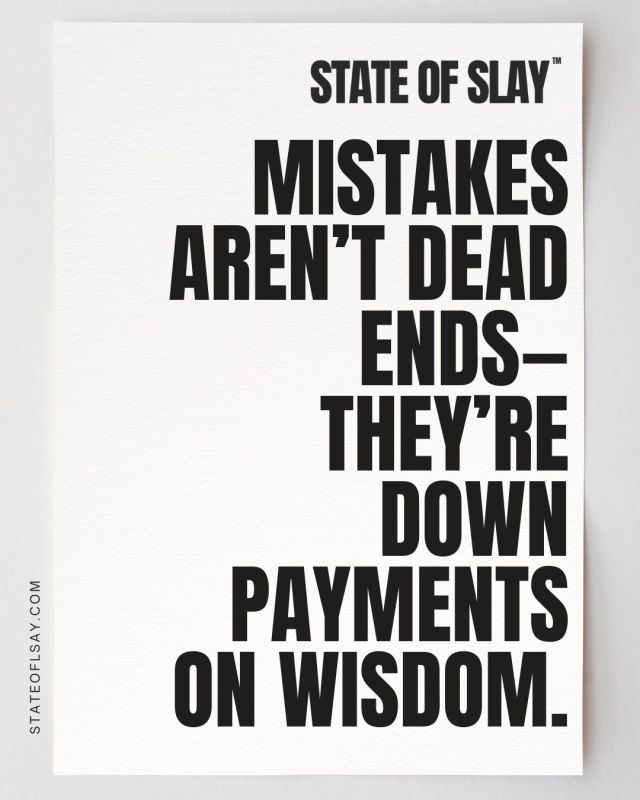
FALLING IS PART OF RISING

We often see failure as the enemy of success, when in reality, it’s the soil that growth springs from. Every mistake, stumble, or setback isn’t wasted—it plants something valuable inside you.

Those moments that feel like defeat are really shaping your resilience, sharpening your clarity, and preparing you for what comes next.

Instead of fearing failure, remember that it’s not the end of the journey. It’s simply one of the steps on the way up.

This is your reminder that setbacks are not roadblocks—they’re building blocks.

SLAY on!

Slay Say

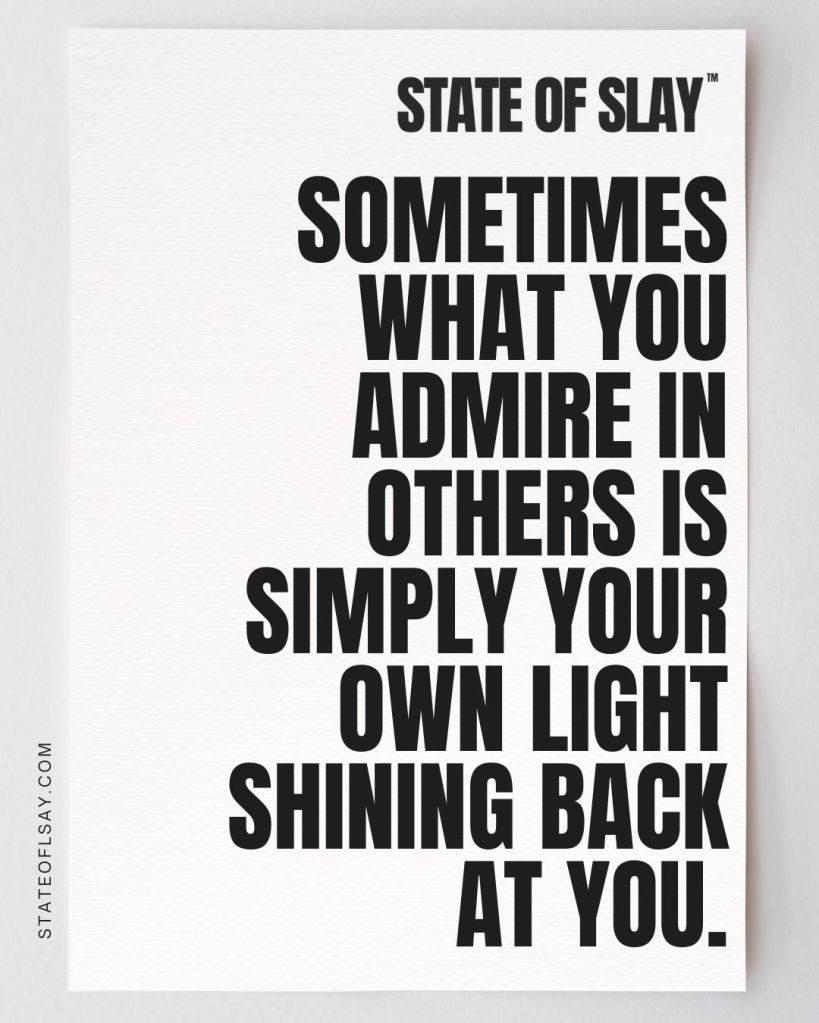
YOUR LIGHT REFLECTED

What we admire in others is often a mirror of what already lives within us. The kindness, courage, or strength you notice in someone else doesn’t just exist outside of you—it resonates because it’s also part of you.

Too often, we downplay our own gifts while lifting others up. But the truth is, the qualities you celebrate in them are not foreign—they are familiar. They’re reminders of your own capacity, your own light, your own power shining back at you.

Instead of seeing yourself as “less than,” see the reflection for what it is: proof that you, too, carry that same brilliance.

This is your reminder that what you see in others is also alive in you.

SLAY on!

Slay Say

The journey no one clapped for created the moment they celebrate

It’s easy to admire someone’s success without ever seeing the struggles that built it. People will clap for the glow, but they rarely acknowledge the fire it came from.

Behind every highlight is a hard-fought story—quiet battles, sleepless nights, doubts you had to silence, and resilience you had to grow. The truth is, the spotlight only shows the ending; it doesn’t reveal the shadows you walked through to get there.

Your journey matters, even if no one sees it. Every step, every scar, every setback you’ve overcome is part of the strength that makes your light shine.

This is your reminder to honor the path as much as the outcome.

SLAY on!

Temporary People Teach Us Permanent Lessons

We don’t always get to choose who comes into our lives—or how long they stay. Some people walk with us for a lifetime, others for only a season. And while temporary people may leave as quickly as they came, their impact often lingers.

Sometimes it’s beautiful. Sometimes it’s heartbreaking. But always—it’s instructive.

Because even the ones who don’t stay teach us something we carry forward. Temporary people leave permanent lessons.


The Pain of Goodbyes and the Gift They Leave Behind

When someone exits your life, it can feel like rejection, abandonment, or loss. You may replay every moment, wondering what you could have done differently to make them stay. But here’s the truth: their leaving isn’t always about you.

Temporary people teach us boundaries. They teach us what we will and will not accept.
They teach us value. Sometimes by showing us what we deserve—and sometimes by showing us what we don’t.

Not all lessons are gentle. But every lesson has purpose.


What Temporary People Reflect Back to Us

Every person who crosses our path acts as a mirror. Some reflect our best qualities back at us—reminding us of the love, kindness, or courage we already hold. Others reflect the wounds we still carry, highlighting the work that’s left undone.

If you’ve ever noticed how one relationship reveals your need for boundaries, while another pushes you toward forgiveness, that’s no accident. Temporary people show us where we’re growing, and where we’re still stuck.

Even the ones who hurt us—sometimes especially the ones who hurt us—end up guiding us toward our truth.


Not Everyone Is Meant to Stay

We live in a culture that glorifies “forever.” Forever friends. Forever love. Forever loyalty. But life doesn’t always work that way.

The truth is, some people are only meant to walk us part of the way. They show up for a chapter, not the whole book. And that’s okay.

Because their role is not to stay—it’s to move us forward. To give us the lesson, the shift, the wake-up call we couldn’t have gotten any other way.

When we cling to people who were only meant to be temporary, we rob ourselves of the lesson. When we let them go with gratitude, we keep the gift they came to bring.


Choosing Growth Over Grief

It’s natural to grieve when someone leaves. But we don’t have to get stuck in the story of what “could have been.”

Instead, we can ask:
What did I learn from this connection?
How did this person shift me?
What strength did I discover because of them?

Sometimes the hardest people to release leave behind the clearest lessons. They teach us self-respect. They teach us resilience. They teach us that we can survive the leaving—and even thrive after it.

You may not have chosen their exit, but you can choose what you carry forward.


SLAY Reflection

  1. Who in your past was only meant to be temporary, but taught you something lasting?
  2. What lesson are you still carrying from a relationship that didn’t last?
  3. Do you find yourself holding on to people who were never meant to stay? Why?
  4. How does it feel to shift from grief to gratitude when you think of temporary people?
  5. What permanent strength or wisdom do you have today because someone left?

S – See the role they played in your growth
L – Let go of what wasn’t meant to last
A – Acknowledge the lessons they gave you
Y – Yield to gratitude instead of grief


Call to Action: Join the Conversation

I’d love to hear from you.
Who was a “temporary person” in your life, and what permanent lesson did they leave behind?
Share your story in the comments. Let’s cheer each other on.

And if you know someone struggling to let go of someone who was never meant to stay, send this to them.
Sometimes, all we need is a reminder that even endings carry gifts.