
A Pickle Can’t Go Back To Being A Cucumber

There were so many times—when I was living in my darkness—that I wished I could turn back time. Every day felt heavier. My shame grew deeper, my self-hatred stronger, and my life more out of control. I remember wondering how I ended up in such a place, feeling trapped and defeated. And instead of taking action, I relied on wishful thinking, hoping things would magically return to the way they once were.

But as they say: a pickle can’t go back to being a cucumber.


You Can’t Go Back

Life moves forward, whether we do or not. Time doesn’t stop just because we’re stuck. We can’t undo the past, and we can’t relive the glory days we once knew. No amount of hoping, wishing, or romanticizing will turn back the clock.

What we can do is choose to grow from where we are now. We can become the best version of who we are today. We might not be able to go back to who we were before, but we can become someone even stronger—someone wiser, more resilient, and more alive because of what we’ve walked through.

When I stopped trying to return to the past and started showing up for the present, everything changed. I started building the life I wanted—not by undoing what was, but by creating what could be.


From Regret to Renewal

In the beginning, I had to learn how to be okay with discomfort. Letting go of the past and embracing the present wasn’t easy. I had to shift my mindset, stop reliving old memories, and set new goals for myself. I had to trust that I could heal, evolve, and become someone I hadn’t even imagined yet.

And you know what? I did.

Today, I live in forward motion. I know I can’t be who I was before, but I can be someone better. I’ve learned to love the journey—even when it’s messy. Because forward is the direction of growth. It’s where joy, healing, and new beginnings live.

We don’t need to be cucumbers again. We just need to be the best damn pickles we can be.

SLAY on.


SLAY Reflection: Embrace the Now

  • Do you spend time wishing for the past? Why?
  • What are you holding onto that’s keeping you stuck?
  • What parts of your past could you reframe as lessons?
  • What can you do today to move forward—just one step?
  • How might your life change if you focused on who you’re becoming, not who you used to be?

Call to Action: Join the Conversation

I’d love to hear from you.
What’s one way you can let go of the past and move forward today?
Share your story in the comments. Let’s cheer each other on.

And if you know someone who keeps looking back, send this to them.
Sometimes, all we need is a reminder that the best is yet to come.
Words Can Hurt And Words Can Heal

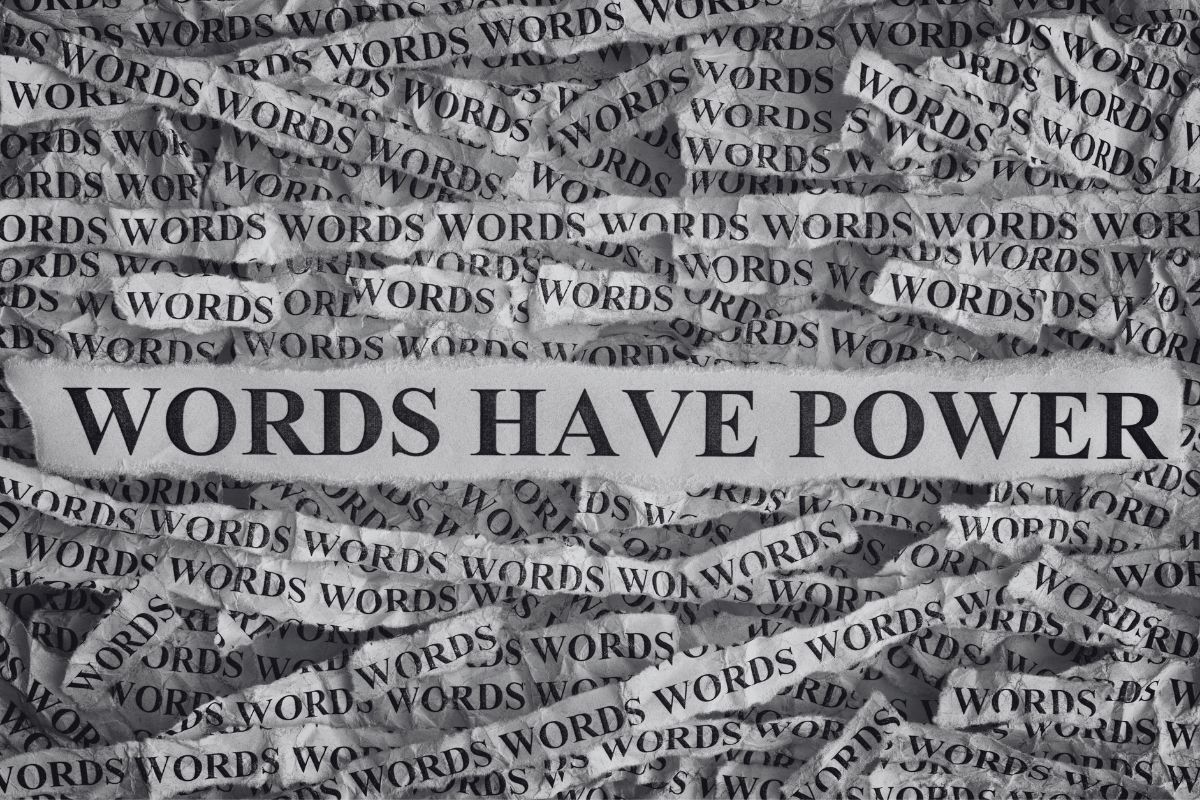
Words can build bridges.
Words can burn them down.

They can make someone feel seen, valued, loved—or they can tear open wounds that never fully heal. The truth is, words are some of the most powerful tools we have. And yet, many of us throw them around carelessly, forgetting that once spoken, they can’t be taken back.

We’re living in a world that feels more divided and reactive than ever. Which is why this matters so much: the way we speak—to others and to ourselves—matters. It always has. And it always will.


Prefer to listen? The Audio Blog version is available here.


The Language of My Past

Before I began walking this path, I used words as weapons.
I used them to hurt, to manipulate, to control the narrative.

Even more painfully, I used them on myself. Quietly. Cruelly. I would tell myself I wasn’t good enough, that I didn’t deserve love, that I was destined to fail. And those words? They stuck. They festered. They kept me small.

I remember being told early in my recovery that I had a barbed tongue. At the time, I almost wore it like a badge of honor—proof I could defend myself in any verbal battle. But really, I was just scared. I was always in fear. And fear made me lash out. It made me forget that love—real love—starts with what we say when no one else is listening.


The Way You Speak to Yourself Shapes Everything

If you wouldn’t say it to someone you love, why say it to yourself?

That was the question that changed everything for me. Because the truth is, we’re always listening to our own inner dialogue. And when we speak harshly to ourselves, our body, heart, and mind all take that in.

So I started small.
I started with one kind sentence a day.
Sometimes I didn’t believe it. Sometimes it felt fake.
But I kept going.

And eventually, those gentle words turned into something bigger: compassion. Forgiveness. Even love.

Speak Like It Matters—Because It Does

When I shifted the way I spoke to myself, something else changed: the way I spoke to others. And sometimes that was easier—giving kind words to others, even when I couldn’t give them to myself. But what I found is that the more kindness I gave away, the more I saw myself as someone capable of kindness. The cycle slowly started to shift.

Today, I try to ask myself before I speak:
Will these words hurt or heal?

That one question has the power to change a conversation. A relationship. A life. Let your words be the ones that bring light—not pain.

SLAY on.


SLAY OF THE DAY: Reflect & Rise

  • Do you pause before you speak, or do your words just pour out?
  • Have your words ever hurt someone you love? What happened?
  • How do you speak to yourself—especially when you’re struggling?
  • Can you remember a time when your words helped someone heal?
  • What would change if you made kindness your default language?

Call to Action: Join the Conversation
I’d love to hear from you.
What’s one small way you can use your words today to heal instead of hurt—either for yourself or someone else?
Share your story in the comments. Let’s cheer each other on.

And if you know someone who’s been hard on themselves lately, send this to them.
Sometimes, the right words come at the right time—and change everything.

We Accept The Love We Think We Deserve

For most of my life, I believed I was unlovable.

Not just hard to love—unworthy of it.

I didn’t like myself, let alone love myself, so when someone claimed to love me, I didn’t trust it. If someone’s love felt genuine, it made me uncomfortable. I feared they’d eventually discover the “ugly truth,” so I kept one foot out the door—just in case. Even after I began to learn how to love myself, I still accepted love that was far below what I knew I deserved.

Because deep down, I didn’t believe I could ever have the kind of love I truly wanted.

That belief kept me stuck in relationships that weren’t healthy. They weren’t safe. And they weren’t loving. But it was only through experiencing pure loveone grounded in mutual respect, connection, and emotional honesty—that I finally learned what I truly deserved.

And more importantly, I believed I could have it.


Love Begins Within

It’s hard to receive real love when you don’t feel it for yourself.

Sure, there are times we begin to heal through the way someone else sees us. But more often than not, if we don’t believe we’re worthy, we’ll sabotage anything good that comes our way.

To let love in, love has to live inside us first.

If fear, shame, or self-hatred are taking up residence, there’s no room for love to grow. Love doesn’t thrive where it’s unwelcome. But when we begin to care for ourselves, nurture our hearts, and see our worth, love becomes a natural extension of that inner work.

It becomes the lens we filter everything through.

If what we say, do, or allow in our lives doesn’t align with love—it has to go.


What We Accept Reflects What We Believe

When we truly love ourselves, we become more compassionate toward others. Our energy shifts from scarcity to abundance. From needing love to sharing it.

And the more love we put out, the more love finds us.

That kind of love? It’s not desperate or dependent. It’s full. It’s expansive. It shows up with open hands, not clenched fists. And when it arrives, we can receive it—not because we’re perfect, but because we’ve finally stopped questioning whether we deserve it.

You do.


You Are Love

There are many paths to love.

Sometimes we have to hit rock bottom to find our way back to it. Other times, we’re inspired by love we witness in others. But the more we cultivate and share love, the more it grows—and the more it sustains us when life gets hard.

Because love is more powerful than fear, shame, or anything trying to hold us back.

You are love at your core. That has always been true—even if you forgot for a while.

Feed that love. Honor it. Share it with someone who needs it today.

SLAY on.


SLAY OF THE DAY: Reflect & Rise

  • Do you love yourself? Why or why not?

  • If you do, what do you love most about yourself?

  • If not, what beliefs stand in your way?

  • What’s one small, loving thing you can do for yourself today?

  • What kind of love are you accepting right now—and is it aligned with what you deserve?

Start by naming one reason you’re lovable. Hold it in your heart. Add to it every day until you believe it.


Call to Action: Join the Conversation
I’d love to hear from you.
What helped you finally believe you were worthy of real love?
Share your story in the comments. Let’s cheer each other on.

And if you know someone who’s settling for less than they deserve, send this to them.
Sometimes, all we need is a reminder of who we truly are.

Everyone Wants to Change the World—But Are You Willing to Change Yourself?

There’s a lot of talk about change right now—and that’s a good thing.

Awareness is the first step. Conversation is the second. But here’s the truth I’ve learned:
Real change begins with you.

It starts with how you show up in your life.
How you treat yourself.
How you treat others.
What you contribute to your relationships, your community, your world.

And the most powerful change I’ve ever experienced didn’t come from trying to fix someone else—it came from the moment I stopped pointing fingers and started looking in the mirror.


It’s Not Them. It’s You.

Before I began this path of healing, my default was blame.
If something wasn’t working, it was your fault.
If I didn’t get what I wanted, it was because you messed up.

I lived in a constant state of resentment, convinced the world needed to change—never realizing I had the power to change my world by changing myself.

The truth? That mindset kept me stuck.

When we expect others to adjust for our comfort, we end up in a loop of frustration and disappointment. Change can’t be something we demand from others—it’s something we must embody.

That doesn’t mean other people don’t have room to grow. But it’s not our job to mold them.
It’s our job to decide who we are—and who we want to be in relationship with.


The Mirror Never Lies

Sometimes what bothers us most in someone else is something we haven’t fully healed in ourselves.
It’s like life holds up a mirror—and instead of facing what we see, we blame the reflection.

That’s the moment where growth begins.
That’s the invitation:
To stop reacting and start reflecting.

Even when there’s no direct mirror involved, change must come from the inside out.

If a dynamic no longer feels aligned, maybe you’ve outgrown it. That’s okay. Growth often means stepping out of what’s familiar and choosing what’s righteven if it’s uncomfortable.


Let the Ripple Begin With You

The most impactful changes I’ve made in my life didn’t happen because someone else demanded them.
They happened when I decided I wanted something better for myself.

And you know what?
When I changed, everything around me changed, too.

Relationships improved.
Boundaries became clearer.
Opportunities showed up that had never been possible before—because I wasn’t ready for them until then.

Change starts within.
And from there, it ripples out to everything—and everyone—around you.


SLAY OF THE DAY: What Needs to Change—In You?

  • Do you tend to look outside yourself when things feel off?

  • Have you waited for others to change while staying the same?

  • What’s one thing you’ve wanted to shift in your life—and what would it look like to begin that change within yourself?
  • When have you seen personal growth ripple outward into other areas of your life?

  • Who have you outgrown—and what might that say about the evolution you’re stepping into?

  • What’s one action you can take today to embody the change you want to see?


Call to Action: Join the Conversation

I’d love to hear from you.
What’s one way you’ve seen personal change impact the world around you?
Share your story in the comments. Let’s cheer each other on.

And if you know someone who’s been talking about change but unsure where to start, send this to them.
Sometimes, the most powerful shift happens the moment we turn inward.

We Are Not Meant To Be Perfect

I was scrolling through my social feed recently when a post from a friend stopped me in my tracks. She was being hard on herself—and calling herself out for it. That kind of self-awareness is powerful. But it also reminded me just how common it is for us to beat ourselves up for not being perfect.

For most of my life, I felt like I was less than. I believed everyone else had it easier, did it better, or simply was better than me. I didn’t just chase perfection—I punished myself for not catching it. And I know now, that wasn’t living. That was surviving under pressure I created for myself.

But here’s the truth I’ve learned along the way:

We are not meant to be perfect.


The Lie of “Perfection”

Perfection is a moving target. It’s shaped by the media, our upbringing, our culture—and our own inner critic. What’s “perfect” to one person might feel totally wrong to someone else. And yet, we often use it as a ruler to measure our worth.

I used to think if I could just do everything rightlook right, act right, succeed right—then I’d finally feel good about myself. But chasing perfection only left me feeling more broken. I saw my mistakes as failures instead of lessons. I saw my body as wrong because it didn’t match an airbrushed image I was never meant to emulate.

The beauty and fashion industries thrive on this illusion. As someone who has worked in that world, I can tell you firsthand: most of what you see has been digitally altered. The people in the photos don’t even look like that in real life. So why are we holding ourselves to impossible standards?


Your Imperfection Is Your Power

True growth happens in the mess. We learn through failure. We build strength through struggle. We connect through our flaws—not despite them, but because of them. And when we stop trying to be perfect, we start learning how to be authentic. That’s when the real magic begins.

What if you let go of the map you were handed and created your own version of “perfect”?
What if your quirks, your softness, your scars—what if those were the most beautiful parts of you?

They are.

When you love the things you can’t change—and commit to working on the things you can—you stop being at war with yourself. You start building a life you actually want to live.

Celebrate Who You Are

We’re all meant to be different. To stand out. To evolve.
So what if instead of chasing the illusion of perfection, you embraced the truth of who you are right now? What if you stopped waiting to feel worthy—and decided you already are?

That’s not weakness. That’s power. And it’s yours to claim.

SLAY on.


SLAY OF THE DAY: Reflect & Rise

Are you chasing an idea of perfection that’s keeping you from loving who you are today?

  • What does “perfect” mean to you—and where did that definition come from?

  • Do you speak kindly to yourself when you fall short, or do you criticize?

  • What parts of yourself do you struggle to accept? Can you reframe them with love?

  • What makes you uniquely you?

  • How can you start celebrating your journey instead of comparing it?


Call to Action: Join the Conversation

I’d love to hear from you.
What’s one way you can let go of perfection and embrace who you are right now?
Share your story in the comments. Let’s cheer each other on.

And if you know someone who’s been beating themselves up for not being perfect, send this to them.
Sometimes, the reminder we need most is that we’re enough—just as we are.

What Can You Do To Contribute To Life?

This is a question I ask myself every single day.

It’s the question that grounds me, guides me, and pushes me forward—especially on the days when I feel stuck. It’s what led me to start this blog years ago, and what continues to lead me through my recovery and beyond:

What can I contribute to life—today?

From Survival to Service

When I began my journey in recovery, I was surrounded by support—more than I expected, and more than I felt I deserved. I was told early on how important it was to give back. And I did. But it wasn’t until I survived a night I shouldn’t have that I truly understood what that meant.

That night changed everything.

Working through the survivor’s guilt was heavy. But eventually, I asked myself a new question—not why I survived, but how I was going to use that survival to make a difference. That shift pulled me out of guilt and into action.

Today, it’s still what gets me out of my own head. When I ask, “How can I be of service?”, I’m no longer obsessing over what I lack, who hurt me, or what I wish was different. I’m shifting my energy outward—into purpose, into connection, into change.

The Ego Step-Aside

When we approach our day with a heart of service, we get a powerful gift in return: perspective.

Instead of reacting out of ego or trying to control a situation that isn’t ours to fix, we can pause and ask, Is there a way I can contribute here? And sometimes, the answer is to step back. Not every contribution is loud. Sometimes it’s simply holding space, offering silence, or choosing not to escalate a moment that’s not about us.

That humility keeps us grounded. It keeps us teachable. And it reminds us that our greatest impact isn’t in being right—it’s in being present.

Why We’re Here

I believe we’re here to help each other.

To lift each other.
To challenge each other.
To remind each other what love and support feel like.

When we stay self-centered, we cut ourselves off from that connection. We lose the gift of being part of something bigger. But when we stay open to giving—whether it’s our time, our wisdom, or simply our kindness—we stay rooted in community, perspective, and purpose.

When you ask how you can contribute to life, life responds.

Even on our hardest days, we have something to offer. Something to give. A kindness to share. A light to pass along. And when we choose to shine that light outward, it often finds its way back to us—brighter than before.

SLAY on.


SLAY OF THE DAY: Reflect & Rise

Do you ask yourself what you can give, rather than what you need?

  • What do you do each day to contribute to the world around you?

  • If you don’t yet, what’s one small way you could start?

  • Have you noticed a shift in your mindset when you act in service?

  • How has giving back changed your life, your relationships, or your attitude?

  • What part of your story could help someone else feel seen or supported?

We’re not here to do life alone. Contribution connects us. Let’s start showing up—for each other.


Call to Action: Join the Conversation

I’d love to hear from you.
What’s one way you can contribute to life today—no matter how big or small?
Share your story in the comments. Let’s cheer each other on.

And if you know someone who’s feeling stuck or unmotivated, send this to them.
Sometimes, the shift we need is in simply asking a better question.

The Language Of The Heart

I was talking with someone recently about truth—
that raw, honest place inside where there are no walls, no masks, no pretending.
That space where we allow ourselves to be vulnerable enough to let our truth speak to someone else’s truth.

That, to me, is the language of the heart:
one heart speaking to another.


Before I Could Speak From the Heart

Before walking this path, I didn’t speak that language. I couldn’t.
I was too afraid to let anyone see the real me.

I believed vulnerability was weakness.
I was convinced that if you saw who I really was, you’d run.
So I kept my heart closed. I played roles. I wore masks.
I hid behind a version of myself I thought the world would accept.

But all that hiding left me feeling even more isolated. Even more alone.
And the more I suppressed my truth, the more painful it became to carry it.

It took a long time to let that fear go.
To open the door—even just a crack—and let the truth come through.


Surrender Is Where It Began

I had to surrender.
Admit that my way wasn’t working.
That my silence, my pretending, my performance—it was keeping me stuck. Sick.

That surrender became a turning point.
The moment I let go of control was the moment I took my power back.

From there, I was told something that has stayed with me:
You have to be rigorously honest if you want to get better.

No more pretending. No more hiding. No more playing small.

And that honesty? It wasn’t just about speaking truth to others.
It was about telling the truth to myself. Every day. Even when it felt uncomfortable. Even when it was messy.


The Power of Speaking From the Heart

The more I spoke from the heart, the more comfortable I became living in that truth.
And the more honest I was, the deeper my connections became.

But I won’t lie—it wasn’t always easy.
There were still times I held things back, thinking I wasn’t ready to let them go.
But each time I did, I felt the disconnection.
The space it created. The wall it built between me and the people who loved me.

Now, I know better.
When I’m not honest, I lose those connections.
I lose myself.

Honesty—heart-led honesty—is what keeps me aligned, connected, and free.


Your Truth Is Beautiful

It can feel scary to speak from the heart. To show someone your truth.
But that is the place where our most beautiful, powerful self lives.

Even when our truth is sad. Or messy. Or uncertain.
If it’s honest, it’s real.

And when we speak from that place, we give others permission to do the same.

So open your heart.
Speak your truth.
Let your light guide you—and light the way for someone else.

SLAY on.


SLAY OF THE DAY: Reflect & Rise

Do you speak your truth—or do you hide behind what you think others want to hear?

  • What fears keep you from being fully seen?

  • Are those fears yours—or were they passed down to you?

  • How has sharing your truth helped you or someone else?

  • What would it look like to speak more from your heart—today?

The language of the heart is honest, raw, and real.
When we speak it, we don’t just heal ourselves—we create space for others to heal, too.


Call to Action: Join the Conversation

I’d love to hear from you.
What helps you speak the language of your heart?
Share your story in the comments. Let’s cheer each other on.

And if you know someone who’s been afraid to share their truth, send this to them.
Sometimes, all we need is permission to be real.

Is It True, Is It Right, Is It Selfish, Is It Loving?

I was speaking with someone recently in recovery about something that was weighing heavily on my heart. I was stuck in my head, unsure what to do, and she gently asked me if I had run it through The Four Absolutes.

That gave me pause.

It had been a while since I’d thought about those—honesty, unselfishness, purity, and love.
She reminded me that those four questions are meant to help guide us in times of emotional confusion:

  • Is it true or false?

  • Is it right or wrong?

  • Is it selfish or unselfish?

  • Is it loving or unloving?

So, I did just that. I ran my situation through this filter. And what had felt so emotionally tangled began to make sense. The noise fell away, and I could finally see what mattered—and what didn’t.


When Feelings Take the Wheel

Before walking this path, I never questioned my feelings.
If I felt it, I believed it.
If I believed it, I acted on it—no pause, no reflection.

The problem? Feelings aren’t facts.

And when you let feelings run the show, especially feelings fueled by fear, pain, or ego, you can spiral down a path that leads to more chaos, not clarity.

That’s why these Four Absolutes matter. They strip away the fluff—
the defensiveness, the assumptions, the justifications—and leave only truth.

They allow us to pause before reacting.
They offer perspective.
And sometimes, they stop us in our tracks—before we say or do something we can’t take back.


Why the Pause Matters

These days, I try to run my emotions through this lens before I act.

  • Is it true?

  • Is it right?

  • Is it selfish?

  • Is it loving?

If I can’t answer those honestly, I pause.
If I can’t say yes to “Is it loving?”—I definitely pause.

That moment of stillness, of reflection, can be the difference between peace and regret.

And it’s not just about being kind to others.
It’s about being kind to ourselves.

Because we’re the ones who have to live with the aftermath of our actions. And when we move through life with intention, we create space for clarity, connection, and growth.


Pause. Reflect. Then Proceed.

In a world that often rushes us toward reaction, pausing is powerful.

Especially during stressful times—when everything feels heightened and emotions are raw—it’s even more important to approach life with intention and grace.

Lead with compassion.
Be passionate, yes.
But don’t let your passion cloud your perspective.

Let your response come from a place of truth, righteousness, selflessness, and love.

Ask yourself:
Is it true? Is it right? Is it selfish? Is it loving?
Then act—with clarity and care.

SLAY on.


SLAY OF THE DAY: Reflect & Rise

Do you pause before reacting—or do you tend to jump in headfirst?

  • What’s your typical emotional response when you’re triggered?

  • Have you ever reacted quickly and later realized your feelings were misdirected?

  • How could using the Four Absolutes have changed that outcome?

  • What tools or “safety nets” can you put in place to help you pause before reacting?

  • How can examining your feelings—rather than acting on them—help you grow?

When we respond from a grounded place, we create a ripple of calm in a chaotic world.
Let your next action reflect the best version of yourself.


Call to Action: Join the Conversation

I’d love to hear from you.
Have you ever used the Four Absolutes to guide a difficult decision?
Share your story in the comments. Let’s cheer each other on.

And if you know someone who could use a moment to pause and reflect—send this their way.
Sometimes, all it takes is a question to shift our perspective.

Find Your OK Without Giving Away Your Power

We all want people, places, and things to go our way.
We imagine how life should look, how others should act—and when things don’t line up with that vision, we get unsettled.
Sometimes we unravel.

But here’s the truth:
If you need someone else to act a certain way so you can be OK… you’ve given away your power.

We cannot control the world around us.
We can only control how we show up in it.


Control, Acceptance, and That False Sense of Safety

Back when I was living in the dark—emotionally, mentally, spiritually—my life felt completely unmanageable. I was spiraling, yet I still expected everything around me to bend in my favor. If things didn’t go how I wanted, I panicked. If people didn’t say or do what I thought they should, I spun out.

So I tried to control what I couldn’t:
People.
Places.
Situations.
Emotions.
Outcomes.

Spoiler: It never worked.
And it only made me feel worse.

When we tether our mental wellness to the actions of others, we’re setting ourselves up for disappointment, resentment, and chaos. True stability doesn’t come from control—it comes from acceptance.


Pause. Then Take Right Action.

Today, when I feel disturbed, I pause.

I ask myself:

  • What’s actually going on?

  • What do I need to do for me?

  • Is there any action to take?

  • Or is this something I need to let go?

That pause is everything.

Because if I haven’t checked in with myself—if I haven’t done the inner work first—any action I take outwardly might come from fear, ego, or unmet expectations.

Feelings aren’t facts.
And reactions aren’t always truth.

I’ve learned that when I find my center—when I root myself in clarity and self-love—I no longer need everyone else to behave a certain way for me to be OK.
I become OK because I’ve chosen to be.


You Are Not the Center of the Universe (And That’s a Good Thing)

Sometimes we resist change because it feels personal.
Unfair.
Uncomfortable.

But growth rarely happens in comfort.
And what doesn’t feel good in the moment might be the very shift that leads to a better outcome—not just for us, but for the collective.

That’s humbling.

We’re not the center of the universe—but we are a part of something bigger. And when we stop trying to bend life to our will, we open ourselves up to learning, connection, and peace.


Your Peace Is Your Responsibility

Here’s what I know:
No one else is responsible for your OK.

Not your partner.
Not your friends.
Not your boss.
Not your timeline.
Not your past.

You are.

When we find peace within ourselves, the chaos around us loses its power. We stop being reactive. We become responsive. We make room for grace. For learning. For love.

So don’t hand over your peace to anyone else.
Take it back.
Hold it close.
Let that be your anchor.

SLAY on.


SLAY OF THE DAY: Reflect & Rise

Do you need others to act a certain way for you to feel OK?

  • How does that show up in your life?

  • Where do you think that need comes from?

  • How has that pursuit held you back or caused pain?

  • What could shift if you found your OK within yourself?

  • What practices help you find peace regardless of what’s happening around you?

Let go of the grip. Let in the grace. Find your center—then carry it with you, wherever you go.


Call to Action: Join the Conversation

I’d love to hear from you.
How have you learned to find peace within yourself—especially when life around you is messy?
Share your story in the comments. Let’s cheer each other on.

And if you know someone who’s struggling to feel OK in a world they can’t control, send this their way.
Sometimes, we all need the reminder that we already have what we need inside us.

Rest and Digest: The Power of the Pause

There was a time in my life when I reacted to everything.

Fast. Defensive. Ready to pounce.

I lived in constant fight or flight mode—responding not from thought, but from fear. It felt like life was a game show, and I had to buzz in before the question was even finished. But spoiler alert: there was no prize behind door number two. Just more stress, more chaos, and more regret.

I wasn’t resting.
I wasn’t digesting.
I was just surviving.


Living on the Edge (and Not in a Good Way)

Before I started walking this path of healing, I had no self-care. No grounding. No pause. I was always “on.” And that always-on state pushed me into situations where I wasn’t proud of how I showed up. I wanted to be right. I wanted to win. And I never stopped to ask myself if being right was worth the cost of peace—or relationships.

I’ve written before about the power of the pause, and I’ll say it again here:
That pause saved me.
It taught me to breathe.
To reflect.
To choose differently.


Response Over Reaction

In recovery, I had to retrain my brain. I made a commitment to myself:

  • Don’t act right away.

  • Don’t respond just to fill the silence.

  • Don’t feel pressured to have the answer right now.

I started saying things like,

“Let me think about that.”
“I need to check in with myself.”
“Can I get back to you?”

Those phrases were a revelation.
Because life is not a game show—there’s no buzzer, no penalty for taking your time.
In fact, slowing down is often how we win.


Self-Care Creates Space

Making rest and nourishment a priority changed everything for me.

When I’m rested, fed, and grounded, I don’t jump into the fire—I assess the flames. I choose how I want to show up. I give myself the chance to respond instead of react.

And when I pause, I listen better. I learn more. I catch myself before I repeat an old pattern.

Reacting is living in the past.
Responding is choosing from the present.


When the World Feels Like Too Much

We’re living in challenging times. The news is overwhelming. Emotions are high. People are hurting.
But when everything feels loud and urgent, that’s exactly when we need to rest and digest.

We may not be able to control what’s happening around us—but we can absolutely control how we move through it. We can hit pause. We can take care of ourselves. And we can choose to respond from a place of calm, compassion, and clarity.

That’s how we move forward. Together.

SLAY on.


SLAY OF THE DAY: Reflect & Rise

Do you find yourself reacting before fully thinking things through?

  • Why do you think you do that?

  • How has it affected your relationships or peace of mind?

  • Have you ever regretted jumping in too quickly? Did you make amends—or avoid it?

  • How do you feel when you think back on those moments?

  • What would pausing look like for you?

  • How can you begin to practice rest and reflection before action?

Take a breath, SLAYER.
Let your calm lead the way.


Call to Action: Join the Conversation

I’d love to hear from you.
What helps you pause when life feels overwhelming?
Share your story in the comments. Let’s cheer each other on.

And if you know someone who tends to react fast and regret later, send this to them.
Sometimes, we all need a gentle reminder that the pause is where the peace lives.