Slay Say

Where You Stand, You Belong

Imposter syndrome whispers that you’re lucky to be here—
but luck didn’t build the path beneath your feet.

You did.

Every risk you took, every doubt you silenced,
every time you showed up scared but still showed up—
that’s what opened the door.

You earned your place.
You belong in every space your growth has brought you to.

The room didn’t make you worthy.
Your courage did.

This is your reminder to stop questioning your seat at the table
and start owning the strength that got you there.

Slay on!

Breaking the Cycle: Healing Generational Trauma

Generational trauma doesn’t start with you, but healing it can.

It’s the invisible thread that ties generations together — a quiet inheritance of pain, shame, and survival patterns passed down like heirlooms. You may not have been there for the original wound, but its effects can still live in your body, your beliefs, and the way you love.

It shows up in how you react under pressure, how you handle conflict, how you view yourself, and even how you parent or partner.
It’s the anger that comes from nowhere. The fear that feels too big for the situation. The exhaustion that no amount of rest seems to fix.

Generational trauma teaches us to survive, not to thrive.
But survival isn’t the same as living.


The Inheritance You Didn’t Ask For

Many of us were born into families that did their best with what they had — but what they had wasn’t always enough. They carried their own unhealed wounds: poverty, addiction, loss, war, oppression, or abuse. Instead of processing those experiences, they buried them, and the patterns took root.

Maybe your family believed that talking about emotions was weakness.
Maybe affection was rare, or love was conditional.
Maybe silence became the language of safety.

Even if the trauma wasn’t spoken about, it was felt. Children absorb what isn’t said — the tension in the room, the fear behind the laughter, the energy that says something is wrong even when the words say otherwise.
And over time, those unspoken wounds become part of our identity.

We mistake survival patterns for personality traits.
We call anxiety “being responsible.”
We call hypervigilance “being careful.”
We call people-pleasing “being kind.”

But beneath all of that is a nervous system that has learned to live on alert — waiting for something that may never come.


The Body Keeps the Score

Generational trauma isn’t just emotional — it’s biological.
Science shows that trauma can change gene expression through a process called epigenetics. That means the stress responses your grandparents experienced can influence how your body responds to stress today.

It’s not just in your head — it’s in your DNA.

That’s why certain family patterns repeat: the same type of relationships, the same self-sabotage, the same fear of failure or intimacy. These patterns aren’t coincidences; they’re learned responses to survival.

But here’s the good news: what’s learned can be unlearned.

Your body and mind can heal. Your story can change.


You Are the Pattern Breaker

When you start doing the work — therapy, mindfulness, self-reflection, boundaries — you’re not just healing yourself. You’re healing everyone who came before you and everyone who will come after.

That’s the weight and beauty of being the first.

You may be the first in your family to go to therapy.
The first to apologize instead of explode.
The first to say, “I need help.”
The first to choose love over fear.

And that can feel lonely. Because when you stop participating in dysfunction, it can look like betrayal to those still trapped in it.
But what you’re really doing is freeing everyone — even the ones who don’t understand it yet.

Healing is not rebellion. It’s reclamation.


Breaking Patterns Takes Courage

Healing generational trauma means facing what your ancestors couldn’t. It’s looking at the pain that’s been avoided for decades and saying, It ends with me.

That takes courage — and compassion.

You can honor your family without repeating their patterns. You can love them and still create distance when you need safety. You can forgive them without pretending what happened was okay.
Forgiveness doesn’t mean forgetting — it means freeing yourself from carrying what isn’t yours to hold.

The truth is, many of the people who hurt you were hurting too. They passed down what they knew. And maybe what they knew was pain.

By choosing healing, you’re rewriting that story.


How to Begin Healing Generational Trauma

1. Acknowledge What Was Passed Down
You can’t heal what you refuse to name. Start by identifying the patterns that repeat: emotional suppression, perfectionism, codependency, control, or addiction. Awareness is the first act of liberation.

2. Separate What’s Yours from What’s Theirs
Ask yourself: Is this reaction mine, or does it belong to someone else’s pain? Many of our fears are inherited — they were once protective, but now they’re limiting. You don’t have to carry them anymore.

3. Allow Yourself to Feel
What your parents or grandparents couldn’t express, you can. Crying, grieving, and expressing anger are not weakness — they are releases. Feeling is not failure. It’s freedom.

4. Create New Patterns
Set boundaries. Speak your truth. Rest when your ancestors couldn’t.
Every time you do something different, you’re reprogramming your nervous system and teaching future generations a new way to live.

5. Seek Support
You don’t have to heal alone. Therapy, somatic work, journaling, and community all help rewire the mind and body. Support gives your healing structure.


You Are the Bridge Between What Was and What Can Be

Generational trauma may have shaped you — but it doesn’t define you.
You are the living proof that the story can change.

You are the bridge between what was and what will be.
And when you choose healing, that bridge leads to peace.

You are not broken. You are breaking free.


SLAY Reflection

  1. What family patterns have you noticed repeating in your life?
  2. How have those patterns shaped the way you see yourself or others?
  3. What’s one survival behavior you’re ready to release?
  4. How can you show compassion for your past without living in it?
  5. What new pattern do you want to create for the generations after you?

  • S – See the inherited patterns clearly
  • L – Let go of what isn’t yours to carry
  • A – Actively choose healing over repetition
  • Y – Yield to transformation and break the cycle

Call to Action: Join the Conversation

I’d love to hear from you.
What generational pattern have you broken — or are working to break?
Share your story in the comments. Let’s cheer each other on.

And if you know someone who’s ready to heal their family story, send this to them.
Sometimes, the first step toward freedom is realizing you’re not alone.

#SlayOn

Pursue Yourself and the Path Will Appear

If you’ve ever felt lost, stuck, or unsure of what direction to take in life—you’re not alone. There are moments when the map feels blank, when every option looks uncertain, and when “figuring it out” feels impossible.

But here’s the truth: you don’t have to know your destination to start moving forward.

When you pursue yourself—your healing, your peace, your growth—the path meant for you begins to reveal itself.


You Are the Compass

So many of us chase what we think will make us happy: success, validation, love, security. We look for purpose in jobs, people, or achievements, hoping something external will give us direction.

But purpose doesn’t exist out there. It begins within.

When you take the time to know yourself—to really listen, explore, and nurture who you are—you start to see what lights you up, what drains you, and what truly feels aligned.

That awareness is your internal compass. The more you pursue yourself, the clearer your direction becomes.

You can’t follow the wrong path if you’re following your truth.


Stop Searching, Start Becoming

When you stop frantically searching for the next step and start becoming the person you’re meant to be, your life naturally begins to align.

Every lesson, loss, and detour starts to make sense. The puzzle pieces of your story start fitting together—not because you forced them, but because you became ready for them.

You don’t need to chase opportunities when you become the kind of person who attracts them.

You don’t need to beg for love when you embody the kind of love that draws it in.

And you don’t need to have every answer when you’re living as the most authentic version of yourself.


The Power of Stillness

Sometimes the reason we can’t find our path is because we’re too busy running. We fill our calendars, our minds, and our hearts with noise—hoping to outrun uncertainty.

But clarity comes in stillness.

When you pause long enough to hear your own thoughts, you’ll discover that your intuition has been whispering the answers all along.

What if the purpose you’ve been searching for has been waiting for you to slow down and listen?


Be Patient with Becoming

Growth doesn’t follow a timeline. It doesn’t unfold on demand. It happens quietly, in the background, while you’re learning, falling, healing, and trying again.

When you invest in knowing yourself—through journaling, therapy, reflection, or prayer—you begin to uncover the layers of who you are beneath the expectations and fears.

And one day, you’ll look back and realize: you’ve been walking your path all along.

You didn’t find it.
You became it.


SLAY Reflection

  1. Where in your life do you feel lost or unsure right now?
  2. How often do you pause to ask yourself what you really want—not what’s expected of you?
  3. What parts of yourself have you been neglecting while searching for purpose?
  4. What does pursuing yourself look like in this season of your life?
  5. How might the right path reveal itself if you stop forcing and start trusting?

S – Slow down enough to hear your inner voice
L – Let go of the need to know every step ahead
A – Align with what feels true to you right now
Y – Yield to your own evolution and trust the journey


Call to Action: Join the Conversation

I’d love to hear from you.
What shifted when you stopped chasing and started pursuing yourself?
Share your story in the comments. Let’s cheer each other on.

And if you know someone who feels lost or uncertain about their direction, send this to them.
Sometimes, all we need is permission to slow down and listen.

You Don’t Outgrow People, You Outgrow the Version of You Who Chose Them

There comes a moment in life when you look around and realize some of the people who once felt like home no longer fit. Conversations feel different. Energy feels heavier. The connection feels strained or forced.

It’s easy to assume that means you’ve outgrown them—but often, what’s really happened is that you’ve outgrown the version of yourself who chose them.

The friends, partners, or even family members you once aligned with matched a specific stage of your evolution. They reflected your wounds, your needs, your patterns, and the beliefs you held about yourself at that time. But as you heal, grow, and redefine who you are, those old reflections no longer fit the new version of you.

That’s not betrayal. That’s growth.


The Mirror of Who You Were

Every person you’ve ever connected with was, in some way, a reflection of your state of being.

When I look back on the people I surrounded myself with during some of my darkest times, they mirrored exactly where I was: lost, seeking validation, people-pleasing, or trying to fill a void with distraction instead of truth.

Those relationships weren’t wrong—they were teachers. They held up a mirror to who I was, helping me see the parts of myself that needed to evolve.

And when I did evolve—when I started setting boundaries, speaking my truth, and prioritizing peace over chaos—it’s no wonder some of those relationships fell away. They weren’t meant to walk with the healed version of me.

You can love someone deeply and still outgrow the person you were when you met them.


Growth Doesn’t Require Guilt

Outgrowing people is one of the most painful—and most freeing—parts of becoming who you’re meant to be.

We tell ourselves that letting go means we’ve failed, abandoned, or betrayed the bond. But the truth is, we can honor what someone brought into our lives without needing to keep them there forever.

Growth asks you to release guilt and step into gratitude. To thank the version of yourself that needed them—and then thank the version of yourself that’s strong enough to move forward.

You don’t owe anyone a lifetime seat in your story just because they showed up in an earlier chapter.


Honoring the Evolution

Here’s the beautiful thing: when you stop clinging to relationships that no longer fit, you make space for connections that align with who you’ve become.

When you choose authenticity over obligation, you’ll attract people who see the real you—the one who’s done the work, who’s healing, who’s learning, who’s free.

Not everyone is meant to grow beside you. Some were meant to help you begin the journey. And that’s okay. You can love them, wish them well, and still continue on your path.

Growth doesn’t erase love. It just transforms it.


SLAY Reflection

  1. Who in your life represents an old version of you?
  2. How have your needs and values changed since you first connected?
  3. What emotions come up when you think about letting go of relationships that no longer align?
  4. How can you honor what they taught you while still moving forward?
  5. What kind of energy or people do you want to attract into your life now?

  • S – See who you’ve become with honesty and love
  • L – Let go of relationships that reflect your past pain
  • A – Align yourself with those who match your growth
  • Y – Yield to your evolution and trust the timing of connection

Call to Action: Join the Conversation

I’d love to hear from you.
Who have you outgrown—and what did that teach you about yourself?
Share your story in the comments. Let’s cheer each other on.

And if you know someone who’s struggling to release what no longer fits, send this to them.
Sometimes, all we need is permission to grow.

Slay Say

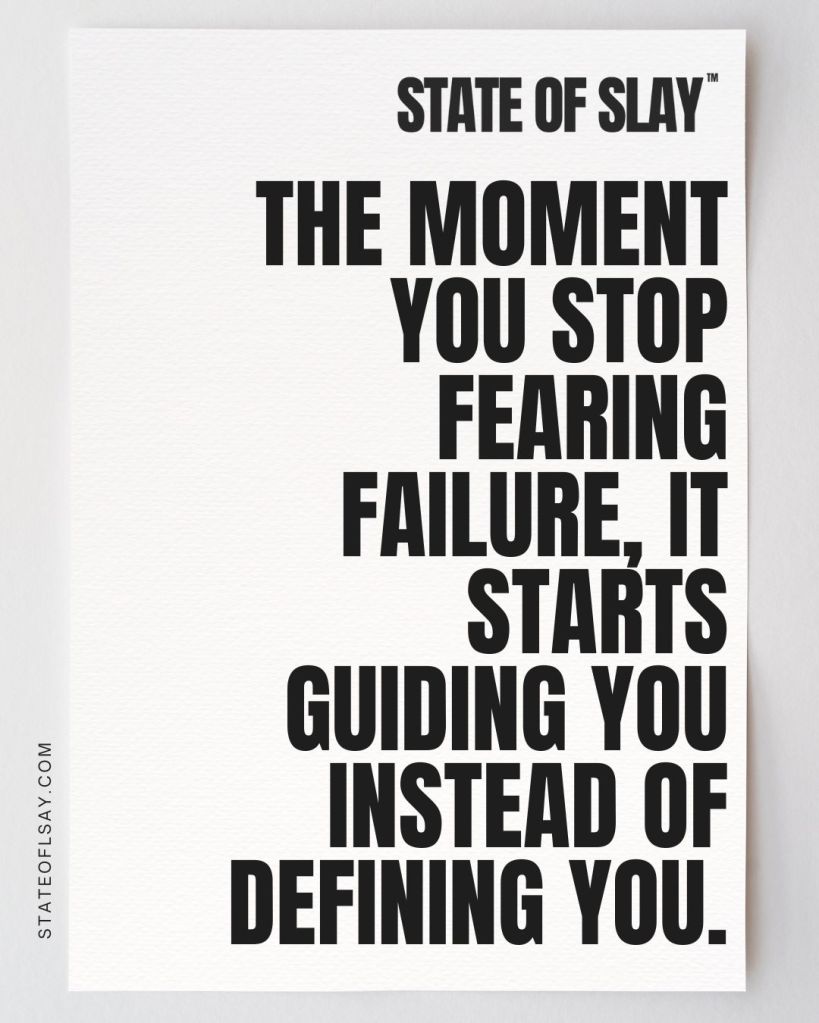
Let Failure Guide You, Not Define You

Failure is inevitable—but how we interpret it determines what it becomes. When we see failure as proof that we’re not enough, it defeats us. But when we see it as guidance, it strengthens us.

Every misstep offers direction. Every setback points toward growth. The path may not look how you imagined, but it’s still leading you somewhere valuable.

This is your reminder that the detour is not the end of the road. It’s the map showing you another way forward.

SLAY on!

Tell Your Brain the Kind of Day You’re Going to Have

Have you ever noticed how your mornings set the tone for everything that follows? The moment you wake up, before your feet even hit the floor, your brain is already scanning for cues about what kind of day it’s going to be. And here’s the truth: what you tell your brain, your brain will look for.

That means if you wake up thinking, Ugh, this is going to be a hard day, your brain will search for every piece of evidence to confirm it. If you start the day with, I’m choosing peace today, your brain will find moments to validate that choice.

Your mindset is like a compass—point it in one direction, and your day will naturally start aligning with it. The question is, are you pointing it toward chaos or calm? Toward frustration or gratitude? Toward fear or courage?


Your Brain Believes What You Feed It

Here’s what’s fascinating: our brains are designed with something called the reticular activating system (RAS). It acts like a filter, deciding what gets your attention. When you tell your brain to focus on something—whether consciously or unconsciously—it scans your environment to find it.

Think of it like when you buy a new car, and suddenly you start seeing that same make and model everywhere. It’s not that the cars weren’t there before—it’s that your brain is now wired to notice them.

Your thoughts work the same way.

If you tell yourself, This meeting is going to be a disaster, your brain will notice every sigh, every side-eye, and every awkward silence. If you tell yourself, I can handle this with grace, your brain will pick up on the support, the nods, the opportunities to speak with confidence.

This is why starting your day with intentional thoughts is so powerful. Your brain is always listening.


The Power of Morning Scripts

The way you script your morning can shift everything. Here are some examples:

  • Instead of: Today’s going to be so stressful.
    Try: Today I’m choosing peace, no matter what comes my way.
  • Instead of: I’m so tired, this day is going to drag.
    Try: I have enough energy to handle what matters most today.
  • Instead of: Nobody respects me at work.
    Try: I respect myself, and I show up in a way that earns respect.

These aren’t empty affirmations. They are instructions for your brain. And when your brain has instructions, it follows them.


Frustration, Stress, and the Choice We Overlook

Life is going to throw things at you—that’s not optional. Someone cuts you off in traffic, a coworker sends a passive-aggressive email, your plans get derailed.

But here’s the key: those external things don’t decide the quality of your day. You do.

The outside world can invite you to be upset, but you are the one who accepts or declines that invitation.

When you catch yourself spiraling into negativity, pause and ask:
What did I just tell my brain about this moment? Did I tell it to look for the worst, or did I give it something else to notice?

It’s in those pauses that power lives.


Rewiring Takes Practice

If you’ve spent years waking up dreading the day or rehearsing worst-case scenarios, it’s going to take practice to redirect that thought pattern. And that’s okay.

Every time you catch yourself choosing the old script—This is going to be awful—and instead replace it with a new one—I’ve handled worse, and I will handle this too—you are literally rewiring your brain.

The more you do it, the easier it gets. Eventually, your default setting changes. Instead of your brain scanning for stress, it starts scanning for strength. Instead of looking for failure, it starts looking for possibility.


Tell Your Brain Where to Go

Think of your brain like a GPS. If you program it with the wrong address, you’ll end up somewhere you don’t want to be. But when you give it the right directions, it will get you closer to where you want to go.

So before you argue with someone, before you step into that meeting, before you check your email—set the address.

Tell your brain:

  • I’m going to stay calm.
  • I’m going to choose compassion.
  • I’m going to focus on solutions, not problems.

And watch how your day reroutes to align with it.


SLAY Reflection

  1. What’s the first thought you usually have when you wake up? Does it serve you or sabotage you?
  2. How often do you give your brain negative instructions without realizing it?
  3. What would it feel like to intentionally start your day with a thought that empowers you?
  4. When was the last time you caught yourself spiraling, and what did you do to redirect it?
  5. What’s one phrase you can start telling yourself tomorrow morning to shift your entire day?

S – Script your mornings with intentional thoughts
L – Let your brain look for evidence that supports your peace
A – Align your mindset with the day you want to create
Y – Yield to positivity and refuse to accept the invitation to chaos


Call to Action: Join the Conversation

I’d love to hear from you.
What’s the phrase you tell yourself that shifts the entire direction of your day?
Share your story in the comments. Let’s cheer each other on.

And if you know someone who’s stuck in negative loops, send this to them.
Sometimes, all we need is a reminder that our brains believe what we tell them.

Slay Say

Speak Even If Not Everyone Listens

Not everyone will understand your truth. Some may dismiss it, ignore it, or even resist it. But that doesn’t mean your voice has no value.

Your words will find their way to the ones who are ready to hear them, the ones who need the reminder, the encouragement, or the strength your voice carries.

This is your reminder that silence serves no one. Keep speaking. Keep sharing. Your voice will reach the hearts it was meant for.

Slay on!

Frustration Is an Invitation You Don’t Have to Accept

We all know the feeling—traffic that doesn’t move, a conversation that goes sideways, a plan that unravels in real time. Frustration builds, and before you know it, you’re simmering in anger, irritation, or resentment.

But here’s the truth that changed everything for me: frustration is always self-induced.

The outside world can invite us to be upset, yes—but we are the ones who accept the invitation.

When I first heard this idea, I bristled. Surely the rude driver, the unfair boss, the inattentive friend—they were the source of my frustration. But as I dug deeper, I realized the common denominator in every moment of anger was me. I was the one choosing to hold onto the irritation, the one letting it hijack my energy, the one letting the external world dictate my internal peace.

And that was the moment I understood: I can’t always control what happens, but I can always control whether or not I RSVP to frustration’s invitation.


The Hidden Cost of Accepting the Invitation

Frustration feels powerful in the moment. It gives us something to cling to, a sense of being “right,” or even righteous. But that power is fleeting, and the cost is high.

Every time we accept frustration’s invitation, we:

  • Drain our energy on things that don’t serve us.
  • Poison our mood, often for hours or days after the fact.
  • Damage relationships by reacting instead of responding.
  • Distract ourselves from solutions by obsessing over problems.

When I look back at my own life, I see how many days I lost this way—days spent stewing instead of living, days consumed by anger that did nothing but make me miserable. And all of it was preventable.

The truth? Frustration doesn’t come from what happened. It comes from the story we tell ourselves about what happened.


Pause Before You RSVP

The good news is that frustration is optional. Just because you’re invited doesn’t mean you have to attend.

Here’s what I practice today:

  1. Notice the rise. That heat in my chest, that quickening of my thoughts—I know frustration is knocking.
  2. Ask: Is this worth my peace? Nine times out of ten, the answer is no.
  3. Choose my response. Instead of spiraling, I take a breath. Sometimes I literally step away. Sometimes I laugh at how small the trigger really is. Sometimes I pray.
  4. Reframe. Instead of “Why is this happening to me?” I ask, “What is this showing me?” That shift turns frustration into information.

When I don’t RSVP to the invitation, I keep my power. I keep my peace. And I remember: the world doesn’t get to run my emotions—I do.


Frustration Reveals What We Value

Here’s the part most people miss: frustration isn’t all bad. It’s actually a teacher, if we’re willing to listen.

Frustration shows us what matters to us, what we expect, what boundaries may need adjusting. For example:

  • If traffic frustrates me, maybe it’s not about the cars—it’s about my lack of preparation or my need for control.
  • If someone interrupts me and I feel rage, maybe it’s pointing me to a wound around not feeling heard.
  • If I’m furious that a plan changed, maybe it’s about my deeper need for certainty and security.

When I stop blaming the outside world and start looking inward, frustration becomes less of a punishment and more of a flashlight.

It shines a light on the gap between my expectations and reality—and that’s where my work begins.


Choosing Peace Over Frustration

It’s not about denying your feelings. It’s about remembering that frustration is optional. You always have another choice:

  • You can let go. Not everything deserves a reaction.
  • You can laugh. Humor disarms frustration in a heartbeat.
  • You can learn. Ask what this moment is teaching you.
  • You can move on. Protect your energy by refusing to give it away.

When I practice this, I notice how much lighter my days feel. I have more energy for the things that actually matter. And maybe most importantly, I stop letting other people’s behavior write the story of my day.

Because at the end of the day, frustration is a story. And you get to decide whether or not you keep telling it.


Frustration Will Knock Again—Be Ready

Don’t get me wrong—I still get frustrated. I’m human. But now, instead of automatically reacting, I pause and ask myself:

Am I about to accept an invitation to frustration? Or am I going to choose peace instead?

That moment of awareness has changed my life. It’s not always easy, but it’s always worth it.

Frustration may knock, but peace is the one I let in.


SLAY Reflection

  1. What situations frustrate you most often?
  2. What expectations lie beneath that frustration?
  3. Can you trace your frustration back to an old story, wound, or belief?
  4. How does your day feel different when you choose not to engage with frustration?
  5. What’s one way you can practice pausing before accepting frustration’s “invitation” this week?

S – Stop and notice when frustration rises
L – Let go of the need to control what you can’t
A – Align your response with peace, not anger
Y – Yield to wisdom, not to the story frustration tells


Call to Action: Join the Conversation

I’d love to hear from you.
What’s one frustration you’ve learned to stop accepting—and how did it free you?
Share your story in the comments. Let’s cheer each other on.

And if you know someone who feels constantly hijacked by frustration, send this to them.
Sometimes, all we need is a reminder that peace is always a choice.

I Heal Out Loud Because I Nearly Died in Silence

Silence almost killed me.

For years, I bottled everything inside—pain, fear, shame, grief, anger—because I thought speaking it out loud would make me weak, unworthy, or too much. I believed that my feelings were a burden, that no one wanted to hear the truth, and that the safest way to exist was behind a mask.

But here’s the thing about silence: it doesn’t protect you—it suffocates you.

When we swallow our pain instead of releasing it, it eats away at us. The secrets, the shame, the unspoken words—they pile up until they feel unbearable. And for me, they almost were.

That’s why today, I heal out loud. Because staying silent nearly cost me everything.


The Danger of Silent Suffering

We live in a culture that often rewards keeping it together. Smile when you’re breaking inside. Say you’re fine when you’re anything but. Push through no matter how heavy the weight.

I wore that mask for years. I said yes when I wanted to say no. I smiled when I wanted to scream. I denied myself the very human right to feel, because I thought silence kept me safe.

But silence didn’t keep me safe—it made me sick. It fed my depression, deepened my shame, and convinced me that I was alone. And when you believe you’re alone, hopelessness creeps in. That’s a dangerous place to live.

Unspoken pain doesn’t disappear—it festers. And the more we bury it, the more it convinces us we don’t deserve light.


Why Healing Out Loud Matters

Healing out loud doesn’t mean sharing every detail of your life with the world. It doesn’t mean turning your pain into a performance.

It means refusing to carry it alone anymore. It means telling the truth—to yourself, to someone you trust, to a community that understands.

For me, healing out loud started with small steps: admitting to a friend that I wasn’t okay, reaching out for help, speaking the words I had locked away for so long. Each time I spoke, the silence lost some of its power.

When you voice your truth, you cut shame off at the knees. Shame can’t survive in the light.

And as I began to heal out loud, something unexpected happened: people leaned in. They said, “Me too.” They shared their own stories. They told me I wasn’t alone.


The Power of Vulnerability

We think silence makes us strong, but real strength comes from vulnerability.

It takes courage to say: I’m hurting. I’m scared. I need help.

And yet, that’s where transformation begins. Vulnerability is not weakness—it’s the bridge to connection, compassion, and healing.

I learned that my silence kept people out, but my vulnerability drew them close. It built trust. It created bonds rooted in honesty instead of performance. And it allowed me to step into the fullness of who I am—messy, imperfect, human, but alive.

Healing out loud is how we reclaim our power from the very things that tried to silence us.


From Surviving to Thriving

The shift from silent suffering to speaking my truth didn’t happen overnight. It was clumsy, scary, and uncomfortable. But every time I let the words out, I felt a little lighter.

And slowly, my healing turned into living.

I stopped existing just to survive the day. I started building a life rooted in truth, love, and connection. I surrounded myself with people who could hold space for my story without judgment. And I realized that sharing my voice not only saved me—it helped others too.

Because when you heal out loud, you give others permission to do the same. You become a mirror that reflects back courage, honesty, and hope.


Practical Ways to Heal Out Loud

If you’ve been living in silence, here are a few ways to begin:

  • Name it. Write down what hurts, what scares you, what you’ve been carrying. Naming it is the first step to releasing it.
  • Speak it to someone safe. Choose a trusted friend, mentor, therapist, or support group. Let your truth be heard by someone who can hold it with care.
  • Create a ritual of release. Journaling, prayer, meditation, or even saying your truth out loud in private can help shift it from inside to outside.
  • Set boundaries with silence. You don’t owe your story to everyone. Healing out loud means choosing where and when to share, with intention.
  • Celebrate your courage. Every time you speak instead of stuffing it down, acknowledge your strength. Healing is a practice, not a performance.

A New Way to Live

I heal out loud now, not because it’s easy, but because I know what silence nearly cost me. I know the danger of secrets. I know the weight of carrying pain alone.

Healing out loud doesn’t erase the scars. It transforms them into reminders of resilience, proof that you can walk through the fire and come out stronger.

Your voice matters. Your truth matters. You matter.

So, if you’ve been silenced by shame, fear, or judgment—let today be the day you begin to speak. Whisper if you have to. Write it if you can’t yet say it. Share it with one safe person.

Because silence takes life, but truth gives it back.


SLAY Reflection

  1. Where in your life have you been silencing your truth?
  2. How has that silence affected your health, relationships, or self-worth?
  3. Who is one safe person you could begin sharing your truth with?
  4. What fears come up when you imagine speaking out loud?
  5. What freedom might you find if you allowed yourself to heal out loud?

S – Speak your truth instead of burying it
L – Let others in who can hold space for your story
A – Acknowledge the courage it takes to be vulnerable
Y – Yield to healing by bringing light to your silence


Call to Action: Join the Conversation

I’d love to hear from you.
Have you ever found freedom in sharing what you once kept silent?
Share your story in the comments. Let’s cheer each other on.

And if you know someone who’s struggling in silence, send this to them.
Sometimes, hearing “me too” is what saves us.

Slay Say

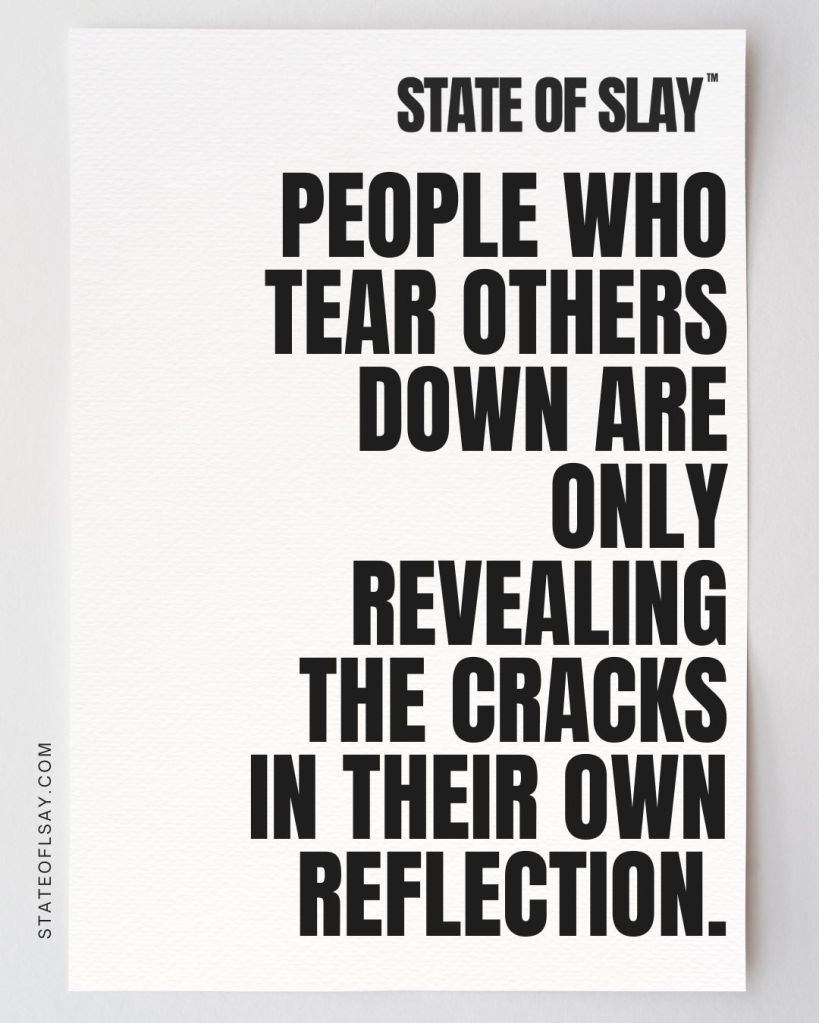
THE REFLECTION ISN’T YOURS

Unkindness is not a reflection of your worth, but of someone else’s struggle. People often project what they haven’t healed, and their cruelty is more about their unrest than your value.

When you remember this truth, you free yourself from carrying pain that was never yours to hold.

This is your reminder: you don’t need to absorb the darkness someone else hasn’t learned to face.

SLAY on!