Pursue Yourself and the Path Will Appear

If you’ve ever felt lost, stuck, or unsure of what direction to take in life—you’re not alone. There are moments when the map feels blank, when every option looks uncertain, and when “figuring it out” feels impossible.

But here’s the truth: you don’t have to know your destination to start moving forward.

When you pursue yourself—your healing, your peace, your growth—the path meant for you begins to reveal itself.


You Are the Compass

So many of us chase what we think will make us happy: success, validation, love, security. We look for purpose in jobs, people, or achievements, hoping something external will give us direction.

But purpose doesn’t exist out there. It begins within.

When you take the time to know yourself—to really listen, explore, and nurture who you are—you start to see what lights you up, what drains you, and what truly feels aligned.

That awareness is your internal compass. The more you pursue yourself, the clearer your direction becomes.

You can’t follow the wrong path if you’re following your truth.


Stop Searching, Start Becoming

When you stop frantically searching for the next step and start becoming the person you’re meant to be, your life naturally begins to align.

Every lesson, loss, and detour starts to make sense. The puzzle pieces of your story start fitting together—not because you forced them, but because you became ready for them.

You don’t need to chase opportunities when you become the kind of person who attracts them.

You don’t need to beg for love when you embody the kind of love that draws it in.

And you don’t need to have every answer when you’re living as the most authentic version of yourself.


The Power of Stillness

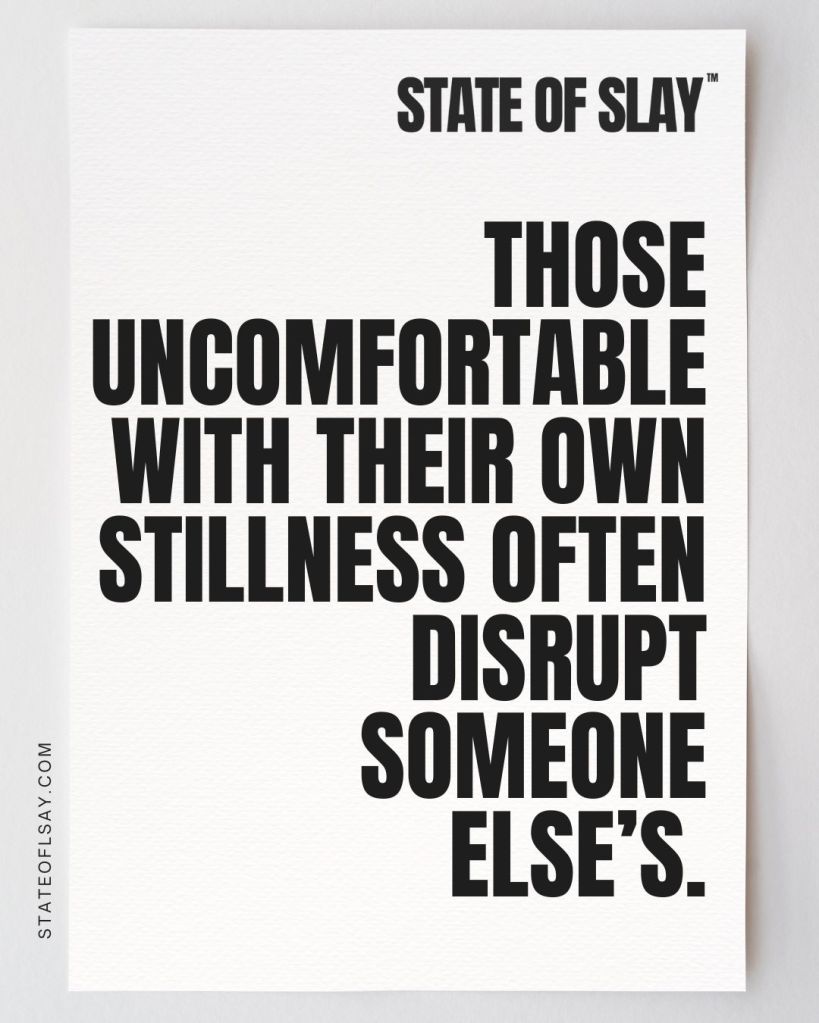
Sometimes the reason we can’t find our path is because we’re too busy running. We fill our calendars, our minds, and our hearts with noise—hoping to outrun uncertainty.

But clarity comes in stillness.

When you pause long enough to hear your own thoughts, you’ll discover that your intuition has been whispering the answers all along.

What if the purpose you’ve been searching for has been waiting for you to slow down and listen?


Be Patient with Becoming

Growth doesn’t follow a timeline. It doesn’t unfold on demand. It happens quietly, in the background, while you’re learning, falling, healing, and trying again.

When you invest in knowing yourself—through journaling, therapy, reflection, or prayer—you begin to uncover the layers of who you are beneath the expectations and fears.

And one day, you’ll look back and realize: you’ve been walking your path all along.

You didn’t find it.
You became it.


SLAY Reflection

  1. Where in your life do you feel lost or unsure right now?
  2. How often do you pause to ask yourself what you really want—not what’s expected of you?
  3. What parts of yourself have you been neglecting while searching for purpose?
  4. What does pursuing yourself look like in this season of your life?
  5. How might the right path reveal itself if you stop forcing and start trusting?

S – Slow down enough to hear your inner voice
L – Let go of the need to know every step ahead
A – Align with what feels true to you right now
Y – Yield to your own evolution and trust the journey


Call to Action: Join the Conversation

I’d love to hear from you.
What shifted when you stopped chasing and started pursuing yourself?
Share your story in the comments. Let’s cheer each other on.

And if you know someone who feels lost or uncertain about their direction, send this to them.
Sometimes, all we need is permission to slow down and listen.

You Don’t Outgrow People, You Outgrow the Version of You Who Chose Them

There comes a moment in life when you look around and realize some of the people who once felt like home no longer fit. Conversations feel different. Energy feels heavier. The connection feels strained or forced.

It’s easy to assume that means you’ve outgrown them—but often, what’s really happened is that you’ve outgrown the version of yourself who chose them.

The friends, partners, or even family members you once aligned with matched a specific stage of your evolution. They reflected your wounds, your needs, your patterns, and the beliefs you held about yourself at that time. But as you heal, grow, and redefine who you are, those old reflections no longer fit the new version of you.

That’s not betrayal. That’s growth.


The Mirror of Who You Were

Every person you’ve ever connected with was, in some way, a reflection of your state of being.

When I look back on the people I surrounded myself with during some of my darkest times, they mirrored exactly where I was: lost, seeking validation, people-pleasing, or trying to fill a void with distraction instead of truth.

Those relationships weren’t wrong—they were teachers. They held up a mirror to who I was, helping me see the parts of myself that needed to evolve.

And when I did evolve—when I started setting boundaries, speaking my truth, and prioritizing peace over chaos—it’s no wonder some of those relationships fell away. They weren’t meant to walk with the healed version of me.

You can love someone deeply and still outgrow the person you were when you met them.


Growth Doesn’t Require Guilt

Outgrowing people is one of the most painful—and most freeing—parts of becoming who you’re meant to be.

We tell ourselves that letting go means we’ve failed, abandoned, or betrayed the bond. But the truth is, we can honor what someone brought into our lives without needing to keep them there forever.

Growth asks you to release guilt and step into gratitude. To thank the version of yourself that needed them—and then thank the version of yourself that’s strong enough to move forward.

You don’t owe anyone a lifetime seat in your story just because they showed up in an earlier chapter.


Honoring the Evolution

Here’s the beautiful thing: when you stop clinging to relationships that no longer fit, you make space for connections that align with who you’ve become.

When you choose authenticity over obligation, you’ll attract people who see the real you—the one who’s done the work, who’s healing, who’s learning, who’s free.

Not everyone is meant to grow beside you. Some were meant to help you begin the journey. And that’s okay. You can love them, wish them well, and still continue on your path.

Growth doesn’t erase love. It just transforms it.


SLAY Reflection

  1. Who in your life represents an old version of you?
  2. How have your needs and values changed since you first connected?
  3. What emotions come up when you think about letting go of relationships that no longer align?
  4. How can you honor what they taught you while still moving forward?
  5. What kind of energy or people do you want to attract into your life now?

  • S – See who you’ve become with honesty and love
  • L – Let go of relationships that reflect your past pain
  • A – Align yourself with those who match your growth
  • Y – Yield to your evolution and trust the timing of connection

Call to Action: Join the Conversation

I’d love to hear from you.
Who have you outgrown—and what did that teach you about yourself?
Share your story in the comments. Let’s cheer each other on.

And if you know someone who’s struggling to release what no longer fits, send this to them.
Sometimes, all we need is permission to grow.

Your Brain Isn’t Broken, It’s Searching for Safety

There’s a moment in healing when you realize that what you’ve been calling “broken” was really protective.
Those looping thoughts, the anxious spirals, the what-ifs that replay like a broken record — they’re not your brain failing you. They’re your brain trying to keep you safe.

It’s called pattern completion, and it’s one of the ways your mind tries to make sense of the world.
When your brain experiences something painful, confusing, or traumatic, it looks for patterns — familiar situations, similar people, recognizable emotions — and tries to predict what comes next. It’s a survival mechanism, not a flaw.

But survival mode isn’t meant to be a permanent address.


Your Brain Is Trying to Protect You, Not Punish You

When you’re caught in a mental loop — replaying a conversation, worrying about what might happen, or assuming the worst — it’s your brain saying, “I’ve been here before. I know what this felt like last time, so I’ll prepare for it again.”

That’s pattern completion.
It’s your nervous system scanning for danger based on old data.

But here’s the truth: you’re not living that old story anymore.

The brain doesn’t know the difference between memory and reality until you show it.
Every time you ground yourself in the present, take a deep breath, or remind yourself “I’m safe now,” you’re re-educating your mind. You’re teaching it that not every silence means rejection, not every argument means abandonment, not every change means chaos.

You’re not broken — you’re healing an overworked safety system.


Familiar Isn’t Always Safe

One of the hardest truths to accept is that your brain equates familiar with safe, even when familiar hurt you.

That’s why we sometimes repeat relationships that feel eerily similar to the ones that wounded us.
Why we overwork ourselves the way we saw others do.
Why we shrink in moments that ask us to rise.

Your brain is chasing comfort, not happiness.
It’s doing what it knows.
But healing begins when you start showing it something new — when you remind it that safety can look like calm, silence, boundaries, and peace.

At first, that newness will feel uncomfortable. Your brain may resist. It’s not because you’re doing something wrong — it’s because you’re doing something different. And different can feel like danger when you’ve lived in survival mode for too long.


Teach Your Brain a New Way to Be Safe

Rewiring those patterns takes intention, but it’s possible.

Here’s how to start:

  • Notice the loop. When your thoughts start spiraling, pause. Label it. “This is my brain trying to complete an old pattern.”
  • Ground yourself in the present. Look around. Name five things you see, four you can touch, three you can hear. Tell yourself, “This is now, not then.”
  • Reassure your nervous system. Speak gently to yourself. “I’m safe. I don’t need to fight, flee, or freeze right now.”
  • Replace fear with truth. Ask, “What is real in this moment?” That question alone can shift everything.

Over time, your brain learns.
It starts to trust that you’re no longer in danger — that you’re the safe place now.

And that’s when healing becomes your new pattern.


You’re the Safety You’ve Been Searching For

The next time your mind replays an old fear, remember this:
You’re not back there. You’re right here.
You’ve survived everything that tried to break you — and now, you get to teach your brain what safety truly feels like.

Because your brain isn’t broken. It’s learning a new language — one called peace.


SLAY Reflection

  1. What thought patterns or worries tend to repeat for you?
  2. When you feel triggered, can you pause and remind yourself, “I’m safe now”?
  3. How can you show your brain a new version of safety today?
  4. What familiar behaviors are you ready to release, even if they once made you feel “safe”?
  5. How can you speak to yourself with compassion when old fears resurface?

S – Stop labeling your survival instincts as flaws
L – Learn to identify when your mind is replaying old fears
A – Align your thoughts with the truth of the present moment
Y – Yield to peace; you’re safe now


Call to Action: Join the Conversation

I’d love to hear from you.
What’s one pattern your brain keeps replaying — and how are you learning to rewrite it?
Share your story in the comments. Let’s cheer each other on.

And if you know someone who’s been hard on themselves for how they think or feel, send this to them.
Sometimes, all we need is a reminder: we’re not broken — we’re healing.

Tell Your Brain the Kind of Day You’re Going to Have

Have you ever noticed how your mornings set the tone for everything that follows? The moment you wake up, before your feet even hit the floor, your brain is already scanning for cues about what kind of day it’s going to be. And here’s the truth: what you tell your brain, your brain will look for.

That means if you wake up thinking, Ugh, this is going to be a hard day, your brain will search for every piece of evidence to confirm it. If you start the day with, I’m choosing peace today, your brain will find moments to validate that choice.

Your mindset is like a compass—point it in one direction, and your day will naturally start aligning with it. The question is, are you pointing it toward chaos or calm? Toward frustration or gratitude? Toward fear or courage?


Your Brain Believes What You Feed It

Here’s what’s fascinating: our brains are designed with something called the reticular activating system (RAS). It acts like a filter, deciding what gets your attention. When you tell your brain to focus on something—whether consciously or unconsciously—it scans your environment to find it.

Think of it like when you buy a new car, and suddenly you start seeing that same make and model everywhere. It’s not that the cars weren’t there before—it’s that your brain is now wired to notice them.

Your thoughts work the same way.

If you tell yourself, This meeting is going to be a disaster, your brain will notice every sigh, every side-eye, and every awkward silence. If you tell yourself, I can handle this with grace, your brain will pick up on the support, the nods, the opportunities to speak with confidence.

This is why starting your day with intentional thoughts is so powerful. Your brain is always listening.


The Power of Morning Scripts

The way you script your morning can shift everything. Here are some examples:

  • Instead of: Today’s going to be so stressful.
    Try: Today I’m choosing peace, no matter what comes my way.
  • Instead of: I’m so tired, this day is going to drag.
    Try: I have enough energy to handle what matters most today.
  • Instead of: Nobody respects me at work.
    Try: I respect myself, and I show up in a way that earns respect.

These aren’t empty affirmations. They are instructions for your brain. And when your brain has instructions, it follows them.


Frustration, Stress, and the Choice We Overlook

Life is going to throw things at you—that’s not optional. Someone cuts you off in traffic, a coworker sends a passive-aggressive email, your plans get derailed.

But here’s the key: those external things don’t decide the quality of your day. You do.

The outside world can invite you to be upset, but you are the one who accepts or declines that invitation.

When you catch yourself spiraling into negativity, pause and ask:
What did I just tell my brain about this moment? Did I tell it to look for the worst, or did I give it something else to notice?

It’s in those pauses that power lives.


Rewiring Takes Practice

If you’ve spent years waking up dreading the day or rehearsing worst-case scenarios, it’s going to take practice to redirect that thought pattern. And that’s okay.

Every time you catch yourself choosing the old script—This is going to be awful—and instead replace it with a new one—I’ve handled worse, and I will handle this too—you are literally rewiring your brain.

The more you do it, the easier it gets. Eventually, your default setting changes. Instead of your brain scanning for stress, it starts scanning for strength. Instead of looking for failure, it starts looking for possibility.


Tell Your Brain Where to Go

Think of your brain like a GPS. If you program it with the wrong address, you’ll end up somewhere you don’t want to be. But when you give it the right directions, it will get you closer to where you want to go.

So before you argue with someone, before you step into that meeting, before you check your email—set the address.

Tell your brain:

  • I’m going to stay calm.
  • I’m going to choose compassion.
  • I’m going to focus on solutions, not problems.

And watch how your day reroutes to align with it.


SLAY Reflection

  1. What’s the first thought you usually have when you wake up? Does it serve you or sabotage you?
  2. How often do you give your brain negative instructions without realizing it?
  3. What would it feel like to intentionally start your day with a thought that empowers you?
  4. When was the last time you caught yourself spiraling, and what did you do to redirect it?
  5. What’s one phrase you can start telling yourself tomorrow morning to shift your entire day?

S – Script your mornings with intentional thoughts
L – Let your brain look for evidence that supports your peace
A – Align your mindset with the day you want to create
Y – Yield to positivity and refuse to accept the invitation to chaos


Call to Action: Join the Conversation

I’d love to hear from you.
What’s the phrase you tell yourself that shifts the entire direction of your day?
Share your story in the comments. Let’s cheer each other on.

And if you know someone who’s stuck in negative loops, send this to them.
Sometimes, all we need is a reminder that our brains believe what we tell them.

Slay Say

THE REFLECTION ISN’T YOURS

Unkindness is not a reflection of your worth, but of someone else’s struggle. People often project what they haven’t healed, and their cruelty is more about their unrest than your value.

When you remember this truth, you free yourself from carrying pain that was never yours to hold.

This is your reminder: you don’t need to absorb the darkness someone else hasn’t learned to face.

SLAY on!

Slay Say

THE POWER OF CONTRAST

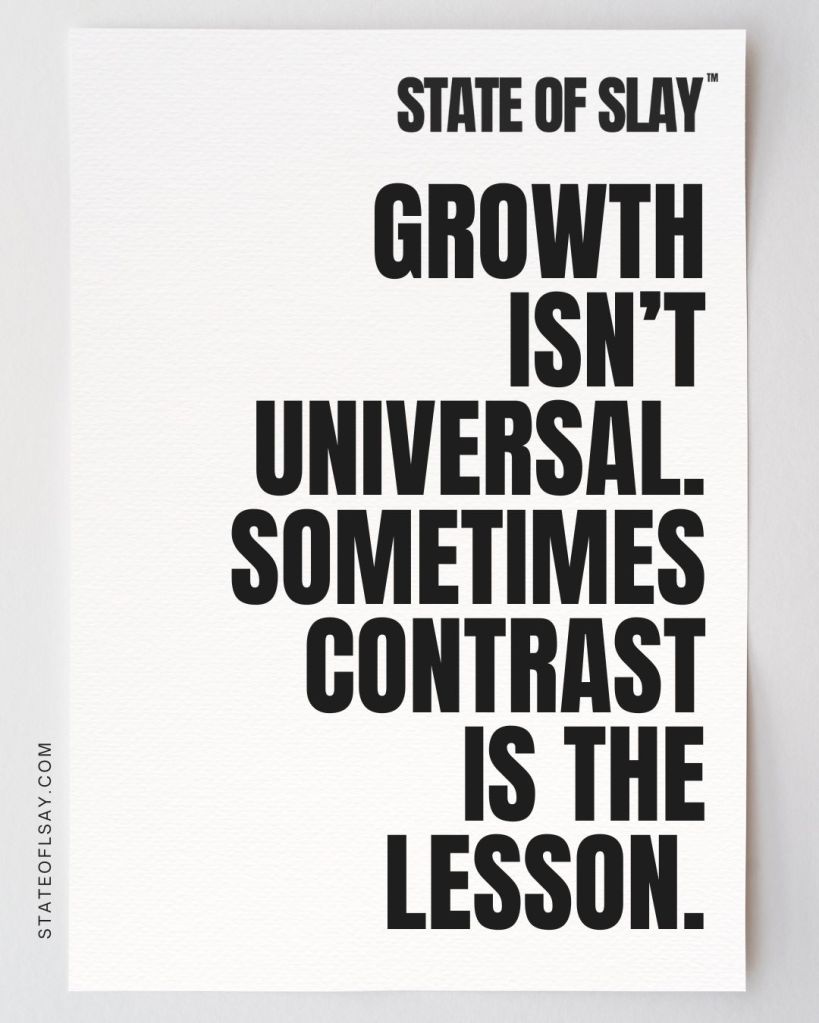
Not every influence shapes us through admiration. Some shape us through opposition. It’s in watching behavior we don’t want to repeat, words we won’t use, or choices we refuse to make that we find clarity in who we are.

This is the quiet gift of contrast—it sharpens our vision and strengthens our commitment to live differently.

This is your reminder: even painful examples can become powerful teachers.

SLAY on!

Slay Say

Truth isn’t found in the height of a reaction, but in the clarity that comes after.

Feelings can be powerful storytellers—but not always reliable ones. They shout in moments of hurt, fear, or doubt, demanding you take action, say something, quit, or lash out. But when you give your emotions time to breathe, your wisdom steps forward. Your truth finds its voice. And your story becomes something you can stand by—without apology.

This is your reminder to pause before you print.

SLAY on!

Slay Say

Some Wounds Aren’t Loud

Just because there wasn’t malice doesn’t mean there wasn’t damage.
The ripple of someone’s behavior can still cut deep—
even when their hands never meant to cause pain.

What matters is how you felt. What you carry.
Your truth still deserves recognition.

This is your reminder to honor what happened,
even if no one else saw it.

SLAY on!

Slay Say

Growth starts where ego ends

It’s not always easy to hear what we need to hear. Sometimes, the truth pokes at our pride before it frees us. But if we want to grow, we have to stop treating feedback like failure. Growth asks for humility, curiosity, and the willingness to be wrong. The most powerful people are the ones who stay open—even when it stings.

If you treat feedback as an attack, you’ll miss every opportunity to rise.

SLAY on!

Slay Say

Truth Over Tolerance

Not everyone will treat you with kindness—and that’s on them. Rudeness, cruelty, dismissal… those choices reflect what someone brings into the world, not what you deserve. You are not responsible for someone else’s inability to show respect or humanity. Recognize it for what it is—and don’t carry what isn’t yours.

This is your reminder:
You don’t have to internalize someone else’s limitations. Let their behavior reveal them, not define you.

SLAY on!