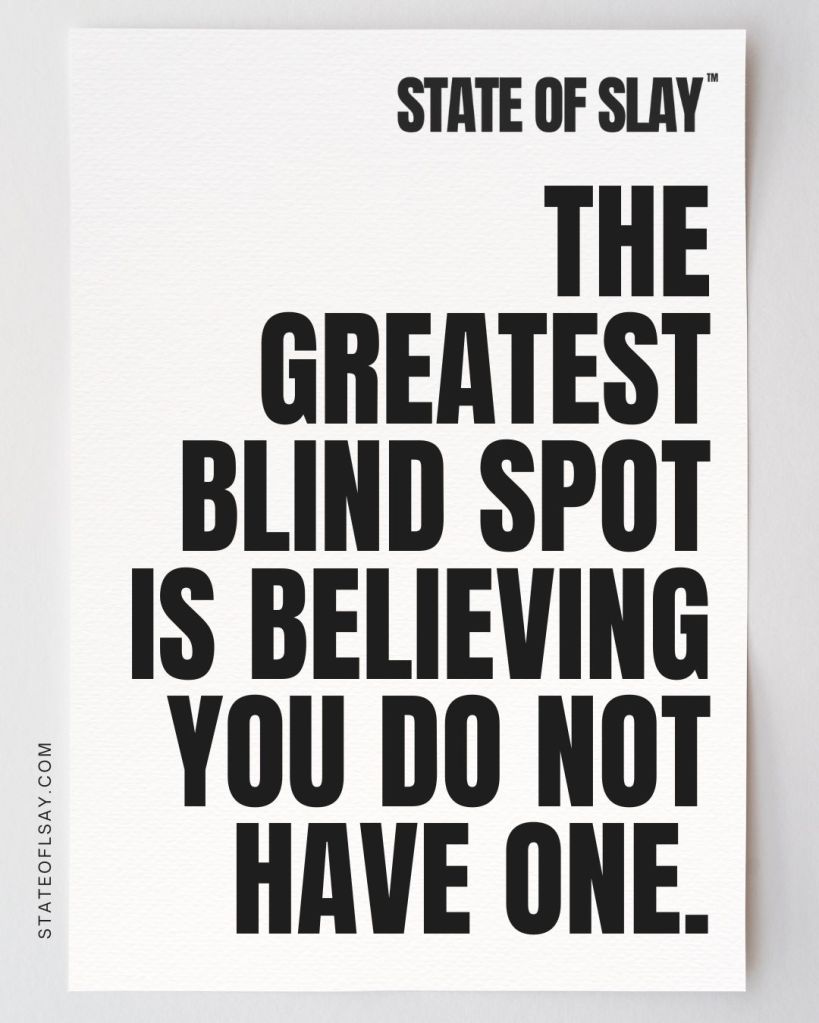
Perspective is a powerful thing. It shapes how we interpret events, understand other people, and navigate the world around us.
But perspective can also quietly become a limitation when we begin to treat it as the complete picture rather than just one angle of a much larger reality.
Every person carries experiences, assumptions, and beliefs that influence how they see the world. Those influences are not inherently wrong, but they can become dangerous when we stop questioning them or refuse to consider that someone else may see something we cannot.
Growth often begins with humility. The willingness to pause, listen, and recognize that our view may not capture the full truth can open the door to deeper understanding and stronger relationships.
This is your reminder that wisdom is not found in believing we see everything clearly, but in recognizing that our vision will always have edges.
There was a time in my life when I believed being nice meant being good.
I went out of my way to help people. I showed up when someone needed support. I tried to be generous with my time, my attention, and my energy.
And if I am being completely honest, there were moments when I expected something in return.
Gratitude. Loyalty. Support. Recognition.
When those things did not come back the way I hoped, I felt hurt. Confused. Sometimes, even resentful.
It took time and a lot of self-reflection to understand something that shifted my perspective.
Kindness that comes with expectations is not really kindness. It is a transaction.
Prefer to listen? The Audio Blog version is available here.
The Difference Between Kindness And Approval Seeking
Doing something kind should come from a genuine place. A place where you choose to give because it feels right, not because you are trying to secure a future outcome.
But many of us grow up learning that kindness earns approval. We are praised for being helpful, agreeable, and accommodating. Over time, it can become easy to connect our value to how much we do for others.
Without realizing it, kindness can slowly turn into people pleasing.
And people pleasing often carries a hidden contract.
I will do this for you so that you will appreciate me, support me, or treat me the way I want to be treated.
When that contract is not fulfilled, disappointment follows.
I Had To Look At My Own Motives
This was not a comfortable realization.
There were moments when I had to ask myself a difficult question.
Was I being kind because it was the right thing to do, or because I wanted something in return?
Sometimes the answer surprised me.
I began noticing the subtle expectations attached to my actions. If someone did not respond the way I hoped, I would feel irritated. If my effort went unnoticed, I would feel overlooked.
That reaction revealed the truth.
My kindness was not always unconditional.
Recognizing that allowed me to shift how I approached giving.
True Kindness Does Not Keep Score
Authentic kindness is not about tallying favors.
It is about choosing generosity because it aligns with who you are, not because it guarantees a reward.
When kindness becomes transactional, it creates emotional pressure for both people involved. The person giving feels entitled to a response. The person receiving may feel obligated rather than grateful.
That dynamic can quietly damage relationships.
When kindness is genuine, there is freedom on both sides.
You give because it feels right. Not because you are expecting something back.
Boundaries Protect Real Generosity
Learning this lesson does not mean you should give endlessly without considering your own needs.
Healthy boundaries are essential.
There is a difference between genuine kindness and overextending yourself. True generosity respects both the other person and your own well-being.
When you give from a place of fullness instead of obligation, your kindness becomes sustainable.
And when you say no where necessary, your yes becomes more meaningful.
Let Go Of The Invisible Contracts
One of the most liberating things you can do is release the silent agreements you place on your kindness.
If you choose to help someone, do it because it aligns with your values. If appreciation comes back, receive it with gratitude.
If it does not, let your peace remain intact.
Your character should not depend on someone else’s response.
Kindness is a reflection of who you are, not a strategy for controlling outcomes.
Authentic Kindness Strengthens Relationships
When generosity is genuine, relationships feel lighter.
There is no hidden pressure. No silent expectation. No emotional accounting.
People feel the difference.
Authentic kindness creates trust because it is rooted in sincerity rather than strategy.
And when kindness flows naturally, it encourages others to respond with the same spirit.
Not because they owe you something, but because genuine care inspires connection.
Be Kind Because It Reflects Your Values
At the end of the day, kindness is about alignment with who you want to be.
Not about what you receive in return.
When you act from your values, you no longer measure your goodness through someone else’s reaction. Your actions become an extension of your character rather than a tool for validation.
That shift removes resentment.
And resentment is often the signal that our kindness had conditions attached to it.
When kindness is authentic, peace follows.
SLAY Reflection
S — See Your Motivation When you do something kind, what are you hoping will happen afterward?
L — Look For Hidden Expectations Do you ever feel disappointed if appreciation or kindness is not returned?
A — Adjust Your Perspective How could you practice giving without attaching an outcome to the act?
Y — Your Next Step What would change if your kindness came purely from your values rather than your expectations?
Call to Action: Join the Conversation
I’d love to hear from you. Have you ever realized that some of your kindness carried hidden expectations? What changed when you let go of them?
Share your story in the comments. Let’s cheer each other on.
And if you know someone who might benefit from this reminder, send this to them. Sometimes, all we need is a nudge.
One of the hardest lessons I have ever had to learn is this:
Sometimes the truth is right in front of us, but we refuse to see it.
Not because we are unintelligent. Not because we are careless. But because we want the story to be different. We want the outcome to be different. We want the person to be different.
So we interpret reality through hope instead of honesty.
I have done this more times than I can count. In relationships. In friendships. In professional situations. Even in how I viewed myself.
And every time I ignored what was actually happening, the result was the same.
Disappointment.
Because when we see things as we wish they were instead of how they are, we build expectations on an illusion.
Prefer to listen? The Audio Blog version is available here.
Hope Is Beautiful But It Cannot Replace Reality
Hope is powerful. It keeps us moving forward when things are difficult. It allows us to believe in possibility and growth.
But hope becomes dangerous when it replaces truth.
When we hope someone will change without evidence of change. When we hope a situation will improve without action. When we hope circumstances will magically align without acknowledging what is actually unfolding.
Hope should inspire action, not replace awareness.
There is strength in optimism, but there is wisdom in clarity.
I Had To Learn This Through Experience
There were times in my life when I ignored warning signs because they did not fit the story I wanted.
I overlooked behaviors that made me uncomfortable. I rationalized actions that did not align with my values. I convinced myself that if I just waited long enough, the situation would turn into what I hoped it could be.
But reality always revealed itself eventually.
And each time I avoided that truth, the consequences felt heavier.
Eventually I understood something important.
Seeing reality clearly is not pessimism. It is self protection.
Clarity Creates Better Decisions
When we look at situations honestly, we gain information.
We see patterns instead of excuses. We notice consistency instead of promises. We understand where our energy is being returned and where it is not.
That clarity allows us to make better decisions.
Sometimes it means walking away. Sometimes it means setting stronger boundaries. Sometimes it means adjusting expectations.
But almost always, it brings relief.
Because living in truth removes the constant mental effort of trying to maintain an illusion.
Emotional Honesty Is A Form Of Self Respect
It takes courage to see things clearly.
Admitting that a relationship is not healthy. Accepting that a goal may need to change. Recognizing that someone cannot give us what we hoped they would.
Those moments can be painful.
But they are also powerful.
Because emotional honesty is an act of self respect. It means you trust yourself enough to face reality, even when it challenges your expectations.
And that trust builds resilience.
Seeing Clearly Does Not Mean Losing Compassion
Recognizing reality does not require becoming cold or cynical.
You can still care about people while acknowledging their limitations. You can still appreciate memories while accepting that circumstances have changed.
Compassion and clarity can exist together.
In fact, when we stop forcing situations to be something they are not, compassion often becomes easier. We stop trying to control outcomes and start accepting people and circumstances as they truly are.
Acceptance creates peace.
Truth Creates Freedom
There is something incredibly freeing about seeing things clearly.
When you stop negotiating with reality, your energy returns. Your decisions become more grounded. Your expectations become healthier.
You stop chasing what could be and start responding to what actually is.
And from that place, growth becomes easier.
Because your foundation is truth.
SLAY Reflection
Let’s reflect, SLAYER:
S: Is there a situation in your life where you may be seeing what you hope instead of what is actually happening?
L: What signs or patterns might you be overlooking because they are uncomfortable?
A: How could greater honesty with yourself change the decisions you make moving forward?
Y: What would choosing clarity over illusion bring into your life right now?
Call to Action: Join the Conversation
I’d love to hear from you. Have you ever had a moment where seeing a situation clearly changed everything for you? What did you learn from it? Share your story in the comments. Let’s cheer each other on.
And if you know someone who might be struggling to face a difficult truth, send this to them. Sometimes, all we need is a nudge.
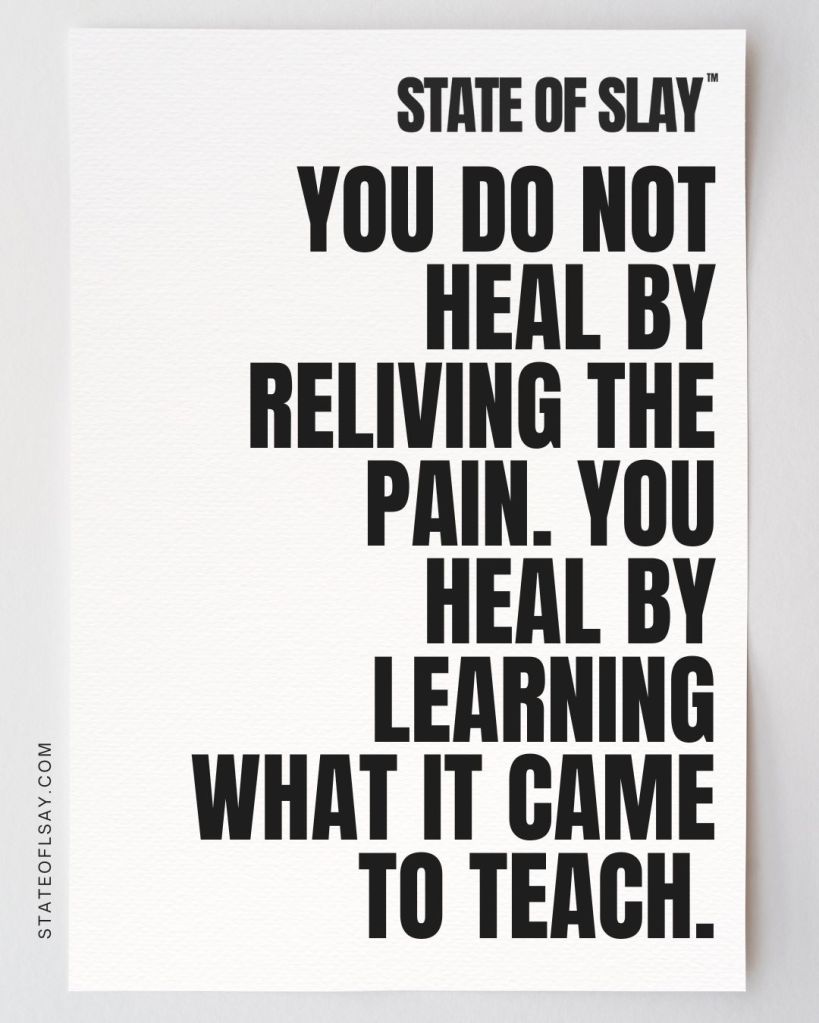
Healing does not come from looping the moment that hurt you. It comes from the courage to pause, reflect, and ask what the experience revealed about your boundaries, your needs, or your strength.
Growth begins when you stop reopening the wound and start honoring the wisdom it left behind.
This is your reminder to let the lesson move you forward, not the pain keep you stuck.
You can hold people accountable without making them small.
You can speak truth without tearing someone down.
You can walk away without burning everything behind you.
Choose Who You’re Becoming
Every conflict is a mirror.
It shows you who you are — and who you’re becoming.
You get to choose:
Reaction or reflection Ego or evolution Drama or dignity Noise or peace
Because every response is shaping your identity.
You Don’t Rise by Lowering Others
You rise by becoming more of yourself.
More grounded. More aware. More aligned. More whole. More healed.
Elevation comes from integrity — not comparison.
SLAY Reflection
Let’s reflect, SLAYER:
S: Where have you felt tempted to make someone else look bad to protect yourself? L: What emotion was really driving that reaction? A: What would strength look like instead of reactivity? Y: How would your life shift if you chose dignity over drama more often?
Call to Action: Join the Conversation
I’d love to hear from you. Have you ever noticed how different it feels to walk away with dignity instead of winning an argument? Share your story in the comments. Let’s cheer each other on.
And if you know someone stuck in conflict or comparison, send this to them. Sometimes, all we need is a nudge.
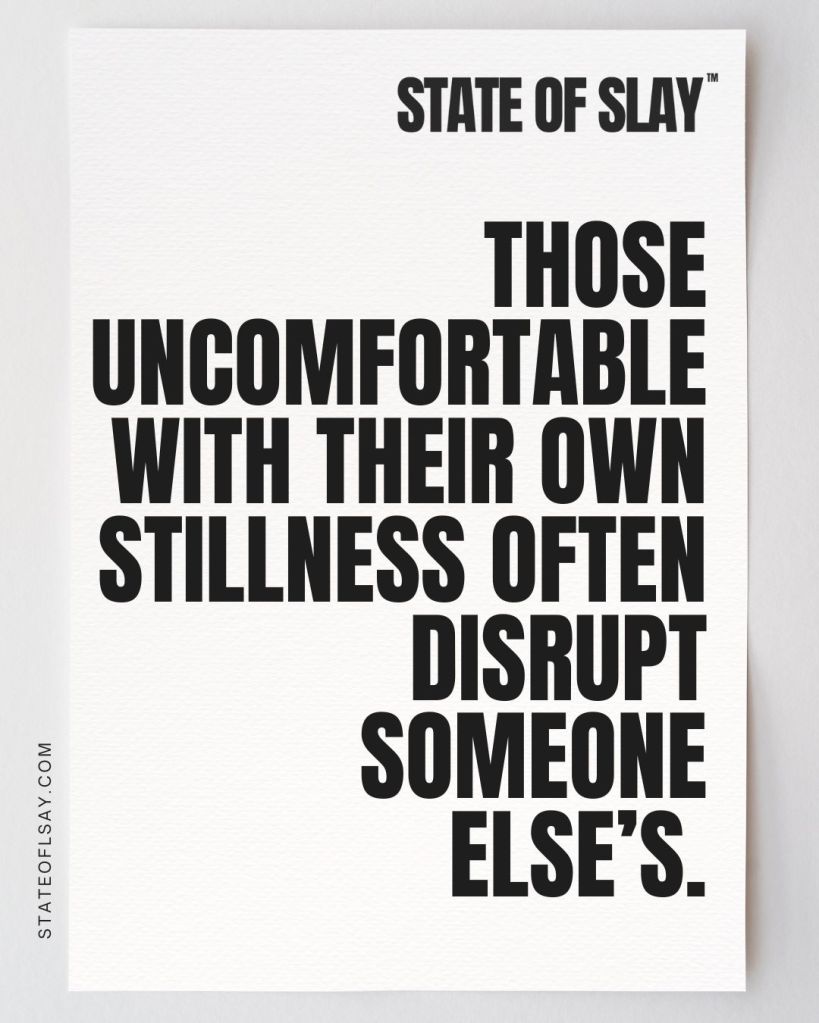
Not everyone knows how to sit with themselves. Some people fill the silence with noise, distraction, or disruption — not because you invited it, but because your calm reminds them of what they avoid.
Peace can feel threatening to someone who hasn’t learned how to rest inside themselves. So they poke. They provoke. They project.
This isn’t a reflection of your openness or your strength. It’s a signal to protect your quiet.
Stillness is not weakness. It’s discernment. It’s clarity. It’s a boundary you don’t have to explain.
This is your reminder: You are allowed to keep your peace intact. You don’t need to absorb someone else’s unrest to be compassionate.
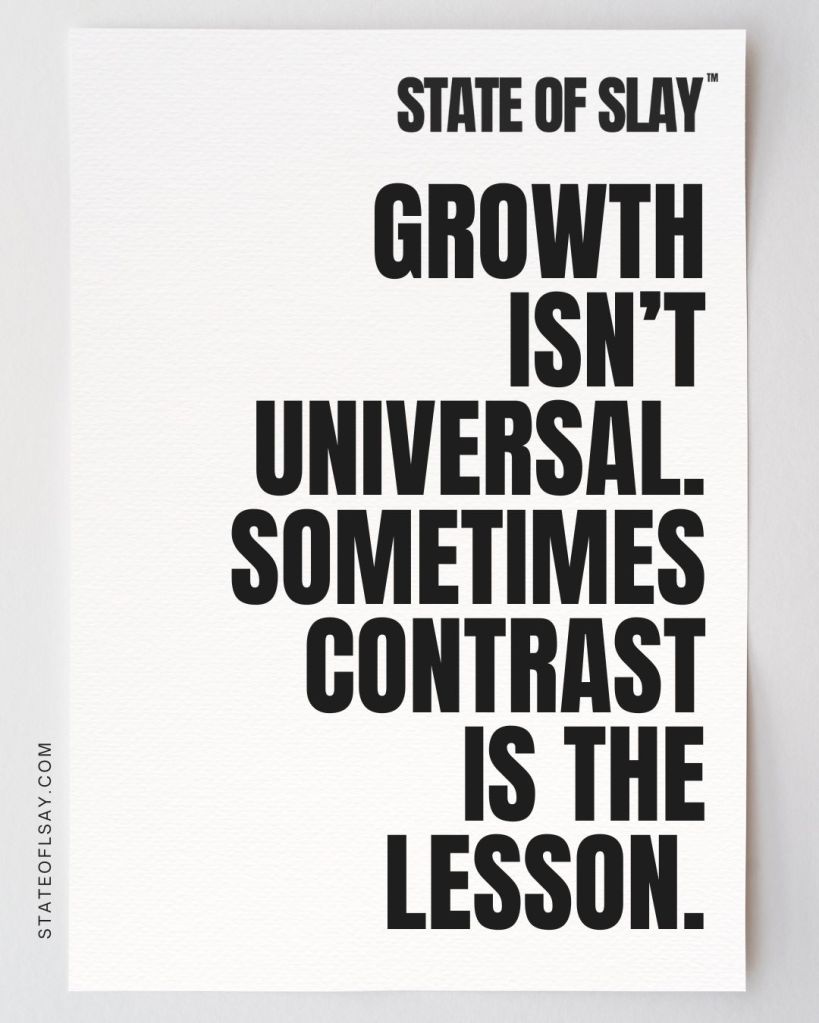
Growth doesn’t move in straight lines, and it doesn’t happen on the same timeline for everyone. Some people expand quickly. Others pause. Some stay exactly where they are.
None of that makes anyone wrong.
But sometimes clarity doesn’t come from progress — it comes from contrast. From noticing what feels aligned and what no longer does. From recognizing patterns you don’t want to repeat, or directions you no longer wish to follow.
Contrast isn’t about comparison. It’s about awareness.
Seeing what remains unchanged can quietly highlight what you’re ready to shift. Not out of judgment, but out of honesty. Not because you’re ahead — but because you’re listening to yourself more closely.
Growth isn’t a competition. It’s a conversation with your own values.
This is your reminder: Pay attention to what feels heavy and what feels expansive. Sometimes contrast isn’t criticism — it’s guidance.
For a long time, we were taught that power looks a certain way.
Loud. Unyielding. Unemotional. Hard.
We learned to associate strength with dominance and softness with weakness — as if the two can’t coexist. As if choosing gentleness somehow cancels out authority. As if tenderness diminishes capability.
But real power isn’t found in becoming harder.
Real power is found in becoming whole.
And embracing your power does not mean abandoning your softness.
Why Softness Gets Misunderstood
Softness is often mistaken for fragility.
For weakness. For indecision. For vulnerability that can be exploited.
But softness isn’t the absence of strength — it’s the presence of awareness.
Soft people feel deeply. They notice nuance. They respond instead of react. They choose compassion without self-abandonment.
Softness is emotional intelligence in motion.
And in a world that rewards hardness, choosing softness is an act of quiet rebellion.
Power Without Softness Becomes Armor
When power is built without softness, it turns into armor.
It looks like control instead of confidence. It sounds like defensiveness instead of clarity. It feels like disconnection instead of leadership.
Hard power protects — but it isolates.
Softness is what keeps power human. It allows strength to be felt instead of feared. It creates safety, trust, and resonance.
Power that cannot soften eventually cracks.
Softness Requires More Strength Than Hardness
Anyone can harden themselves to survive.
It takes real courage to stay open.
Softness means:
Feeling your emotions without being ruled by them
Listening without losing yourself
Offering kindness without inviting harm
Holding boundaries with grace instead of aggression
Softness does not mean you tolerate disrespect. It does not mean you avoid hard truths. It does not mean you shrink to keep others comfortable.
Softness with boundaries is strength refined.
You Can Be Kind and Still Be Unmovable
There is a version of power that doesn’t need to raise its voice.
It doesn’t posture. It doesn’t perform. It doesn’t prove.
It simply is.
You can speak gently and still mean every word. You can be empathetic and still say no. You can lead with compassion and still walk away.
Power doesn’t disappear when you soften your tone. It deepens.
The Myth That You Must Choose One
We’re often told we have to choose:
Be soft or be strong. Be nurturing or be authoritative. Be emotional or be capable.
But that’s a false binary.
Your softness is not a liability — it’s a strength multiplier. It sharpens intuition. It strengthens connection. It allows power to flow instead of dominate.
The most grounded people are the ones who can hold both.
When You Stop Abandoning Your Softness, You Stop Abandoning Yourself
Many of us hardened ourselves out of necessity.
We learned that softness was punished. That sensitivity was mocked. That being open wasn’t safe.
So we adapted.
But at some point, protection turns into self-betrayal.
Reclaiming your softness is reclaiming the parts of you that feel, connect, create, and love. It’s choosing authenticity over survival.
And when you stop abandoning your softness, your power becomes sustainable.
Soft Power Changes Everything
Soft power doesn’t dominate — it influences.
It changes the way you show up in relationships. It shifts how you lead. It deepens trust. It invites others to lower their defenses.
Soft power doesn’t demand respect — it earns it.
And it lasts longer than force ever could.
You Are Allowed to Be Both
You don’t have to become someone you’re not to be powerful.
You don’t have to suppress your tenderness to be taken seriously.
You are allowed to be gentle and strong. Empathetic and boundaried. Soft-hearted and self-assured.
That balance isn’t weakness.
It’s mastery.
SLAY Reflection
Let’s reflect, SLAYER:
S: Where have you hardened yourself to feel safe or respected? L: What parts of your softness have you been taught to hide or minimize? A: How can you honor your sensitivity while strengthening your boundaries? Y: What would embracing both your power and your softness look like in your life?
Call to Action: Join the Conversation
I’d love to hear from you. Where have you discovered that softness actually made you stronger? Share your story in the comments. Let’s cheer each other on.
And if you know someone who’s been told they’re “too soft” to be powerful, send this to them. Sometimes, all we need is a nudge.
We live in a world that measures impact by numbers.
Followers. Likes. Views. Shares.
Somewhere along the way, we started believing that influence requires visibility — that if you don’t have a platform, a brand, or a loud presence online, your voice doesn’t matter.
But that simply isn’t true.
You don’t have to be an influencer to make an influence.
Real influence doesn’t come from being seen by thousands. It comes from being felt by someone.
Influence Is Not the Same as Attention
Attention is loud. Influence is quiet.
Attention looks like being watched. Influence looks like being remembered.
Influence happens in moments no algorithm ever tracks:
When you listen instead of interrupt
When you show kindness without needing credit
When you speak truth gently but honestly
When you choose integrity even when no one is watching
Some of the most influential people in our lives never posted a thing. They didn’t try to lead. They simply lived in a way that made others feel safer, braver, or more understood.
That kind of influence doesn’t fade when the screen goes dark.
The Smallest Actions Often Carry the Greatest Weight
We tend to underestimate the impact of everyday moments.
A conversation that makes someone feel seen. A boundary that gives someone else permission to set their own. A decision to choose yourself that inspires someone watching quietly.
You may never know who noticed. You may never hear the thank-you. You may never see the ripple.
But it exists.
Influence doesn’t announce itself. It moves quietly, person to person, moment to moment.
And often, the people who influence us the most are the ones who never tried to.
You Are Influencing More Than You Realize
Whether you intend to or not, your life is speaking.
Your choices. Your reactions. Your boundaries. Your courage.
Someone is watching how you handle disappointment. How you talk about yourself. How you treat people who can’t do anything for you. How you walk through hard seasons.
You don’t need to be perfect to be influential. You just need to be honest.
Because authenticity resonates far more deeply than performance ever could.
Influence Comes From Alignment Not Approval
Many people chase influence by trying to be liked.
They soften their truth. They avoid discomfort. They stay quiet when they should speak.
But real influence comes from alignment — from living in a way that reflects who you truly are, even when it’s inconvenient.
When you live aligned, you give others permission to do the same.
That’s influence.
When you stop people-pleasing and start self-respecting, someone else learns they can too. When you choose growth over familiarity, someone else finds the courage to move. When you show up as yourself, without apology, someone else feels less alone.
You Don’t Need a Stage to Lead
Leadership doesn’t require a microphone.
Some of the strongest leaders lead by example — in families, friendships, workplaces, and communities. They model what it looks like to take responsibility, to repair mistakes, to stay curious, to choose compassion without self-abandonment.
They don’t seek recognition. They don’t need applause.
They simply live their values.
And people notice.
Influence rooted in character lasts longer than influence rooted in popularity.
Your Presence Matters More Than Your Reach
We often confuse reach with impact.
Reach is how many people you touch. Impact is how deeply you touch them.
You can reach thousands and change nothing. You can reach one person and change everything.
Never underestimate the power of showing up fully in the spaces you already occupy. The room you’re in. The relationship you’re in. The moment you’re in.
That’s where influence lives.
Influence Is Built in Integrity
What you do when no one is watching matters. What you choose when it’s hard matters. How you treat yourself matters.
Influence isn’t about convincing others to follow you — it’s about being someone worth following.
And that starts with how you live when there’s nothing to gain.
You Are Already Enough to Make a Difference
If you’ve ever felt like your voice is too small, your life too ordinary, or your reach too limited, let this be your reminder:
You don’t need a title. You don’t need a platform. You don’t need permission.
Your kindness matters. Your honesty matters. Your courage matters.
You are influencing more than you know — just by being you.
SLAY Reflection
Let’s reflect, SLAYER:
S: Who has influenced you in your life without ever seeking attention or recognition? L: Where in your life do you underestimate the impact of your presence or choices? A: How could you live more intentionally, knowing your actions matter? Y: What would change if you trusted that who you are is already enough to make an influence?
Call to Action: Join the Conversation
I’d love to hear from you. Who has made a meaningful influence in your life without being “visible” — or where do you see yourself making one quietly? Share your story in the comments. Let’s cheer each other on.
And if you know someone who feels unseen or insignificant, send this to them. Sometimes, all we need is a nudge.
There’s a moment we all face at some point in our lives — that split second where we know the truth, feel the truth, and can almost hear it knocking inside us… yet we swallow it, push it aside, or cover it with something easier. Something softer. Something far more convenient.
A convenient lie.
Convenient lies are seductive. They shield us from discomfort, delay accountability, and let us stay exactly where we are. They keep the peace — temporarily. They protect our reputation — superficially. They protect our ego — momentarily. But they never move us forward.
The inconvenient truth, on the other hand, doesn’t care about comfort. It doesn’t soften its edges to make the landing easier. It shows up as it is — raw, revealing, and sometimes painful. But it is always the doorway to freedom.
And this is the paradox: Lies keep us safe in the moment. Truth keeps us free in our lives.
Learning to choose the inconvenient truth over the convenient lie is one of the most defining acts of emotional maturity we will ever face.
Prefer to listen? The Audio Blog version is available here.
Why We Choose the Convenient Lie
Let’s be honest — most lies don’t come from cruelty. They come from fear.
Fear of hurting someone. Fear of looking bad. Fear of disappointing others. Fear of disappointing ourselves. Fear of consequences. Fear of change.
For years, I leaned on convenient lies because the truth felt overwhelming. It meant confronting who I had become. It meant taking responsibility. It meant letting go of people, habits, or patterns that once kept me afloat.
Convenient lies feel like cushions. Inconvenient truths feel like cliffs.
But here’s the thing: Cushions can suffocate you just as quickly as cliffs can scare you.
Convenient lies delay pain, but they guarantee suffering.
The High Cost of Avoiding the Truth
When you bend, blur, or bury the truth, you pay for it in ways you don’t always see right away.
The cost shows up later as:
anxiety you can’t explain
guilt that follows you into bed
shame that sticks to your skin
relationships built on uneven ground
resentment that grows each time you betray your own integrity
a life that doesn’t feel like yours
Convenient lies feel like relief… until they don’t.
Because every time you avoid the truth, you abandon a piece of yourself. And eventually, those pieces add up.
The Inconvenient Truth: A Pathway to Freedom
Telling the truth has consequences. That’s why it scares us.
But so does hiding it.
The difference is that truth gives you your life back.
The inconvenient truth does not destroy you — it reveals you. It strips away illusion, denial, fantasy, and projection. It brings you back into alignment with yourself. It allows you to grow.
It is inconvenient because it demands clarity, responsibility, ownership, and sometimes painful self-awareness. But it also gives you something no lie ever could:
Peace.
The kind of peace you don’t need to earn. The kind of peace you don’t need to protect. The kind of peace that only comes from living in integrity.
Truth Doesn’t Hurt as Much as Staying in What Isn’t True
We’ve all been taught that “the truth hurts.” But the truth doesn’t hurt nearly as much as living a lie — especially a lie you tell yourself.
The lie says: “If I tell the truth, I’ll lose them.” The truth says: “If you have to lie to keep someone, you’ve already lost them.”
The lie says: “If I ignore it, it will go away.” The truth says: “What you avoid controls you.”
The lie says: “It’s not the right time to face this.” The truth says: “There is no right time — only now.”
Truth invites you into reality — and reality, even when painful, is where healing lives.
Being Honest With Yourself Is the Hardest Part
You cannot offer truth to others if you refuse to sit with it yourself.
Some of the hardest truths I’ve ever faced were not the conversations I had with other people — but the ones I had alone at night, staring at my reflection and realizing:
I had lied to myself about what I could handle. I had lied to myself about who someone really was. I had lied to myself about what I deserved. I had lied to myself about my patterns and intentions. I had lied to myself to stay comfortable.
Those truths were inconvenient. They were painful. But they were transformational.
Self-honesty is the birthplace of self-respect.
How to Choose Truth When the Lie Feels Easier
Here are practices that help you step into honesty with courage:
1. Sit with discomfort instead of escaping it.
Discomfort isn’t danger — it’s data.
2. Notice when you rationalize.
Any sentence that starts with “It’s no big deal” or “It doesn’t matter” is a clue.
3. Ask yourself: “What am I afraid will happen if I tell the truth?”
Your answer is where the work begins.
4. Practice micro-honesty.
Small truths make room for bigger ones.
5. Let go of outcomes.
Your job is to tell the truth — not control what happens after.
Truth is not the burden. Carrying the lie is.
Choosing Truth Is Choosing Yourself
At the end of the day, choosing the inconvenient truth means choosing yourself — your integrity, your peace, your inner alignment.
When you tell the truth, you stop betraying yourself for temporary comfort.
You start building a life that can actually hold you.
A life that doesn’t require performance, pretending, or self-betrayal.
A life rooted in the most powerful thing of all:
Authenticity.
And that, SLAYER, is where your freedom lives.
SLAY Reflection
Where in your life are you choosing convenience over truth?
What are you afraid will happen if you tell the truth — and is that fear rooted in reality?
What truth have you been avoiding that feels heavy in your body?
How has hiding the truth kept you stuck or small?
What would choosing truth make possible for you?
S – See where you’ve been hiding behind convenience
L – Let truth guide your healing, even when it’s hard
A – Accept discomfort as part of growth
Y – Yield to honesty and reclaim your peace
Call to Action: Join the Conversation
I’d love to hear from you. What inconvenient truth did you finally face — and how did it change your life? Share your story in the comments. Let’s cheer each other on.
And if you know someone who’s stuck in a convenient lie, send this to them. Sometimes, the truth someone’s avoiding is the truth they most need to hear.