Good morning SLAYER! People are often not disturbed by what they see, but by how they see it.
New blog goes up Friday, until then… SLAY on!



Good morning SLAYER! People are often not disturbed by what they see, but by how they see it.
New blog goes up Friday, until then… SLAY on!
Good morning SLAYER! If you don’t like something change it, if you can’t change it change the way you think about it.
SLAY on!


Before walking this path, I thought I knew everything—or at least better than most. I saw the world through judgmental eyes, convinced that everyone else was doing it wrong. It was easier to judge than to look inward, easier to point fingers than to take responsibility. My ego told me I was smarter, better, but deep down, I was just trying to cover the emptiness I felt inside—the fear that I wasn’t enough.
That judgment kept me blind. It limited what I was willing to see and locked me into a narrow, self-protective perspective.
I’ve shared before that it’s vital for me to stay teachable. It took a long time—and a lot of pain—for me to admit that I don’t know everything, that my stubbornness and ego hurt me more than anyone else ever could. Staying open-minded isn’t just a nice idea; it’s essential for my growth and healing.
When I close myself off, I shut down new ideas, new perspectives, and the chance to improve. This path of recovery and growth doesn’t end with a graduation or certificate. It’s a lifelong journey of becoming, of learning, and of serving.
Being of service means setting aside ego. It means being open to seeing things as they are, not just as I want them to be. When I was stuck in my old patterns, I didn’t care about helping others unless it benefited me. But recovery taught me that my growth and healing are deeply tied to my ability to support and lift others up.
We all come from different places, with different life experiences. It’s natural to have a perspective shaped by our journey, but if we only see the world through our own lens, we miss the full picture.
When we stay stuck in our assumptions—what we think we know—we stunt our growth. But when we leave space for discovery, for the possibility that we might not know everything, we create room for connection, understanding, and freedom.
That space in between? It’s where transformation happens.
Do you usually assume you know the truth without investigating?
How has that approach worked—or not worked—for you?
Think of a time when you discovered the reality wasn’t what you thought. What did you learn?
Are you open to continuing to learn from others, even when it’s uncomfortable?
How do you feel when others make false assumptions about you? Remember, it feels the same when we do it to others.
Leave space to grow. Leave space to see.
I’d love to hear from you.
How do you keep yourself open to learning and growth? What helps you shift from judgment to curiosity?
Share your thoughts in the comments and let’s lift each other up.
And if you know someone who could use this message, share it with them. Together, we can break free from assumptions and open our eyes to new possibilities.
Good morning SLAYER! The hardest prison to escape is your mind.
New Blog goes up Tuesday, until then… SLAY on!

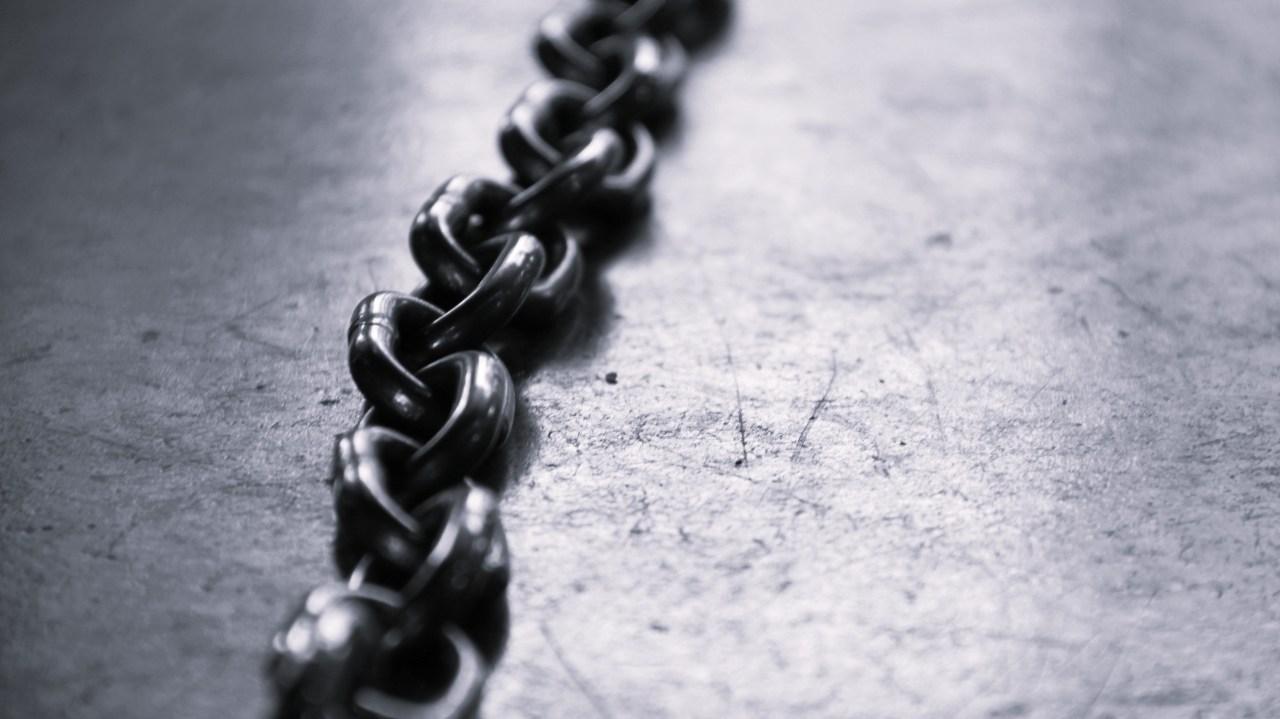
There are so many chains we build in our lives—chains that bind us to the past, to old ways of thinking, to hurts that never healed, and to expectations that were never really ours. We start building them early, learning from what we see, what we’re told, and what we internalize. Over time, we add link after link until we’re dragging around the weight of it all, wondering why we feel so stuck, so tired, and so heavy.
We cling to resentment, to unspoken anger, to the life we thought we should have, the love we thought we deserved, and the promises we believed would be kept. Those chains become part of our identity, and we don’t even realize how much they’re holding us back.
Before I stepped into recovery, I was dragging an entire lifetime of chains. They weren’t just memories—they were burdens, binding me to people and situations I should have let go of a long time ago. I thought breaking them would be impossible. They were too heavy, too tangled, too deeply woven into my story.
But breaking the chains wasn’t impossible—it was just uncomfortable. It took honesty, a willingness to examine what was truly mine to carry and what I could release. It meant confronting the stories I told myself, the grudges I nurtured, and the fear that kept me tethered.
With help, I started cutting links, one by one. Some chains fell away easily; others took time, patience, and forgiveness. And there are still chains I’m working on—because some habits are stubborn, and some attachments are harder to break.
As I broke free from those old chains, I realized something important: they hadn’t been protecting me like I thought. They were limiting me. They were keeping me small. Letting go wasn’t just about feeling lighter; it was about opening myself up to possibilities I’d never imagined.
It’s tempting to build new chains to replace the old ones, to reach for safety and control in the unfamiliar. But I remind myself that those chains never kept me safe—they kept me trapped.
Our lives can be as free as we allow them to be. The power is ours to break the chains that bind us and step into the light of a new way of living.
Do you recognize the chains you’re carrying?
Are they old resentments, limiting beliefs, or attachments that no longer serve you?
Why do you hold onto them?
How do they harm you?
What would it feel like to let them go?
Start today—cut one link. Your freedom is waiting.
I’d love to hear from you.
What chains are you breaking right now? What has helped you find your freedom?
Share your story in the comments and let’s encourage each other to keep cutting those chains.
And if you know someone who’s struggling to let go, send this their way. Sometimes, all we need is a reminder that we hold the key.

Good morning SLAYER! Being kind is giving even when you feel you have nothing to give.
New blog goes up Sunday, until then… SLAY on!

There was a time when everything I did came with a silent expectation.
If I showed up for you, I wanted something in return. If I helped, I hoped you’d notice. And if I gave anything of myself, I measured it against what I might receive.
The scales were always out—always tallying the effort and the reward. And when the reward didn’t match the effort? I’d spiral. I’d get resentful, frustrated, even self-righteous. I wore my “sacrifice” like a badge, convincing myself I was generous, when in reality, I was just trying to fill an empty space inside me.
But living that way left me exhausted, isolated, and hollow. It was all about me—and it never felt like enough.
When I began my recovery journey, one of the first things I was told was this: to keep what you’ve been given, you have to give it away.
At first, that made no sense to me. I was barely hanging on. I felt like I had nothing to offer. How could I give when I was still trying to survive?
But I quickly learned that we always have something to give. Even when we’re at our lowest, our honesty, our story, our presence—they matter.
On the days when I felt broken or unsure, just saying “I’m not okay today” gave others permission to say the same. That alone created connection. And that connection helped both of us breathe a little easier.
Giving isn’t just about grand gestures. It’s about showing up. Listening. Checking in. Offering time or kindness without needing anything back.
And here’s the thing: when we shift our focus from ourselves to someone else, something powerful happens. We get out of our heads. We stop obsessing over our problems, even for a moment. And sometimes, those moments are exactly what we need to find our footing again.
Helping others helps us, too. It reminds us of how far we’ve come. It brings us back to the present. And it shows us that we’re capable of making a difference—even on days when we feel like we’re falling apart.
But it only works when we give without strings attached.
There’s a big difference between offering help out of love and offering help because you expect something in return.
One is generous.
The other is transactional.
And when we expect something in return, it turns kindness into manipulation.
It’s not always easy to recognize. Sometimes, our ego disguises expectation as “helpfulness.” But if you’re giving with a secret hope that someone will praise you, repay you, or see you differently—it’s time to check your motives.
The truth is, the real reward of giving comes when we release the outcome. When we trust that showing up with a pure heart is enough.
When we give freely, with no attachment to the result, we open ourselves up to deeper joy, unexpected blessings, and real connection.
Sometimes the reward is knowing someone else feels less alone. Sometimes it’s gaining perspective on our own journey. And sometimes it’s simply the peace that comes from doing the next right thing.
The universe has a way of putting us exactly where we need to be—if we’re willing to stay present and let go of what we think we should get out of it.
So next time you feel moved to give, ask yourself: Am I giving for the right reasons?
If the answer is yes—lean in. You never know how far that act of kindness might reach.
Let’s get real, SLAYER:
S: Do you focus more on giving or on what you might get in return?
L: Have you ever felt disappointed after giving? What were your expectations?
A: What would giving look like in your life if you let go of the outcome?
Y: How can you show up for someone today simply because you want to—not because of what you might receive in return?
I’d love to hear from you.
When was the last time you gave without expecting anything in return—and how did it shift your day or your perspective?
Share your story in the comments. Let’s cheer each other on.
And if you know someone who’s struggling with expectations, send this to them.
Sometimes, all we need is a nudge.
Good morning SLAYER! Unity is strength.
New blog goes up Friday, until then… SLAY on!

Good morning SLAYER! Determined people working together can do anything.
SLAY on!


It started with a single tap. Then another. Then a steady rhythm.
I was sitting in my car when the rain began to fall. It started slow—one drop, then another—until it became a chorus. And as I sat listening, it reminded me of the beginning of my recovery journey.
That quiet build into something greater reflected what it felt like to go from being alone to being part of a group. From silence to solidarity. From isolation to inclusion.
For a long time, I insisted I wasn’t a group person. I told myself I preferred one-on-one connection, that I worked better alone. And in some ways, that was true. But it was also a shield. A story I told myself to avoid being seen too closely.
When I started recovery, I was encouraged to join a group. Just try it, they said. Keep an open mind. So I did—nervously, reluctantly, with my heart pounding in my chest.
As I scanned the room that first night, I was sure I didn’t belong. These people looked “normal.” They laughed. They smiled. I made a quiet deal with myself: stay for the hour, then leave.
But then a woman began to speak. And what she shared—her pain, her fear, her struggle—sounded a lot like mine. My guard dropped just a little. I kept listening. More voices joined in. Not every story mirrored my own, but enough did. And for the first time in a long time, I didn’t feel alone.
I kept going. Not just to that meeting, but to others.
Even when it was hard to speak. Even when it felt awkward to introduce myself. Even when all I could do was sit and listen—I showed up. And slowly, I found myself becoming part of something.
For someone who had always prided herself on independence, this shift felt strange—but also incredibly healing. There’s power in walking into a room where no one needs you to be anyone other than who you are that day.
In group, we’re not our resumes. We’re not our past mistakes. We’re not our fears. We’re just people—trying, learning, healing. Together.
And eventually, I stopped saying I wasn’t a group person. Because I realized I’d become one.
There’s strength in numbers, but more importantly, there’s connection in numbers.
When we come together with a shared purpose—whether it’s healing, growing, or simply supporting one another—we amplify each other’s voices. We lift one another up. We carry each other forward.
Being part of a group reminded me that I don’t have to do this alone. And more than that, it reminded me that I don’t want to.
That lesson followed me outside of recovery. I began to see how I could be part of something bigger in all areas of my life—work, community, friendships. Today, I don’t walk into a room wondering what I can get. I ask myself what I can give. Even if it’s just a kind word or a warm smile.
Some of us naturally gravitate toward solitude. And there’s nothing wrong with that.
But if we never join in, we might miss the magic of what happens when our voice joins others. A single voice is beautiful—but a choir? That’s transformation.
Your story, your energy, your experience—they’re all valuable. And when you bring them into a shared space, you become part of something powerful.
Don’t underestimate the impact of your presence. Sometimes showing up is the biggest gift you can give—to others and to yourself.
Let’s reflect, SLAYER:
S: Do you naturally lean toward solitude or connection? Why do you think that is?
L: What fears come up for you in group settings, and where do those fears stem from?
A: Have you ever felt seen or supported by a group? What made that experience meaningful?
Y: How can you contribute your voice to a group or community today—without needing it to be perfect, just honest?
I’d love to hear from you.
Have you ever discovered strength or healing by joining a group or community?
Share your story in the comments. Let’s cheer each other on.
And if you know someone who’s afraid to take that first step into a group, send this to them.
Sometimes, all we need is a nudge.
