
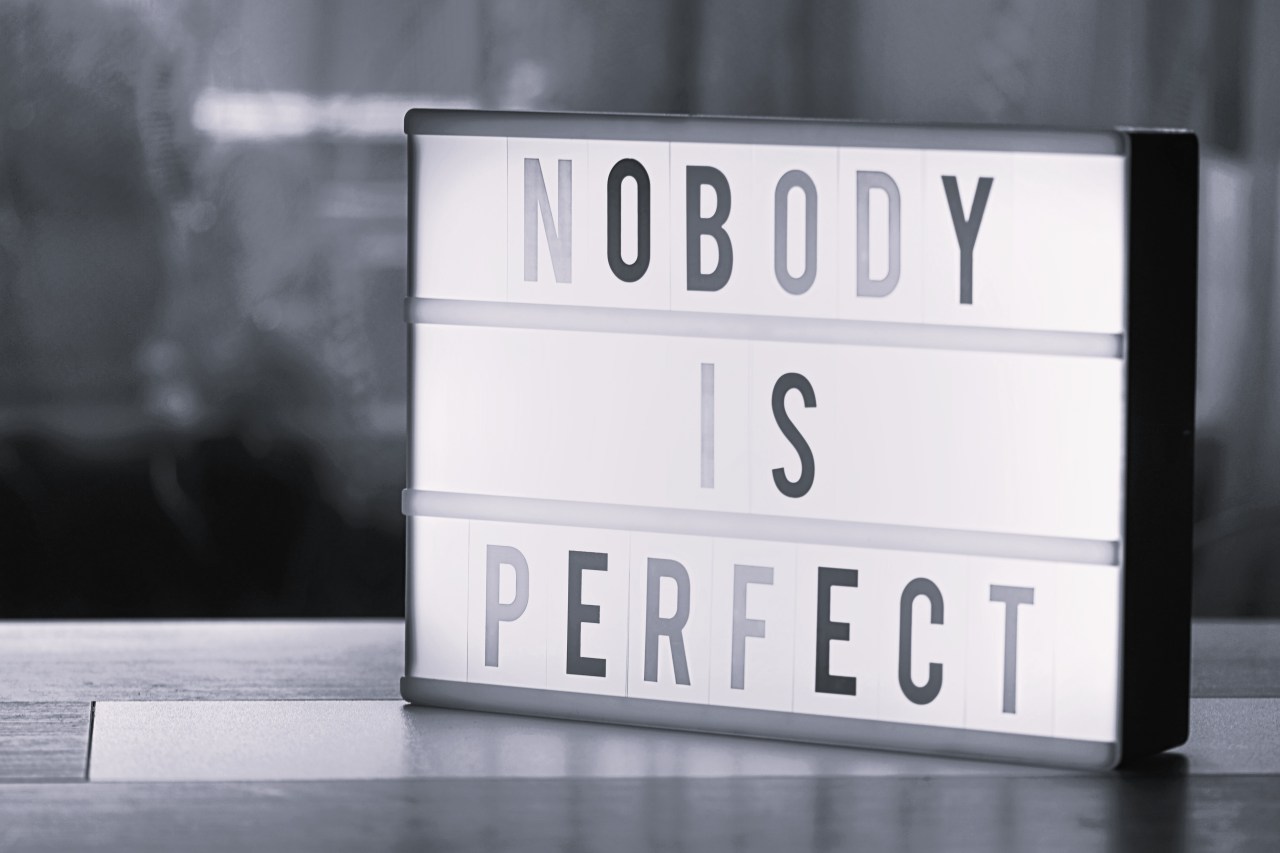
How to Accept Your Humanness and Stop Chasing Perfection

There’s a quiet kind of relief that comes when we finally stop trying to be perfect.

When we stop chasing the illusion that we must always have it together — always strong, always calm, always fine — and start allowing ourselves to be what we already are: human.

It sounds simple, doesn’t it? But for many of us, accepting our humanness feels like the hardest thing in the world.

We live in a culture that celebrates “doing” over “being.” We post our highlight reels but hide our heartbreaks. We praise resilience, but rarely talk about the cracks where that strength is tested.

But the truth is this: you don’t need to be flawless to be worthy of love. You just need to be real.


The Myth of Constant Strength

For years, I believed my worth was measured by how much I could carry without breaking. If I could just hold it together — through the pain, through the loss, through the pressure — then I was strong.

But that wasn’t strength. That was survival.

And survival mode doesn’t allow much room for self-compassion.

It teaches us to suppress what’s uncomfortable, to power through instead of pause, to mistake endurance for courage. But there comes a point when you can’t keep holding your breath through life.

You have to exhale.
You have to fall apart a little.
You have to allow yourself to feel.

Because it’s in those moments — the messy, unguarded, imperfect ones — that healing actually begins.


Being Human Means Being Messy

We will fail. We will get it wrong. We will say the wrong thing, love the wrong person, trust too quickly, or not enough.

We’ll lash out when we’re scared. We’ll close off when we’re hurt. We’ll regret the silence when we should’ve spoken up.

That’s part of being human.

But what makes us grow is not perfection — it’s awareness. It’s choosing to look at our reflection, not to criticize it, but to understand it.

The work of accepting our humanness begins when we stop asking, “What’s wrong with me?” and start asking, “What is this trying to show me?”

Every mistake, every heartbreak, every uncomfortable moment holds a lesson — not to shame us, but to shape us.

When we stop punishing ourselves for being human, we start to heal.


Perfection Is the Enemy of Peace

We chase perfection because we believe it will make us feel safe.

If we do everything right, no one will leave.
If we’re always kind, no one will get angry.
If we’re always strong, no one will see our pain.

But perfection isn’t safety — it’s self-abandonment.

Every time we deny our real feelings, we teach ourselves that we’re only lovable when we’re flawless. And that belief keeps us trapped.

You don’t need to earn your right to rest. You don’t need to earn your right to feel. You don’t need to earn your right to be you.

Your humanity is not something to hide — it’s something to honor.


Learning to Meet Yourself with Grace

When you can look at your reflection — tired, imperfect, flawed — and still say, “I love you,” that’s where peace begins.

Grace is not about letting yourself off the hook. It’s about letting yourself be on the hook for your growth without punishing yourself for being human.

It’s telling yourself:
Yes, I could’ve done better — and I will.
Yes, I hurt someone — and I’ll make it right.
Yes, I fell — but I can get back up.

Healing doesn’t require perfection. It requires honesty.

The more honest you are with yourself, the softer life becomes. The more grace you extend inward, the easier it becomes to extend it outward.

That’s how compassion spreads — from the inside out.


The Power of Humility

Humility isn’t about shrinking yourself — it’s about remembering you’re part of something bigger.

When you can say, “I was wrong,” or “I didn’t know,” or “I’m still learning,” you open the door to growth.

When you can ask for help instead of pretending you have it all figured out, you make connection possible.

And when you can forgive yourself — truly forgive — you make peace possible.

That’s the gift of being human. We stumble, we learn, we grow, and then we help someone else do the same.

That’s not weakness. That’s evolution.


How to Practice Accepting Your Humanness

1. Acknowledge your imperfection.
Say it out loud: “I’m human.” You’ll feel a wave of release. You don’t have to be everything for everyone.

2. Let yourself feel it all.
Anger. Grief. Joy. Fear. Don’t label your emotions as good or bad — they’re messages, not mistakes.

3. Replace judgment with curiosity.
Instead of “Why did I do that?” try “What was I feeling when I did that?” Compassion invites understanding.

4. Set down the need to perform.
You don’t have to earn love by being perfect. Show up as you are — not as who you think you need to be.

5. Celebrate your humanity.
You cry because you care. You ache because you’ve loved. You get back up because you still believe. That’s beautiful.


SLAY Reflection

  1. What part of your humanness do you struggle to accept?
  2. How does perfectionism show up in your daily life?
  3. What’s one mistake from your past that taught you something valuable?
  4. How can you speak to yourself with more compassion this week?
  5. What would it feel like to love yourself as you are, right now?

  • S – Surrender the need to be perfect
  • L – Let yourself feel without judgment
  • A – Accept your flaws as part of your wholeness
  • Y – Yield to grace and choose love over shame

Call to Action: Join the Conversation

I’d love to hear from you.
What’s one way you’re learning to accept your humanness?
Share your story in the comments. Let’s cheer each other on.

And if you know someone who’s being too hard on themselves, send this to them.
Sometimes, all we need is a reminder that being human is enough.


Is There a Better Version of You?

There’s a quiet question that can either empower us or paralyze us: Is there a better version of me out there?

Sometimes, that question pushes us toward growth. Other times, it whispers like doubt, telling us we’ll never measure up. The truth is, the “better version” of you isn’t some unreachable ideal. It’s not a stranger waiting at the finish line. It’s you—already here—waiting to be uncovered, nurtured, and expressed.


The Trap of Perfection

For years, I lived in the shadow of “not enough.” No matter what I accomplished, there was always that voice in my head saying: You should be further along. You should be doing more. You should be better.

Maybe you know that voice too. It’s the one that thrives on comparison, that scrolls through social media and whispers that everyone else has it figured out. It’s the one that insists your worth depends on productivity, appearance, approval, or someone else’s validation.

But here’s the thing: chasing perfection keeps us running in circles. We’ll never outrun the feeling of not enoughness if we keep feeding it.

The better version of you isn’t about being flawless—it’s about being free. Free from the lies that keep you small. Free from the fear of being misunderstood. Free from the chains of perfectionism that whisper you can’t begin until you’ve “arrived.”


Better Doesn’t Mean Different

One of the biggest misconceptions is that becoming a “better you” means transforming into someone else entirely. That’s not true.

The better version of you doesn’t erase the current you—it includes you. It’s your lessons, your scars, your wins, and your setbacks, refined into wisdom. It’s not a makeover. It’s an unfolding.

Think of it this way: a diamond isn’t created by swapping out the rock for something else. It’s created by pressure, time, and patience. The diamond was always there.

The better version of you isn’t an invention. It’s a revelation.


Stop Asking If You’re Enough—Start Asking If You’re Aligned

When I was stuck in cycles of self-sabotage, I constantly asked: Am I enough? That question never brought peace. It only invited judgment.

But when I shifted the question to: Am I aligned? everything changed.

Alignment asks:

  • Am I living according to my values?
  • Am I showing up with integrity?
  • Am I honoring my energy instead of over-giving it away?

When we’re aligned, we stop obsessing over “better” and start focusing on truer. Because when you live in truth, growth is inevitable.


Growth Is Messy, Not Linear

I used to think self-improvement meant climbing a straight staircase, each step higher than the last. But growth? It’s more like a spiral. You circle back to old lessons, but each time you’re stronger, wiser, and better equipped.

Sometimes, the “better version” of you looks like setting boundaries. Sometimes it looks like falling apart and finally asking for help. Sometimes it looks like saying “no” without explanation.

Better doesn’t always look shiny. Sometimes it looks like survival. And that’s okay.


How to Step Into the Better Version of You

If you’re ready to shift from chasing perfection to uncovering your truth, here are some practices that helped me:

  1. Get Honest About Your Patterns
    Where do you keep tripping up? Are you people-pleasing? Overworking? Seeking approval? Honesty is the doorway to change.
  2. Redefine Success
    Instead of measuring success by how others see you, measure it by peace of mind, self-respect, and alignment with your values.
  3. Let Go of Comparisons
    Your journey is not supposed to look like anyone else’s. A flower doesn’t envy another flower—it blooms where it’s planted.
  4. Celebrate Small Wins
    Don’t wait until you’ve “arrived” to feel proud. Every step forward—no matter how small—is evidence of growth.
  5. Forgive the Old You
    The person you were made choices with the tools they had at the time. Forgive them. They carried you here.

The Better Version of You Already Exists

Here’s the truth: there is a better version of you. But it’s not waiting in some distant future. It’s already inside you, asking to be let out.

It’s the version that knows her worth without needing validation. The version that sets boundaries without guilt. The version that chooses peace over chaos, truth over performance, and alignment over approval.

The better version of you isn’t about becoming someone else—it’s about finally becoming yourself.

So the next time you catch yourself wondering if there’s a better you, remind yourself: Yes. And she’s already here.


SLAY Reflection

  1. What does the “better version” of you look like—not in appearance, but in energy, choices, and peace of mind?
  2. Where in your life are you still trying to chase perfection instead of alignment?
  3. What old patterns keep pulling you back—and what lessons are they asking you to learn?
  4. How can you forgive the past versions of yourself for what they didn’t know?
  5. What’s one small step you can take today to align with the truest version of you?

S – Stop comparing your growth to others
L – Let go of perfectionism and people-pleasing
A – Align your choices with your truth
Y – Yield to the better version of you already inside


Call to Action: Join the Conversation

I’d love to hear from you.
When did you realize there was a better version of you waiting inside—and what changed when you began to live it?
Share your story in the comments. Let’s cheer each other on.

And if you know someone who’s still chasing perfection, send this to them.
Sometimes, all we need is a reminder that better isn’t somewhere out there—it’s already inside.

The Oops Factor

Growing up, I never left any room for mistakes. I expected myself to do everything perfectly—and when I didn’t, I beat myself up. I carried these unrealistic expectations with me through childhood, my teenage years, and well into adulthood, never giving myself permission to simply be human. The result? A constant negative narrative playing on loop in my head, convincing me I wasn’t good enough. Every mistake felt like proof of failure, which I used as an excuse to abandon self-care, spiral into self-doubt, and reinforce the lie that I could never get better.

I see now that none of that thinking was true. I made it feel true by keeping my struggles to myself and believing the cruelest voices in my mind. I nearly rode that train all the way into the station—but thankfully, I got off before the final stop.

The truth is: our mistakes are where we learn the most. They shape our character. They build the resilience we need to accomplish the things that really matter. No one is meant to get it right every time. The growth is in the slip-ups. That’s why we need to embrace what I call the “Oops Factor.”


What Perfectionism Really Cost Me

Expecting myself to be perfect—even when I knew better—set me up to fail. I’d aim impossibly high and, when I missed the mark (which was inevitable), I’d use that as ammunition to tear myself down. Even when I succeeded, I picked apart the outcome. I never gave myself permission to feel proud. That made relationships harder too. I lived in fear that people would see me for the fraud I thought I was.

Eventually, I reached a breaking point and asked for help. In that process, I learned something life-changing: mistakes are a sign that I’m trying. They mean I’m pushing myself. And even when things don’t work out the way I hoped, there’s always a lesson or a growth opportunity—often the real reason I was on that path in the first place.

Over time, I’ve learned to trust that I’m exactly where I need to be. My job is to take the next right step. I can’t control the outcome—just the intention behind the action. And when I show up with that mindset? It’s always a win. Trying is the victory. There’s always something to gain.


Make Room for the Oops

We’re all allowed to make mistakes. In fact, we should be making them. That’s how we grow.

Start leaving space for the Oops Factor in your life. When something doesn’t go as planned, look for the lesson—or simply laugh it off. Don’t let the fear of messing up keep you from taking risks or being yourself. Let go of the pressure to be perfect and redefine what success looks like. Maybe, just maybe, being exactly who you are today is enough.

Mistakes don’t define you. But how you respond to them just might.

SLAY on!


SLAY OF THE DAY: Reflect & Rise

  • Do you expect yourself to be perfect?
  • How do you usually react when you make a mistake?
  • Does that response help you—or harm you?
  • What’s one belief about mistakes that you’re ready to let go of?
  • What’s one thing you’ve learned from a recent oops moment that helped you grow?

Give yourself permission to stumble. Learn, laugh, and get back up stronger.


Call to Action: Join the Conversation
I’d love to hear from you.
What’s one way you can show yourself more grace when you make a mistake?
Share your story in the comments. Let’s cheer each other on.

And if you know someone who’s been stuck in a shame spiral, send this to them.
Sometimes, all we need is a little reminder that it’s okay to mess up.

We Are Not Meant To Be Perfect

I was scrolling through my social feed recently when a post from a friend stopped me in my tracks. She was being hard on herself—and calling herself out for it. That kind of self-awareness is powerful. But it also reminded me just how common it is for us to beat ourselves up for not being perfect.

For most of my life, I felt like I was less than. I believed everyone else had it easier, did it better, or simply was better than me. I didn’t just chase perfection—I punished myself for not catching it. And I know now, that wasn’t living. That was surviving under pressure I created for myself.

But here’s the truth I’ve learned along the way:

We are not meant to be perfect.


The Lie of “Perfection”

Perfection is a moving target. It’s shaped by the media, our upbringing, our culture—and our own inner critic. What’s “perfect” to one person might feel totally wrong to someone else. And yet, we often use it as a ruler to measure our worth.

I used to think if I could just do everything rightlook right, act right, succeed right—then I’d finally feel good about myself. But chasing perfection only left me feeling more broken. I saw my mistakes as failures instead of lessons. I saw my body as wrong because it didn’t match an airbrushed image I was never meant to emulate.

The beauty and fashion industries thrive on this illusion. As someone who has worked in that world, I can tell you firsthand: most of what you see has been digitally altered. The people in the photos don’t even look like that in real life. So why are we holding ourselves to impossible standards?


Your Imperfection Is Your Power

True growth happens in the mess. We learn through failure. We build strength through struggle. We connect through our flaws—not despite them, but because of them. And when we stop trying to be perfect, we start learning how to be authentic. That’s when the real magic begins.

What if you let go of the map you were handed and created your own version of “perfect”?
What if your quirks, your softness, your scars—what if those were the most beautiful parts of you?

They are.

When you love the things you can’t change—and commit to working on the things you can—you stop being at war with yourself. You start building a life you actually want to live.

Celebrate Who You Are

We’re all meant to be different. To stand out. To evolve.
So what if instead of chasing the illusion of perfection, you embraced the truth of who you are right now? What if you stopped waiting to feel worthy—and decided you already are?

That’s not weakness. That’s power. And it’s yours to claim.

SLAY on.


SLAY OF THE DAY: Reflect & Rise

Are you chasing an idea of perfection that’s keeping you from loving who you are today?

  • What does “perfect” mean to you—and where did that definition come from?

  • Do you speak kindly to yourself when you fall short, or do you criticize?

  • What parts of yourself do you struggle to accept? Can you reframe them with love?

  • What makes you uniquely you?

  • How can you start celebrating your journey instead of comparing it?


Call to Action: Join the Conversation

I’d love to hear from you.
What’s one way you can let go of perfection and embrace who you are right now?
Share your story in the comments. Let’s cheer each other on.

And if you know someone who’s been beating themselves up for not being perfect, send this to them.
Sometimes, the reminder we need most is that we’re enough—just as we are.

You Don’t Have To Be Perfect, You Just Have To Be

I used to believe I had to be perfect to show up.

Perfect timing. Perfect skills. Perfect hair, even. And if things didn’t line up just right—if I didn’t line up just right—I’d sit it out. I’d pass on the opportunity. I’d talk myself out of the dream. Looking back, I can’t count the chances I missed because I let perfectionism run the show.

But perfection is a lie we tell ourselves when we’re scared.

It gives us a reason to wait, to hide, to stay small. We convince ourselves we’re not ready, not worthy, not enough—so we don’t begin. But here’s the truth: Perfection is not required. Showing up is.


It’s Never Going to Look Perfect—Do It Anyway

No one has it all figured out. No plan is bulletproof. No path is paved just right. Life is messy, and we’re messy too.

The trick is to move forward anyway.

Start with what you’ve got. Doubt? Bring it. Fear? Take it with you. Confusion? Totally normal. You don’t need to wait for the moment to be perfect—you just need to be brave enough to begin.

It reminds me of being a kid on the playground, standing in front of a merry-go-round already spinning. I’d spot my opening, take a breath, and jump. Was it scary? Sure. But it was also thrilling. I didn’t need a guarantee—I just needed to go for it.

So why do we stop doing that?

Because we’ve fallen. We’ve been judged. We’ve been told to wait until we’re “ready.” But the only way to be ready is to start anyway.


Flaws and All, You’re Already Enough

Let me say this loud for the people in the back:

You are already worthy of showing up.

You don’t have to be “fixed” or “perfect” or polished to begin. The real magic happens when you show up as you are. That’s what makes you relatable. That’s what makes you real.

You are perfect in your imperfection. Unique. Valuable. Needed.

And when you let go of chasing perfect, something incredible happens—you start living. You stop waiting. You begin to believe in what’s possible for you.

So whatever it is you’ve been putting off—start it. Show up. Say yes. Jump in. Your life isn’t waiting for perfect. It’s waiting for you.


SLAY Reflection

  1. What’s one thing you’ve avoided because you were waiting for the “perfect” moment?
  2. How has perfectionism kept you from living fully?
  3. What would it feel like to show up just as you are?
  4. What’s one small step you can take this week toward something you’ve been putting off?
  5. Can you write down 5 things that make you uniquely you—and remind yourself why they matter?

S-L-A-Y:

  • Start without needing it to be perfect.
  • Listen to your inner voice—not your inner critic.
  • Accept yourself as you are, flaws and all.
  • You are the magic you’ve been waiting for.

Call to Action: Join the Conversation
I’d love to hear from you.
What have you been putting off because it wasn’t perfect?
Share your story in the comments. Let’s cheer each other on.

And if you know someone who’s stuck waiting for the “right time,” send this to them.
Sometimes, all we need is a nudge.