Peace Over People

There comes a point in life when you realize that protecting your peace isn’t selfish — it’s necessary.

For a long time, many of us are taught to prioritize relationships at all costs. To be accommodating. To be understanding. To be available. To keep the peace, even if it costs us our own.

But here’s the hard truth no one says out loud enough:
Not everyone deserves access to you.

And choosing peace over people doesn’t make you cold, unkind, or difficult.
It makes you honest.

Peace isn’t something you stumble into by accident. It’s something you choose — often after learning the hard way what happens when you don’t.


When Choosing People Costs You Yourself

There was a time when I believed that loyalty meant endurance. That loving someone meant tolerating discomfort. That being a good person meant explaining myself, overextending, and shrinking to keep others comfortable.

So I stayed.
I justified.
I made excuses.
I carried emotional weight that wasn’t mine to hold.

And slowly, without realizing it, I lost my sense of peace.

I felt constantly on edge. I replayed conversations in my head. I walked on eggshells. I questioned myself more than I trusted myself. I told myself it was normal — that relationships were supposed to be hard.

But there’s a difference between growth-discomfort and peace-eroding chaos.

And when a connection consistently costs you your clarity, your safety, or your sense of self — it’s no longer love. It’s a liability.


Peace Is Not the Absence of Conflict It’s the Presence of Alignment

Peace isn’t about avoiding hard conversations or disagreements. It’s about alignment — with yourself, your values, and the way you want to live.

You can be in a room full of people and feel completely at peace.
And you can be deeply connected to someone and feel constantly unsettled.

That’s your body talking.

Peace feels like:

  • Calm instead of tension
  • Clarity instead of confusion
  • Safety instead of anxiety
  • Being yourself instead of performing

When someone disrupts that consistently, it’s not because you’re “too sensitive.” It’s because something isn’t aligned.

And alignment matters more than approval.


Choosing Peace Will Offend People Who Benefit From Your Silence

Let’s be honest — the moment you choose peace, some people will feel threatened.

Not because you changed for the worse.
But because you stopped abandoning yourself for their comfort.

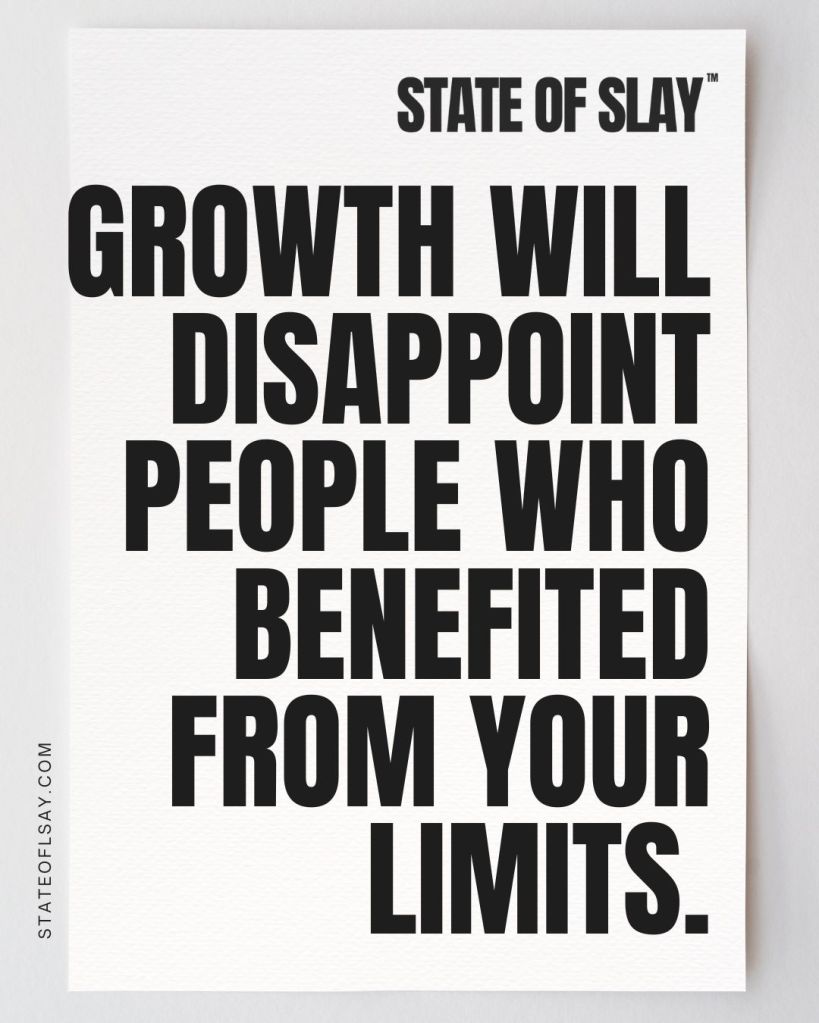
People who benefited from your lack of boundaries will call you distant.
People who relied on your overgiving will call you selfish.
People who were comfortable with your silence will struggle when you find your voice.

That doesn’t mean you’re wrong.

It means the dynamic is changing — and not everyone will be willing or able to meet you where you are now.

Peace has a way of exposing relationships that were built on obligation instead of mutual respect.


You Are Allowed to Walk Away Without Explaining Everything

One of the most liberating truths you can accept is this:
You don’t owe everyone an explanation for choosing yourself.

Closure is not something other people give you — it’s something you choose. You don’t need permission to step back. You don’t need validation to detach. You don’t need agreement to move on.

Sometimes the explanation would only reopen wounds.
Sometimes the conversation would only invite manipulation.
Sometimes silence is the boundary.

Choosing peace means trusting yourself enough to walk away without rewriting the story to make it palatable for others.

You are not responsible for how people process your boundaries.


Peace Requires Boundaries Not Guilt

Peace doesn’t come from cutting everyone off. It comes from discerning who deserves closeness and who requires distance.

Boundaries are not walls — they are doors with locks.

They say:

  • This is how I expect to be treated
  • This is what I will no longer tolerate
  • This is what I need to feel safe and whole

Guilt often shows up when you first set boundaries, especially if you were conditioned to prioritize others’ needs over your own. But guilt is not a sign you’re doing something wrong — it’s a sign you’re doing something new.

And new doesn’t mean wrong.

Every time you honor your boundaries, you reinforce your self-respect. Every time you choose peace, you teach yourself that your well-being matters.


Not Everyone Is Meant to Come With You

This is one of the hardest parts of choosing peace: accepting that some people are seasonal.

They were meant for who you were — not who you’re becoming.

And holding onto them out of nostalgia, guilt, or fear will only keep you tethered to a version of yourself you’ve outgrown.

You can love people from a distance.
You can appreciate what was without forcing what no longer works.
You can wish someone well without inviting them back into your life.

Peace doesn’t require resentment.
It requires honesty.

And sometimes honesty means admitting that access to you is no longer healthy.


Peace Is a Daily Practice

Choosing peace isn’t a one-time decision — it’s a daily practice.

It’s asking yourself:

Does this situation drain me or ground me?
Does this relationship expand me or exhaust me?
Does this choice align with the life I’m trying to build?

Peace shows up in the small choices — who you respond to, what you tolerate, where you invest your energy.

The more you choose peace, the quieter your life becomes.
The quieter your life becomes, the clearer your truth gets.
And clarity changes everything.


You Are Not Losing People You Are Choosing Yourself

If choosing peace costs you people, let it.

You are not here to be consumed, drained, or diminished for the sake of connection. You are here to live fully, honestly, and safely in your own life.

Peace isn’t loneliness.
Peace is freedom.

And the people who are meant to walk beside you will never require you to betray yourself to keep them.

Choose peace — again and again.


SLAY Reflection

Let’s reflect, SLAYER:

S: Where in your life have you been choosing people over your own peace?
L: What relationships leave you feeling drained rather than grounded?
A: What boundary do you need to set to protect your emotional well-being?
Y: How would your life feel if peace became your priority instead of approval?


Call to Action: Join the Conversation

I’d love to hear from you.
What has choosing peace over people looked like in your life — or where do you feel called to make that shift now?
Share your story in the comments. Let’s cheer each other on.

And if you know someone who’s struggling to choose themselves, send this to them.
Sometimes, all we need is a nudge.

Slay Say

So much of what weighs on you happens quietly, internally.
The second-guessing.
The overthinking.
The fear that you’re being watched, measured, judged.

But most of that pressure isn’t real — it’s imagined.
It’s the mind looping through worries that no one else is replaying.
While you’re dissecting every move, most people are navigating their own uncertainties, carrying their own doubts, and trying to find their footing too.

You don’t need to be flawless to move forward.
You don’t need to shrink to stay safe.
You don’t need to carry a spotlight that isn’t actually on you.

Freedom begins when you stop living as if you’re being graded —
and start living as if you’re allowed to learn.

This is your reminder to release the unnecessary weight you’re carrying and move with more ease, more grace, and far less fear.

Slay on!

Survival Mode Is Meant to Save Your Life Not Become Your Life

There are seasons in life where survival mode is necessary. Where getting through the day is an act of bravery. Where your nervous system is on high alert, your heart is guarded, and your only goal is to make it to tomorrow.

Survival mode isn’t weakness.
It’s instinct.
It’s protection.
It’s your body and mind stepping in when things feel unsafe, overwhelming, or unbearable.

But survival mode was never meant to be permanent.

It’s meant to save your life, not define it.

And yet, so many of us stay there far longer than we should — not because we want to, but because it becomes familiar. Predictable. Safer than the unknown.

The danger isn’t entering survival mode.
The danger is building a life inside it.


When Survival Mode Becomes Your Default

Survival mode doesn’t always look dramatic. Sometimes it’s quiet. Functional. Even impressive from the outside.

You’re productive but disconnected.
Independent but exhausted.
Strong but numb.
Capable but constantly bracing for impact.

You tell yourself you’re fine because you’re still standing. Still working. Still showing up. But inside, everything feels tight. Restricted. On edge.

You’re not living — you’re managing.

When survival mode becomes your baseline, your nervous system forgets what safety feels like. Rest feels foreign. Joy feels suspicious. Peace feels temporary.

You stay alert because letting your guard down once cost you something.
And your body remembers.

But living in survival mode long-term comes at a price — emotionally, mentally, physically, and spiritually.


Survival Mode Kept You Alive Honor That

Before we talk about leaving survival mode, let’s be clear about something important:

Survival mode served a purpose.

It helped you endure what you couldn’t escape.
It helped you function when you couldn’t fall apart.
It helped you stay alive when the alternative felt unbearable.

There is no shame in that.

But honoring survival mode doesn’t mean staying there forever. Gratitude doesn’t require permanence. You can thank the coping mechanisms that carried you — without allowing them to cage you.

What once protected you may now be limiting you.
What once kept you safe may now be keeping you small.

And that doesn’t mean you failed — it means you’ve grown.


You Can’t Heal While You’re Still Bracing for Impact

Healing requires safety.
Growth requires space.
Peace requires permission.

Survival mode doesn’t allow for any of those things.

When you’re constantly preparing for the next threat, your body stays tense. Your mind stays guarded. Your heart stays armored. There’s no room to soften — and without softness, healing can’t land.

You might notice this showing up as:

  • Difficulty relaxing even when things are good
  • Feeling guilty for resting
  • Expecting something bad to happen when things feel calm
  • Struggling to trust happiness or stability
  • Staying busy to avoid feeling

This isn’t because you’re broken.
It’s because your system learned that staying alert was safer than being open.

But what kept you alive is not what will help you thrive.


Leaving Survival Mode Can Feel Scarier Than Staying

Here’s the part no one talks about enough:
Leaving survival mode can feel terrifying.

When survival has been your identity, peace can feel unfamiliar. Stillness can feel unsafe. And healing can bring up emotions you didn’t have time to feel when you were just trying to survive.

Survival mode is exhausting — but it’s predictable.
Healing is freeing — but it’s unknown.

So you stay guarded.
You stay busy.
You stay “fine.”

Not because you don’t want more — but because more requires vulnerability.

And vulnerability feels risky when you’ve been hurt before.


You Are Allowed to Want More Than Survival

There comes a moment — sometimes quiet, sometimes loud — when something inside you says:
I don’t want to live like this anymore.

Not because life is falling apart.
But because you’re tired of holding it together.

That moment isn’t weakness.
It’s wisdom.

You are allowed to want ease.
You are allowed to want joy.
You are allowed to want a life that feels expansive instead of constricted.

Choosing to leave survival mode doesn’t mean you forget what you’ve been through. It means you refuse to let your past trauma dictate your future.

It means choosing regulation over reaction.
Presence over protection.
Living over enduring.


Healing Is Learning That You’re Safe Now

Leaving survival mode is a process — not a switch.

It looks like learning how to rest without guilt.
Learning how to feel without panicking.
Learning how to trust yourself again.

It means teaching your nervous system that the danger has passed — even when it doesn’t fully believe you yet.

You don’t rush it.
You don’t force it.
You gently remind yourself again and again:

I am safe now.
I don’t have to brace anymore.
I can exhale.

Healing is not about erasing what happened — it’s about expanding beyond it.


You Deserve a Life That Feels Like Living

Survival mode kept you breathing.
Healing lets you breathe deeply.

You weren’t meant to live clenched, guarded, and constantly on edge. You weren’t meant to mistake exhaustion for strength or numbness for stability.

You were meant to feel joy without fear.
To rest without apology.
To live without constantly scanning for danger.

Survival mode is a chapter — not the whole story.

And if you’re reading this, it might be time to turn the page.


SLAY Reflection

Let’s reflect, SLAYER:

S: Where in your life are you still operating from survival instead of safety?
L: What coping mechanisms once helped you survive but may now be limiting your growth?
A: What would it look like to give yourself permission to rest, soften, or receive support?
Y: How would your life feel if survival was no longer your default?


Call to Action: Join the Conversation

I’d love to hear from you.
Where do you notice survival mode showing up in your life and what would healing look like for you right now?
Share your story in the comments. Let’s cheer each other on.

And if you know someone who’s been surviving longer than they should have to, send this to them.
Sometimes, all we need is a nudge.
Slay Say

It’s easy to point outward.
To explain away patterns.
To justify habits that feel familiar, even when they keep you stuck.

But real growth doesn’t begin with perfection —
it begins with honesty.

When you stop making excuses for what drains you,
trips you up,
or keeps repeating itself,
you reclaim your power.

Not to shame yourself.
Not to criticize who you’ve been.
But to finally see yourself clearly enough to move differently.

Self-awareness isn’t harsh.
It’s freeing.
Because once you name what’s been holding you back,
it no longer gets to run the show.

This is your reminder:
You don’t grow by denying your patterns —
you grow by owning them and choosing better

Slay on!

Whoever Is Trying to Bring You Down Is Already Below You

There’s a moment in all of our lives when someone’s words, opinions, or actions cut deeper than they should. Maybe it’s a comment meant to humble you. Maybe it’s a passive-aggressive dig from someone who smiles while sharpening their knives. Maybe it’s the subtle energy of someone hoping you fail just so they can feel better about themselves.

When someone tries to bring you down, it can feel personal — like an attack on your worth, your identity, or the progress you’ve fought hard to make.

But here’s the truth most of us forget when we’re in the sting of it:
People can only pull you down if they’re already standing below you.

People who are grounded in self-worth don’t try to diminish others. People who are fulfilled don’t tear at the edges of someone else’s joy. People who are secure don’t throw stones at anyone who dares to rise.

Their actions say nothing about your value and everything about where they’re standing.


When Someone Targets You, It’s Rarely About You

People who feel whole don’t spend their energy trying to make others feel small. They’re too busy growing, creating, loving, and becoming. When someone attempts to knock you down, what they’re really doing is revealing their own inner struggle.

It’s projection.
It’s insecurity.
It’s comparison dressed up as criticism.

The person trying to belittle you is not operating from power — they’re operating from fear. Fear that you’ll outgrow them. Fear that your success will expose their stagnation. Fear that your courage will confront the parts of themselves they’ve been avoiding.

When you understand this, their behavior no longer feels like a personal attack. It becomes information.

A clarity.
A boundary cue.
A reminder that their perspective isn’t a reflection of who you are — it’s a reflection of where they are.


You Don’t Have to Defend Your Light

When someone tries to dim you, the first instinct is often to defend yourself. To explain. To justify. To make them understand you. But people determined to misunderstand you will always find a way.

Your worth doesn’t increase or decrease based on who recognizes it.
Your light doesn’t owe anyone permission to shine.

Every time you rise, you will trigger something in someone who isn’t ready to rise with you. That isn’t your burden to carry. You don’t need to shrink to make anyone comfortable. You don’t need to contort yourself to be likable. You don’t need to prove anything to anyone who is committed to not seeing you.

Your only job is to keep growing into the fullest version of yourself.

And that version? She isn’t threatened by noise beneath her.


Growth Will Always Expose the Ones Rooted in Stagnation

As you heal, evolve, and expand, the contrast becomes louder. Some people will cheer. Some will drift away. And some will try to throw anchors at your ankles.

Instead of asking, “Why are they acting like this?” shift the question to:
“What is my growth revealing in them?”

Sometimes your happiness highlights their dissatisfaction.
Sometimes your confidence highlights their insecurity.
Sometimes your movement highlights their fear of changing.

And instead of rising with you, they reach for the only tool they know:
Pulling you down.

What they don’t realize is this — you’re not standing where you used to. You’ve climbed. You’ve earned your view. And anyone trying to drag you backward has already positioned themselves behind you to do it.

You don’t have to go down there with them.


Your Energy Is Too Expensive for Their Insecurity

You’ve worked too hard.
You’ve healed too much.
You’ve grown too far.
You’ve survived too many storms to let someone’s insecurity become your setback.

Their opinions don’t pay your bills.
Their validation doesn’t define your identity.
Their behavior doesn’t determine your destiny.

Distance is not disrespect.
Detachment is not coldness.
Boundaries are not punishment.

Boundaries are self-respect in action.
Choosing not to engage is strength.
Refusing to internalize someone else’s projections is wisdom.

When you stop responding to people who want to see you fall, you reclaim your power.
When you stop defending yourself to people who never intend to understand you, you reclaim your peace.
When you refuse to come down to where their insecurity lives, you reclaim your joy.

And the higher you rise, the quieter the noise becomes.


You Are Not Who They Think You Are — You’re Who You’re Becoming

Don’t let someone beneath you convince you to step off your path. Their words aren’t truth — they’re static. Their attempts to pull you down aren’t insight — they’re fear. Their behavior isn’t a reflection of your destiny — it’s a sign of their emotional altitude.

Keep going.
Keep rising.
Keep growing in the direction of your becoming.

Because here’s the power they forget you hold:

No one can bring you down when you’ve already decided to lift yourself higher.

You don’t need to match their energy.
You don’t need to sink to their level.
You don’t need to explain your rise.

Just keep climbing.
The view is not for them — it’s for you.


SLAY Reflection

Let’s reflect, SLAYER:

S: Who in your life has tried to bring you down, and what did their behavior reveal about their emotional state?
L: How have you dimmed yourself in the past to avoid triggering someone else’s insecurity?
A: What boundary do you need to set with someone who keeps trying to pull you backward?
Y: What would rising above their noise look like for you — and how would it feel to finally choose your own growth?


Call to Action: Join the Conversation

I’d love to hear from you.
When has someone tried to bring you down — and how did you rise above it?
Share your story in the comments. Let’s cheer each other on.

And if you know someone who’s wrestling with other people’s opinions, send this to them.
Sometimes, all we need is a nudge.

Slay Say

There are seasons when the world is quiet around you.
When your progress goes unseen,
your efforts go unrecognized,
and the path you are on makes sense only to you.

In those moments, doubt grows loud.
It whispers that if no one else understands the vision,
maybe you should stop believing in it too.

But this is where inner strength is built—
not in applause,
not in validation,
but in choosing to trust your direction
even when you are walking it alone.

Your growth does not require recognition.
Your purpose does not need an audience.
Your next chapter is being shaped in silence long before anyone else notices the shift.

This is your reminder:
The path is still leading you somewhere meaningful,
even when only you can see it.

Slay on!

The First Step Toward Answers Is Being Brave Enough to Ask the Question

There’s a moment — quiet, subtle, easy to miss — when your life begins to shift.
It’s the moment you finally stop pretending you already know. The moment you stop running from the truth. The moment you decide that not knowing is no longer scarier than staying stuck.

That moment is a question.

We don’t talk enough about how much courage it takes to ask one. Because asking a real, honest, soul-level question isn’t just seeking information — it’s opening a door you can’t close again. It’s admitting you want something different. It’s acknowledging that what you’ve been doing is no longer enough.

And for many of us, that is the hardest step of all.


Why We Fear the Questions We Need to Ask

We fear the answers, yes — but often, we fear the asking even more.

Because asking a question means:

  • I might hear something I don’t want to hear.
  • I might have to change.
  • I might be seen.
  • I might learn the truth.

So we avoid it. We distract ourselves. We pretend we’re fine. We convince ourselves we already know how it will go.

But avoidance is its own kind of prison.
And silence is its own kind of answer.

When we refuse to ask the questions that could heal us, save us, free us, or grow us, we stay stuck in a life that feels too small for who we are becoming.


The Questions That Change Everything

Real transformation doesn’t come from having all the answers.
It comes from being willing to ask the uncomfortable questions — the ones that scrape at the truth.

Questions like:

  • What am I afraid to admit?
  • What is this really about?
  • What am I pretending not to know?
  • What do I need?
  • What would I choose if I believed I deserved better?

These are the questions that crack things open.
These are the questions that stop the cycle.
These are the questions that begin your becoming.

And yes — they require courage.
But courage isn’t the absence of fear. Courage is asking the question while your voice trembles.


Answers Don’t Arrive Without an Invitation

There’s a spiritual truth that I learned early in my healing journey:

You cannot receive answers to questions you’re too afraid to ask.

Life will not force clarity on you.
Healing will not push its way in.
Growth will not drag you forward.

You have to invite it.

You have to ask:

  • Why does this pattern keep repeating?
  • What part of me still needs to be healed?
  • What is this trying to teach me?

When you ask the question, the universe, your intuition, your higher self — whatever language you use — finally has somewhere to deliver the answer.

Asking the question is the knock on the door.
The answer is what steps through.


Bravery Looks Like Curiosity, Not Certainty

We think bravery requires confidence.
But most of the bravery in my life came in moments where I didn’t feel certain at all.

Bravery looked like:

  • sitting with someone and saying, “I don’t know how to fix this — can we talk?”
  • looking in the mirror and whispering, “Why do I keep hurting myself this way?”
  • asking for help long before I believed I deserved it
  • admitting I didn’t have control — and never really did

Questions are not weakness.
Questions are self-respect.
Questions are the beginning of wisdom.

The bravest people I know aren’t the ones with the answers — they’re the ones willing to keep asking.


You Deserve the Life That Lives Beyond the Question

There is a version of you waiting on the other side of one brave question.

A more grounded you.
A more peaceful you.
A more aligned, self-aware, self-honoring you.

But you cannot reach her — cannot step into her — if you’re unwilling to ask what needs to be asked.

Whether it’s a question about love, healing, boundaries, forgiveness, purpose, or truth, your life expands the moment you become brave enough to be curious.

Asking the question doesn’t guarantee the answer will be easy.
But not asking guarantees nothing will change.

SLAYER, don’t let fear keep you from the clarity that could change your entire life.

Ask.
Be curious.
Be brave.

Your answers are waiting.


SLAY Reflection

  1. What important question have you been avoiding — and why?
  2. What fear shows up when you imagine asking it?
  3. How might your life shift if you allowed yourself to seek clarity?
  4. What question could help you break a repeating pattern in your life?
  5. What small act of courage can you take this week to open the door to the answers you need?

  • S – Seek clarity instead of avoiding discomfort
  • L – Let curiosity lead you toward truth
  • A – Ask bravely, even when you’re afraid
  • Y – Yield to the wisdom that arrives when you open the door

Call to Action: Join the Conversation

I’d love to hear from you.
What question are you finally brave enough to ask yourself?
Share your story in the comments. Let’s cheer each other on.

And if you know someone who’s been afraid to seek the truth, send this to them.
Sometimes, the right question is the beginning of a new life.

Slay Say

We all have goals that call us forward—
dreams, changes, next chapters that ask more of us
than staying where we feel safe.

But it’s impossible to move into what’s next
while giving your energy to what’s already behind you.
You can’t grow while tending to the comfort of what’s familiar.
You can’t step into opportunity while replaying what held you back.

Progress doesn’t happen in the places where you stay small.
It happens in the stretch—
in the risks you take,
in the habits you break,
in the willingness to do the thing you’ve avoided because it feels big.

Your goals aren’t waiting for you to perfect your past.
They’re waiting for you to stop living in it.

This is your reminder:
You move forward the moment you choose growth over comfort.

Slay on!

The Convenient Lie vs. The Inconvenient Truth

There’s a moment we all face at some point in our lives — that split second where we know the truth, feel the truth, and can almost hear it knocking inside us… yet we swallow it, push it aside, or cover it with something easier. Something softer. Something far more convenient.

A convenient lie.

Convenient lies are seductive. They shield us from discomfort, delay accountability, and let us stay exactly where we are. They keep the peace — temporarily. They protect our reputation — superficially. They protect our ego — momentarily. But they never move us forward.

The inconvenient truth, on the other hand, doesn’t care about comfort. It doesn’t soften its edges to make the landing easier. It shows up as it is — raw, revealing, and sometimes painful. But it is always the doorway to freedom.

And this is the paradox:
Lies keep us safe in the moment. Truth keeps us free in our lives.

Learning to choose the inconvenient truth over the convenient lie is one of the most defining acts of emotional maturity we will ever face.


Why We Choose the Convenient Lie

Let’s be honest — most lies don’t come from cruelty. They come from fear.

Fear of hurting someone.
Fear of looking bad.
Fear of disappointing others.
Fear of disappointing ourselves.
Fear of consequences.
Fear of change.

For years, I leaned on convenient lies because the truth felt overwhelming. It meant confronting who I had become. It meant taking responsibility. It meant letting go of people, habits, or patterns that once kept me afloat.

Convenient lies feel like cushions.
Inconvenient truths feel like cliffs.

But here’s the thing:
Cushions can suffocate you just as quickly as cliffs can scare you.

Convenient lies delay pain, but they guarantee suffering.


The High Cost of Avoiding the Truth

When you bend, blur, or bury the truth, you pay for it in ways you don’t always see right away.

The cost shows up later as:

  • anxiety you can’t explain
  • guilt that follows you into bed
  • shame that sticks to your skin
  • relationships built on uneven ground
  • resentment that grows each time you betray your own integrity
  • a life that doesn’t feel like yours

Convenient lies feel like relief… until they don’t.

Because every time you avoid the truth, you abandon a piece of yourself. And eventually, those pieces add up.


The Inconvenient Truth: A Pathway to Freedom

Telling the truth has consequences. That’s why it scares us.

But so does hiding it.

The difference is that truth gives you your life back.

The inconvenient truth does not destroy you — it reveals you. It strips away illusion, denial, fantasy, and projection. It brings you back into alignment with yourself. It allows you to grow.

It is inconvenient because it demands clarity, responsibility, ownership, and sometimes painful self-awareness. But it also gives you something no lie ever could:

Peace.

The kind of peace you don’t need to earn.
The kind of peace you don’t need to protect.
The kind of peace that only comes from living in integrity.


Truth Doesn’t Hurt as Much as Staying in What Isn’t True

We’ve all been taught that “the truth hurts.” But the truth doesn’t hurt nearly as much as living a lie — especially a lie you tell yourself.

The lie says: “If I tell the truth, I’ll lose them.”
The truth says: “If you have to lie to keep someone, you’ve already lost them.”

The lie says: “If I ignore it, it will go away.”
The truth says: “What you avoid controls you.”

The lie says: “It’s not the right time to face this.”
The truth says: “There is no right time — only now.”

Truth invites you into reality — and reality, even when painful, is where healing lives.


Being Honest With Yourself Is the Hardest Part

You cannot offer truth to others if you refuse to sit with it yourself.

Some of the hardest truths I’ve ever faced were not the conversations I had with other people — but the ones I had alone at night, staring at my reflection and realizing:

I had lied to myself about what I could handle.
I had lied to myself about who someone really was.
I had lied to myself about what I deserved.
I had lied to myself about my patterns and intentions.
I had lied to myself to stay comfortable.

Those truths were inconvenient.
They were painful.
But they were transformational.

Self-honesty is the birthplace of self-respect.


How to Choose Truth When the Lie Feels Easier

Here are practices that help you step into honesty with courage:

1. Sit with discomfort instead of escaping it.

Discomfort isn’t danger — it’s data.

2. Notice when you rationalize.

Any sentence that starts with “It’s no big deal” or “It doesn’t matter” is a clue.

3. Ask yourself: “What am I afraid will happen if I tell the truth?”

Your answer is where the work begins.

4. Practice micro-honesty.

Small truths make room for bigger ones.

5. Let go of outcomes.

Your job is to tell the truth — not control what happens after.

Truth is not the burden.
Carrying the lie is.


Choosing Truth Is Choosing Yourself

At the end of the day, choosing the inconvenient truth means choosing yourself — your integrity, your peace, your inner alignment.

When you tell the truth, you stop betraying yourself for temporary comfort.

You start building a life that can actually hold you.

A life that doesn’t require performance, pretending, or self-betrayal.

A life rooted in the most powerful thing of all:

Authenticity.

And that, SLAYER, is where your freedom lives.


SLAY Reflection

  1. Where in your life are you choosing convenience over truth?
  2. What are you afraid will happen if you tell the truth — and is that fear rooted in reality?
  3. What truth have you been avoiding that feels heavy in your body?
  4. How has hiding the truth kept you stuck or small?
  5. What would choosing truth make possible for you?

  • S – See where you’ve been hiding behind convenience
  • L – Let truth guide your healing, even when it’s hard
  • A – Accept discomfort as part of growth
  • Y – Yield to honesty and reclaim your peace

Call to Action: Join the Conversation

I’d love to hear from you.
What inconvenient truth did you finally face — and how did it change your life?
Share your story in the comments. Let’s cheer each other on.

And if you know someone who’s stuck in a convenient lie, send this to them.
Sometimes, the truth someone’s avoiding is the truth they most need to hear.

Slay Say

You discover who you are the moment you stop auditioning for acceptance.

We learn to shape-shift early.
To fit the room.
To earn approval.
To become what makes others comfortable—even if it costs us pieces of ourselves.

But there comes a moment when the performance gets too heavy.
When pretending feels louder than truth.
When the mask you’ve been holding starts to slip…
and underneath it is the version of you that’s been waiting for air.

Real identity isn’t found in perfection or presentation.
It’s found in the quiet courage to show up as yourself—without shrinking, without apologizing, without molding your worth around someone else’s gaze.

Stepping out of the role others expect isn’t rebellion.
It’s alignment.
It’s freedom.
It’s the first step toward a life that finally fits.

This is your reminder:
You don’t need to audition for a role that was already yours.

Slay on!