Never Explain Yourself To People Who Are Dedicated To Misunderstanding You

There was a time when I thought clarity would fix everything.

If someone misunderstood me, I explained more. If they questioned my motives, I justified them. If tension arose, I tried harder to communicate. I believed that if I just found the right words, the right tone, the right explanation, everything would resolve.

Sometimes it did.

But sometimes, no matter how clearly I spoke, the misunderstanding remained. And eventually I realized something uncomfortable but incredibly freeing.

Not everyone wants understanding.

Some people are committed to their version of you.

And explaining yourself endlessly does not change that.


Prefer to listen? The Audio Blog version is available here.


The Difference Between Confusion And Resistance

Healthy relationships allow space for clarification. Misunderstandings happen. Conversations help. Growth follows.

But there is a difference between someone seeking understanding and someone resisting it.

When someone genuinely wants clarity, they listen. They ask questions. They reflect. There is movement toward resolution.

When someone is dedicated to misunderstanding you, explanations become circular. Nothing shifts. Intentions get distorted. And you leave conversations feeling drained rather than connected.

Recognizing that difference protects your energy.


I Learned This The Hard Way

For years, I overexplained myself.

I thought it was a responsibility. I thought it showed maturity. I thought it prevented conflict.

Sometimes it was simply fear. Fear of rejection. Fear of being judged. Fear of being seen inaccurately.

So I tried to control perception through explanation.

But control is an illusion.

Eventually, I saw that constant explaining was not creating understanding. It was creating exhaustion.

And that realization changed how I approached communication.


You Are Allowed To Be Understood By The Right People

Not everyone is your audience.

That statement once felt harsh to me. Now it feels empowering.

The people meant to be in your life generally seek understanding, not ammunition. They listen with curiosity, not suspicion. They care about connection more than being right.

Those relationships feel different. Lighter. More stable.

And once you experience that, you realize how unnecessary constant self-justification really is.


Boundaries Protect Emotional Health

Boundaries are not walls. They are clarity.

Choosing not to overexplain is often a boundary. It does not mean you lack accountability. It means you recognize when further explanation will not lead to growth.

Boundaries say:

I will communicate clearly once.
I will answer sincere questions.
But I will not chase validation or exhaust myself trying to change fixed perceptions.

That boundary protects peace.

And peace supports mental wellness.


Silence Can Be A Form Of Strength

Silence used to scare me.

I worried it meant giving up. Losing ground. Appearing weak.

Now I understand silence differently.

Sometimes silence reflects confidence. Sometimes it reflects acceptance. Sometimes it reflects wisdom.

Not every misunderstanding requires correction. Not every opinion requires rebuttal. Not every assumption deserves energy.

Choosing when to speak is powerful.

Choosing when not to speak can be even more powerful.


Authentic Living Reduces The Need To Explain

The more aligned I became with my values, the less I felt the urge to justify myself.

When your actions match your beliefs, internal clarity replaces external validation. You still care about relationships. You still value communication. But you are less dependent on universal approval.

And that shift is freeing.

You begin living from authenticity rather than perception management.

That is where real confidence grows.


Let People Have Their Perspective

This was another difficult lesson.

You can present facts, intentions, and context. But you cannot control interpretation. Everyone filters information through their own experiences, fears, and expectations.

And that is human.

Allowing others their perspective does not mean you agree with it. It simply means you release the need to control it.

That release creates emotional space.

And emotional space creates peace.


SLAY Reflection

Let’s reflect, SLAYER:

S: Do you find yourself over-explaining to avoid misunderstanding or conflict?

L: How does that habit affect your energy and emotional well-being?

A: Where might a gentle boundary reduce the need for constant explanation?

Y: How would your life feel if you trusted that the right people will seek understanding naturally?


Call to Action: Join the Conversation

I’d love to hear from you.
Have you experienced a moment where you stopped over-explaining and chose peace instead? What changed for you?
Share your story in the comments. Let’s cheer each other on.

And if you know someone who needs permission to stop exhausting themselves explaining their intentions, send this to them.
Sometimes, all we need is a nudge.

Slay Say

Insight Becomes Change Through Action

Awareness is powerful. It helps you recognize patterns, understand triggers, and see yourself more clearly. But awareness alone does not create transformation. Movement does.

Growth often happens when insight turns into small, consistent choices. When understanding becomes behavior. When intention becomes practice.

This is your reminder to let what you learn guide what you do.

Slay on.

If Their Absence Brings You Peace You Did Not Lose Them

There was a time when I believed every ending was a loss.

If a relationship faded, if someone stepped away, if a friendship dissolved, I assumed I had failed somehow. I replayed conversations. I questioned my worth. I wondered what I could have done differently.

And sometimes there were lessons to learn. Accountability matters. Growth matters. Self-reflection matters.

But there came a moment when I noticed something I could not ignore.

Peace.

Not immediately. Not dramatically. But gradually, quietly, consistently. The absence of certain people or situations brought calm instead of chaos.

And that realization shifted everything.

Because sometimes what we call loss is actually relief.


Prefer to listen? The Audio Blog version is available here.


Peace Is Powerful Information

Peace is data.

If someone’s absence lowers your anxiety, reduces tension, or allows you to feel more like yourself, that is worth paying attention to. It does not necessarily mean the other person is bad. It simply means the dynamic was not healthy for you.

Not every connection is meant to last forever.

Some people enter our lives to teach us boundaries. Some show us what we need. Some reveal what we deserve. And some simply outgrow alignment with who we are becoming.

That is not failure.

That is evolution.


Growth Changes Relationships

As we grow, our needs change. Our values sharpen. Our tolerance for certain behaviors shifts. What once felt normal may start to feel draining.

I experienced this firsthand.

As I committed more deeply to healing, honesty, and self-respect, some relationships no longer fit. Conversations felt forced. Energy felt mismatched. Peace felt compromised.

Letting go was uncomfortable at first.

But staying would have been more uncomfortable in the long run.

Growth often requires recalibration.

And that includes relationships.


Letting Go Is Not Always Rejection

It is easy to interpret distance as rejection. I certainly did.

But many times, distance is simply alignment adjusting.

Sometimes two people are both growing, just in different directions. Sometimes, timing changes compatibility. Sometimes healing requires space.

And sometimes peace requires distance.

Recognizing that helped me release resentment and guilt.

Because letting go can be an act of self-respect, not hostility.


You Are Allowed To Choose Peace

This was one of the hardest lessons for me.

I used to believe choosing peace was selfish. That maintaining relationships at any cost was the kinder choice. That discomfort was just part of connection.

But chronic tension is not connection.

Consistent anxiety is not intimacy.

Emotional exhaustion is not loyalty.

Peace is not something you earn by enduring discomfort. It is something you protect by making aligned choices.

And you are allowed to protect it.


Absence Can Clarify Value

When someone leaves your daily orbit, clarity often follows.

You see patterns more clearly. You notice emotional shifts. You understand what you were tolerating versus what you truly needed.

Sometimes that clarity leads to reconnection later in a healthier way. Sometimes it confirms the separation was necessary.

Both outcomes can be valid.

The goal is not permanence.

The goal is well-being.


Loss And Relief Can Coexist

It is important to acknowledge this nuance.

You can miss someone and still feel more peaceful without them. You can appreciate what was while accepting what is. You can hold gratitude and boundaries simultaneously.

Human emotions are layered.

Allowing that complexity creates emotional maturity.

And emotional maturity supports healthier future connections.


Choosing Peace Supports Growth

Peace creates space.

Space for clarity. Space for healing. Space for creativity. Space for joy.

When your nervous system is not constantly bracing for stress, your energy becomes available for growth instead of survival.

That shift changes everything.

And often, it begins by acknowledging that peace is not accidental.

It is intentional.


SLAY Reflection

Let’s reflect, SLAYER:

S: Have you ever felt more peaceful after a relationship or situation ended?

L: What did that peace reveal about your needs or boundaries?

A: Are there dynamics currently in your life that feel more draining than supportive?

Y: What step could you take to protect your peace while remaining compassionate?


Call to Action: Join the Conversation

I’d love to hear from you.
Have you experienced a situation where someone’s absence created unexpected peace, and what did you learn from it?
Share your story in the comments. Let’s cheer each other on.

And if you know someone navigating change in relationships, send this to them.
Sometimes, all we need is a nudge.

Slay Say

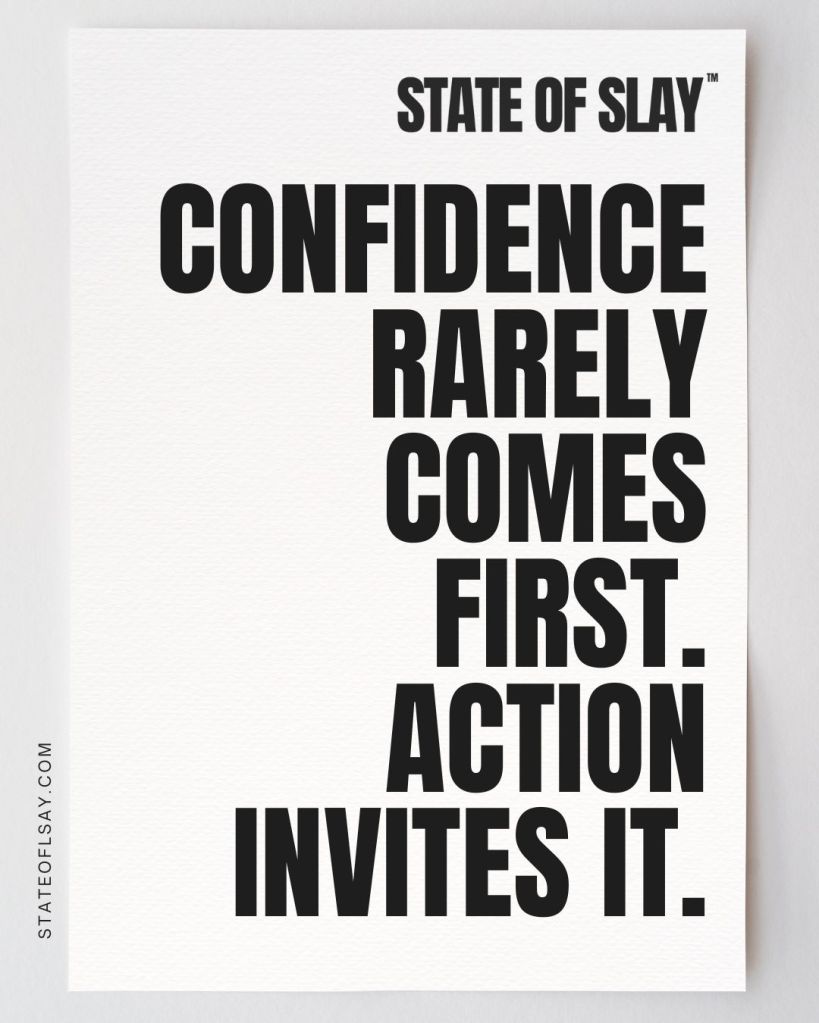
Courage Usually Follows Movement

We often wait for confidence before taking action, believing readiness should come first. But growth rarely works that way. Momentum builds through experience, not hesitation.

The first step may feel uncertain. The early attempts may feel imperfect. That is not failure — it is part of becoming capable. Confidence tends to grow quietly alongside effort, not ahead of it.

This is your reminder to begin even when certainty is not fully there.

Slay on.

The Only Out Is Through

There was a time when I believed avoidance was survival.

If something hurt, I distracted myself. If something scared me, I delayed it. If something overwhelmed me, I convinced myself it would pass on its own.

Sometimes it did.

But most of the time, it waited.

And eventually, whatever I was avoiding showed up again. Usually louder. Usually heavier. Usually, at a time when I felt even less prepared to handle it.

That was when I finally understood something that has become a guiding truth in my life.

The only out is through.

Not around it. Not over it. Not pretending it is not there. Through it.

And while that realization was intimidating at first, it ultimately became freeing.


Prefer to listen? The Audio Blog version is available here.


Avoidance Feels Safer Until It Isn’t

Avoidance gives temporary relief. It lowers anxiety in the moment. It allows us to breathe for a second.

But unresolved emotions, difficult conversations, grief, fear, and truth do not disappear simply because we delay them.

They accumulate.

They surface in stress, burnout, irritability, anxiety, and even physical symptoms. And often, the longer we avoid something, the bigger it feels.

Facing something directly is rarely comfortable. But avoiding it usually costs more in the long run.

That was a hard lesson for me.

But a necessary one.


Growth Lives On The Other Side Of Discomfort

Every meaningful shift in my life required walking through discomfort.

Healing. Honest conversations. Setting boundaries. Admitting mistakes. Asking for help. Letting go of relationships that no longer served me. Even allowing joy again after loss.

None of that happened by bypassing difficult emotions.

It happened by moving through them.

And while the process was not always graceful, it was transformative.

Because growth rarely happens in comfort zones.

It happens when we face what we would rather avoid.


Emotional Courage Builds Emotional Strength

Courage is often misunderstood.

People assume it means fearlessness. But most of the courageous choices I have made happened while I was afraid.

Speaking honestly when silence felt easier. Showing vulnerability when hiding felt safer. Choosing healing when numbness felt familiar.

Courage is not the absence of fear.

It is movement despite fear.

And each time you move through something difficult, your emotional resilience grows.

That confidence compounds.


My Own Turning Point

There was a moment when I realized I could not keep outrunning myself.

Old patterns. Old pain. Old coping strategies. They were not working anymore. They were exhausting me.

So I made a choice.

Not to rush healing. Not to force perfection. Just to start walking through what I had been avoiding.

Therapy. Honest conversations. Self-reflection. Accountability. Forgiveness.

It was uncomfortable. Sometimes painful. Occasionally messy.

But it was also liberating.

Because each step forward reduced the weight I had been carrying.


Through Does Not Mean Alone

One important clarification.

Moving through something does not mean you have to do it alone.

Support matters. Friends. Family. Therapists. Mentors. Community. Shared experiences.

Connection often makes difficult processes more manageable. It provides perspective, encouragement, and accountability.

Strength is not isolation.

Strength is allowing support while doing the work.

And that combination is powerful.


Progress Is Not Linear

There were days I felt strong. Days I felt exhausted. Days I felt hopeful. Days I felt overwhelmed.

That fluctuation is normal.

Healing is rarely a straight line. It is often a spiral. You revisit themes at deeper levels. You grow gradually. You build resilience incrementally.

The key is movement.

Even slow movement counts.

Even uncertain movement counts.

Forward is forward.


Peace Comes From Processing, Not Avoiding

When you move through something instead of around it, something shifts internally.

Clarity replaces confusion. Acceptance replaces resistance. Peace replaces tension.

Not instantly.

But steadily.

And that peace becomes a foundation you carry forward into future challenges.

Which makes future obstacles feel less intimidating.

Because you already know you can move through them.


SLAY Reflection

Let’s reflect, SLAYER:

S: What situation or emotion have you been avoiding lately?

L: What feels most uncomfortable about facing it directly?

A: Who could support you as you move through this experience?

Y: What small step today would represent forward movement rather than avoidance?


Call to Action: Join the Conversation

I’d love to hear from you.
What challenge taught you that the only way forward was through, and what did you learn on the other side?
Share your story in the comments. Let’s cheer each other on.

And if you know someone navigating a difficult season, send this to them.
Sometimes, all we need is a nudge.

Slay Say

You Are Allowed to Evolve

Growth does not always look dramatic. Sometimes it simply means stepping into a version of yourself that feels more honest, more aligned, and more grounded than before.

That shift can surprise people. Expectations adjust. Familiar dynamics change. And while that can feel uncomfortable at first, it is often a sign that you are moving closer to authenticity rather than further from connection.

This is your reminder to keep becoming who you are, even if it takes time for others to catch up.

Slay on.

You Do Not Need To Fix Yourself You Need To Retrain The Pattern

For years, I believed something was wrong with me.

Every setback, every difficult emotion, every repeated mistake became evidence in my mind that I was flawed. That I needed fixing. That I was somehow broken.

That belief kept me stuck longer than anything else ever did.

Because when you think you are the problem, change feels impossible. But when you realize a pattern is the problem, suddenly there is room for growth.

And that shift changes everything.


Prefer to listen? The Audio Blog version is available here.


The Difference Between Identity And Behavior

There is a profound psychological difference between saying “I am broken” and saying “I have a pattern that is not serving me.”

One attacks identity. The other addresses behavior.

Identity feels permanent. Behavior feels adjustable.

When I began to separate who I was from what I did, I experienced relief. I was not defective. I was human. I had learned coping strategies, habits, and reactions that made sense at one point but no longer supported my well-being.

And habits can be retrained.

That realization gave me hope.


Why The Brain Responds Better To Patterns

Our brains are incredibly adaptive. Neuroscience tells us they reorganize based on repeated thoughts and actions. What we practice becomes familiar. What is familiar becomes automatic.

So when we say “I need to fix myself,” the brain often interprets that as shame. And shame tends to shut down growth. It triggers defense, avoidance, and self-criticism.

But when we say “I need to retrain this pattern,” the brain shifts into problem-solving mode. It looks for solutions instead of assigning blame.

That subtle language shift can influence emotional resilience, motivation, and actual behavioral change.

Words matter.

Especially the ones we use with ourselves.


My Own Experience With This Shift

There was a time when I blamed myself for everything. If something went wrong, I assumed it confirmed my inadequacy. That mindset fueled anxiety, perfectionism, and exhaustion.

Eventually, I started noticing recurring patterns. Over-committing. Avoiding difficult conversations. Seeking validation. Ignoring my own needs.

Instead of labeling myself as flawed, I began asking different questions.

What triggered this reaction?
What need was I trying to meet?
What would a healthier response look like?

That curiosity replaced criticism. And progress became possible.

Not instant. Not perfect. But real.


Patterns Are Learned, And They Can Be Relearned

Most of our emotional patterns formed early. Family dynamics, cultural expectations, past relationships, trauma, success, failure, all of it shapes how we respond to life.

But learned does not mean permanent.

Awareness is the first step. Compassion is the second. Consistent action is the third.

Change rarely happens overnight. It happens through repetition. Through gentle correction. Through patience with ourselves.

And every time we choose a healthier response, we strengthen a new pathway in the brain.

That is growth in action.


Self-Compassion Accelerates Change

Criticism rarely produces lasting transformation.

Compassion does.

When we treat ourselves with kindness, we reduce fear. When fear decreases, openness increases. And openness allows learning.

It may sound counterintuitive, but being gentler with yourself often leads to stronger accountability. Because you are not operating from shame. You are operating from intention.

That makes change sustainable.

And sustainable change is what we want.


You Are Not A Project, You Are A Person

One of the biggest lessons on my journey has been this:

I am not something to fix.

I am someone to understand.

There is a big difference.

When we stop treating ourselves like broken projects and start treating ourselves like evolving humans, growth becomes less stressful. It becomes more natural.

You are allowed to grow without condemning where you started.

You are allowed to improve without rejecting who you were.

That perspective creates emotional freedom.


Language Shapes Healing

Try this simple experiment.

Instead of saying:
“I am the problem.”

Say:
“This is a pattern I am learning to change.”

Feel the difference.

One closes the door. The other opens it.

One creates shame. The other creates possibility.

And possibility is where healing begins.


SLAY Reflection

Let’s reflect, SLAYER:

S: What recurring emotional or behavioral pattern have you labeled as a personal flaw?

L: How might your mindset shift if you saw that pattern as learned instead of permanent?

A: What is one small adjustment you can practice today to retrain that pattern?

Y: How could self-compassion help you sustain growth instead of pushing yourself through criticism?


Call to Action: Join the Conversation

I’d love to hear from you.
What pattern have you started to see differently, and how has that perspective changed your growth?
Share your story in the comments. Let’s cheer each other on.

And if you know someone who needs the reminder that they do not need fixing, just understanding, send this to them.
Sometimes, all we need is a nudge.
Slay Say

Sometimes personal growth shifts dynamics you did not expect. Roles evolve. Conversations change. Familiar patterns no longer fit the person you are becoming.

That adjustment period can feel isolating, even when the direction is right. Growth asks for courage before it offers comfort. But what feels unfamiliar today often becomes alignment tomorrow.

This is your reminder to trust growth even when it temporarily feels uncomfortable.

Slay on.

Slay Say

Clarity Changes Everything

There is a shift that happens when you stop wishing vaguely and start seeing specifically. Direction becomes easier. Decisions feel lighter. Doubt has less room to negotiate.

When you know what you are moving toward, your energy stops scattering and starts aligning. Progress rarely begins with perfection. It begins with clarity.

This is your reminder to let your vision guide your choices instead of letting uncertainty lead.

Slay on.

I Am No Longer Available for People or Things That Make Me Feel Bad

There was a time in my life when I stayed available to everything.

People who drained me.
Situations that unsettled me.
Conversations that left me questioning myself.
Expectations that did not belong to me.

I told myself it was kindness. Loyalty. Patience. Love.

But if I am honest, much of it was fear.

Fear of disappointing others.
Fear of conflict.
Fear of being misunderstood.
Fear of not being liked.

And while I was busy protecting everyone else’s comfort, I was slowly abandoning my own.

That realization changed everything.


Prefer to listen? The Audio Blog version is available here.


Learning That Availability Is a Choice

For a long time, I believed being a good person meant always being accessible. Always accommodating. Always understanding. Always giving the benefit of the doubt, even when my intuition was quietly telling me something was off.

I thought boundaries made me difficult.
I thought saying no made me selfish.
I thought protecting my energy made me cold.

Now I see it differently.

Availability is not a personality trait. It is a choice. And I get to decide where my energy goes.


Not Everything Deserves Access to You

This was a hard truth for me.

Just because someone wants your time does not mean they deserve it.
Just because something once fit your life does not mean it still does.
Just because you can tolerate something does not mean you should.

Growth has taught me that protecting my peace is not selfish. It is necessary.

When something consistently makes me feel small, anxious, depleted, or unsettled, I pay attention now. I no longer override those signals.

My nervous system is wise.
My intuition is wise.
My emotional well-being matters.


Choosing Peace Over Approval

There was a version of me that wanted everyone to understand me.

To approve of me.
To agree with me.
To be comfortable with my choices.

That version of me worked very hard. And she was very tired.

Today, I am less concerned with approval and more committed to alignment.

Peace feels better than permission.
Clarity feels better than constant compromise.
Authenticity feels better than acceptance built on pretending.

And the people meant for me respect that shift.


Walking Away Is Not Failure

One of the biggest lessons I have learned is that leaving something that harms you is not failure. It is wisdom.

It does not mean you did not try.
It does not mean you did not care.
It does not mean you gave up too easily.

Sometimes it means you finally chose yourself.

I used to stay far longer than I should have. In relationships. In environments. In conversations. In expectations.

Now I listen sooner.
I trust myself sooner.
I choose peace sooner.

That is growth.


What This Looks Like in Real Life

Being unavailable for what harms you does not always mean dramatic exits.

Sometimes it looks quiet.

Less explaining.
Less engaging.
Less overextending.
Less tolerating what feels wrong.

Sometimes it is simply choosing not to participate.

That quiet shift can be powerful.


This Is Not About Becoming Hard

Choosing peace does not make you cold.
Having boundaries does not make you unkind.
Protecting your energy does not make you distant.

If anything, it allows you to show up more fully where it matters.

When I stopped pouring energy into what drained me, I had more to give to what nourishes me. More presence. More patience. More authenticity.

That feels like love, not withdrawal.


Your Peace Is Worth Protecting

You do not have to justify wanting to feel safe in your own life.

You do not have to explain why something does not feel right.

You do not have to keep proving your worth by enduring discomfort.

You are allowed to choose environments, relationships, and commitments that support your well-being.

That is not selfish.

That is self-respect.


I Am No Longer Available

I am no longer available for constant tension.
For unnecessary drama.
For energy that feels heavy.
For situations that make me doubt myself.

I am available for growth.
For peace.
For honesty.
For relationships rooted in respect.

And most importantly, I am available for myself.


SLAY Reflection

Let us reflect SLAYER:

S: Where in your life do you feel drained or unsettled
L: What signs has your body or intuition been giving you
A: What is one boundary you could gently introduce
Y: How might your life shift if you prioritized peace over approval


Call to Action: Join the Conversation

I would love to hear from you.
What is one thing you are no longer available for in your life
Share your story in the comments. Let us cheer each other on.

And if you know someone learning to protect their peace, send this to them.
Sometimes all we need is a reminder that we are allowed to choose ourselves.