You Do Not Need To Fix Yourself You Need To Retrain The Pattern

For years, I believed something was wrong with me.

Every setback, every difficult emotion, every repeated mistake became evidence in my mind that I was flawed. That I needed fixing. That I was somehow broken.

That belief kept me stuck longer than anything else ever did.

Because when you think you are the problem, change feels impossible. But when you realize a pattern is the problem, suddenly there is room for growth.

And that shift changes everything.


Prefer to listen? The Audio Blog version is available here.


The Difference Between Identity And Behavior

There is a profound psychological difference between saying “I am broken” and saying “I have a pattern that is not serving me.”

One attacks identity. The other addresses behavior.

Identity feels permanent. Behavior feels adjustable.

When I began to separate who I was from what I did, I experienced relief. I was not defective. I was human. I had learned coping strategies, habits, and reactions that made sense at one point but no longer supported my well-being.

And habits can be retrained.

That realization gave me hope.


Why The Brain Responds Better To Patterns

Our brains are incredibly adaptive. Neuroscience tells us they reorganize based on repeated thoughts and actions. What we practice becomes familiar. What is familiar becomes automatic.

So when we say “I need to fix myself,” the brain often interprets that as shame. And shame tends to shut down growth. It triggers defense, avoidance, and self-criticism.

But when we say “I need to retrain this pattern,” the brain shifts into problem-solving mode. It looks for solutions instead of assigning blame.

That subtle language shift can influence emotional resilience, motivation, and actual behavioral change.

Words matter.

Especially the ones we use with ourselves.


My Own Experience With This Shift

There was a time when I blamed myself for everything. If something went wrong, I assumed it confirmed my inadequacy. That mindset fueled anxiety, perfectionism, and exhaustion.

Eventually, I started noticing recurring patterns. Over-committing. Avoiding difficult conversations. Seeking validation. Ignoring my own needs.

Instead of labeling myself as flawed, I began asking different questions.

What triggered this reaction?
What need was I trying to meet?
What would a healthier response look like?

That curiosity replaced criticism. And progress became possible.

Not instant. Not perfect. But real.


Patterns Are Learned, And They Can Be Relearned

Most of our emotional patterns formed early. Family dynamics, cultural expectations, past relationships, trauma, success, failure, all of it shapes how we respond to life.

But learned does not mean permanent.

Awareness is the first step. Compassion is the second. Consistent action is the third.

Change rarely happens overnight. It happens through repetition. Through gentle correction. Through patience with ourselves.

And every time we choose a healthier response, we strengthen a new pathway in the brain.

That is growth in action.


Self-Compassion Accelerates Change

Criticism rarely produces lasting transformation.

Compassion does.

When we treat ourselves with kindness, we reduce fear. When fear decreases, openness increases. And openness allows learning.

It may sound counterintuitive, but being gentler with yourself often leads to stronger accountability. Because you are not operating from shame. You are operating from intention.

That makes change sustainable.

And sustainable change is what we want.


You Are Not A Project, You Are A Person

One of the biggest lessons on my journey has been this:

I am not something to fix.

I am someone to understand.

There is a big difference.

When we stop treating ourselves like broken projects and start treating ourselves like evolving humans, growth becomes less stressful. It becomes more natural.

You are allowed to grow without condemning where you started.

You are allowed to improve without rejecting who you were.

That perspective creates emotional freedom.


Language Shapes Healing

Try this simple experiment.

Instead of saying:
“I am the problem.”

Say:
“This is a pattern I am learning to change.”

Feel the difference.

One closes the door. The other opens it.

One creates shame. The other creates possibility.

And possibility is where healing begins.


SLAY Reflection

Let’s reflect, SLAYER:

S: What recurring emotional or behavioral pattern have you labeled as a personal flaw?

L: How might your mindset shift if you saw that pattern as learned instead of permanent?

A: What is one small adjustment you can practice today to retrain that pattern?

Y: How could self-compassion help you sustain growth instead of pushing yourself through criticism?


Call to Action: Join the Conversation

I’d love to hear from you.
What pattern have you started to see differently, and how has that perspective changed your growth?
Share your story in the comments. Let’s cheer each other on.

And if you know someone who needs the reminder that they do not need fixing, just understanding, send this to them.
Sometimes, all we need is a nudge.

You Are Not Alone

There was a time in my life when I felt deeply alone. Not occasionally lonely. Not just on a quiet evening. I mean profoundly alone. I could be surrounded by people, even in a crowded room or a packed stadium, and still feel like I was standing on an island no one else could reach.

At the time, I did not realize I was playing a major role in creating that feeling. I had family who loved me, friends I enjoyed spending time with, and colleagues I looked forward to seeing. On paper, I was anything but alone. But emotionally, I had built walls so thick that connection could not get through.

And those walls were built from fear.

Fear that if people saw the whole me, the imperfect parts, the struggling parts, the uncertain parts, they might not like what they saw. Fear that if I admitted I was not always OK, people might judge me, reject me, or quietly drift away. So I kept smiling. I kept performing. I kept everything that mattered most locked inside.

From the outside, everything looked fine. From the inside, it felt like isolation.


The Illusion of Being Alone

Here is something I learned that changed everything. Feeling alone is not always about who is around you. Often, it is about how much of yourself you allow to be seen.

I could sit with friends, laugh, share stories, and still feel disconnected because I was protecting myself rather than connecting. I was editing my truth in real time. I was maintaining an image rather than building a relationship.

That kind of distance adds up. Over time, it starts to feel like an ocean between you and everyone else. You watch others seem connected and supported while you stand on your own emotional shoreline, wondering why you cannot feel the same.

For me, the turning point came when the effort of hiding became more exhausting than the fear of being seen.


The Moment Everything Shifted

I remember the first time I truly opened up. I was terrified. My hands were shaking. I had never shared what I considered the messy or imperfect parts of my life. I honestly did not know how it would land.

But I also knew something important. Continuing to carry everything alone was not sustainable. Emotionally, mentally, and physically, it was taking a toll.

So I reached out to someone I trusted. I spoke honestly. Not polished. Not perfect. Just real.

And what came back was not judgment. It was understanding. It was compassion. It was love.

That moment cracked something open inside me. It showed me that vulnerability does not push the right people away. It often pulls them closer.


Connection Requires Courage

When I started sharing more openly with others in my life, something remarkable happened. People showed up. They listened. They supported me. They shared their own stories. And suddenly I saw something clearly.

Everyone is carrying something.

Some people hide it better than others. Some people have not yet found safe spaces to share. But the idea that you are the only one struggling is almost always an illusion created by silence.

Connection happens when honesty enters the room.

That does not mean oversharing with everyone. It means choosing safe people and allowing yourself to be known by them.

And yes, sometimes people will step back. That happened to me too. A few relationships changed. But I learned an important lesson. The people who stay when you are real are the people meant to walk alongside you.


Building Your Circle

We are living in a time when connection can happen in more ways than ever before. Geography is less of a barrier. Shared interests bring people together. Communities form around healing, growth, creativity, spirituality, mental health, and personal development.

Your people might already be in your life. Or they might be waiting for you to find them.

The key is willingness.

Willingness to open up. Willingness to risk being seen. Willingness to believe you deserve connection and support.

And if you are part of this State Of Slay community, know this. We are building that circle together. A space where growth, honesty, and support are not just encouraged but celebrated.

There is real strength in community. Individually, we can accomplish incredible things. Together, we become resilient in ways we never imagined.


You Get To Choose Connection

Today, I do not feel alone the way I once did. Not because life is perfect. Not because challenges disappeared. But because I no longer isolate myself emotionally.

I choose connection.

I choose honesty.

I choose to let people in.

And when you do that, you realize something powerful. You were never truly alone. You were just carrying more by yourself than you needed to.

You do not have to do that anymore.

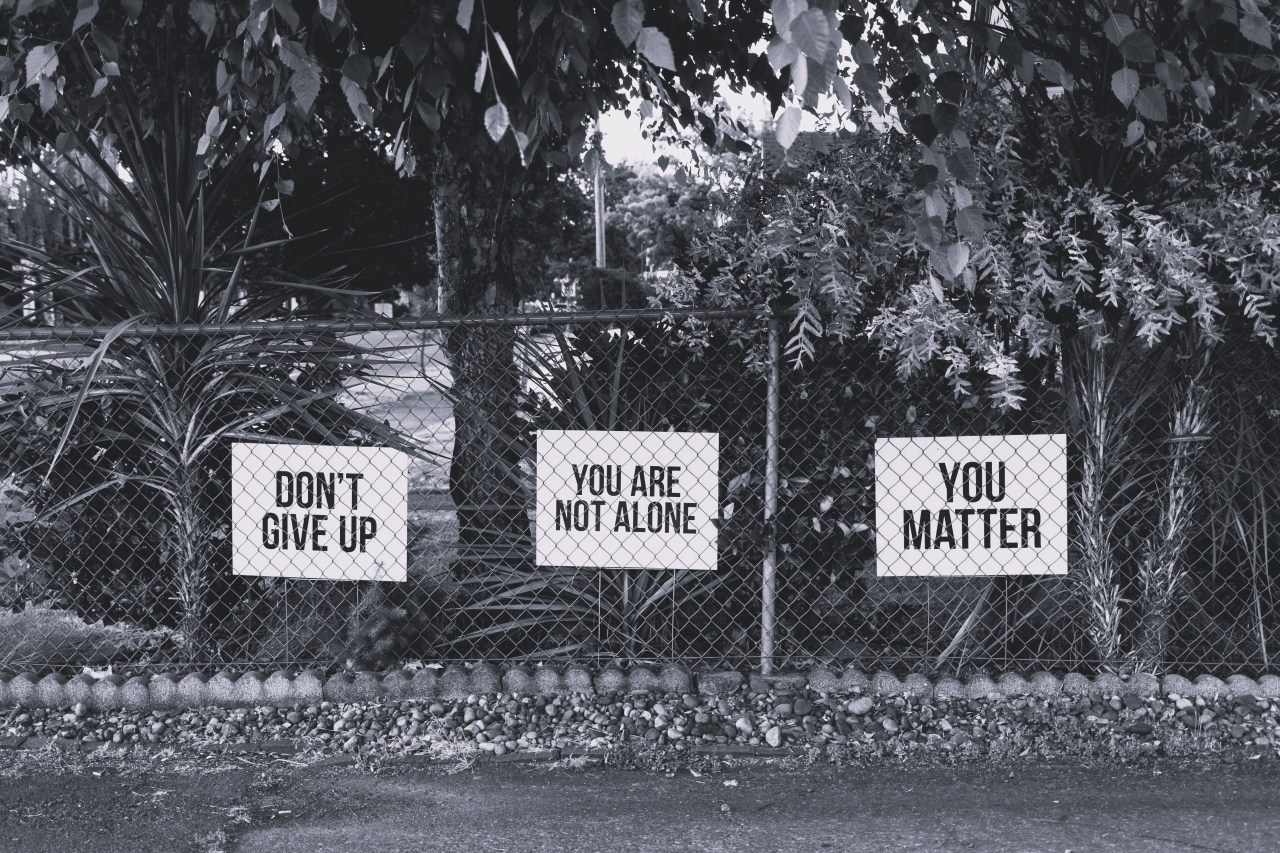
You are not alone.


SLAY Reflection

S — See the Truth
When do you feel most alone? Is it actually about who is around you or what you are holding back?

L — Let Yourself Be Seen
Is there someone safe you could open up to this week? What stops you?

A — Allow Support
How does it feel when someone truly listens to you? Can you let yourself receive that?

Y — Your Next Step
What is one small action you can take today to build connection instead of isolation?


Call to Action: Join the Conversation

I would love to hear from you.
When have you felt alone, and what helped you reconnect with others?
Share your story in the comments. Let’s cheer each other on.

And if you know someone who might need this reminder, send this to them.
Sometimes, all we need is a nudge.