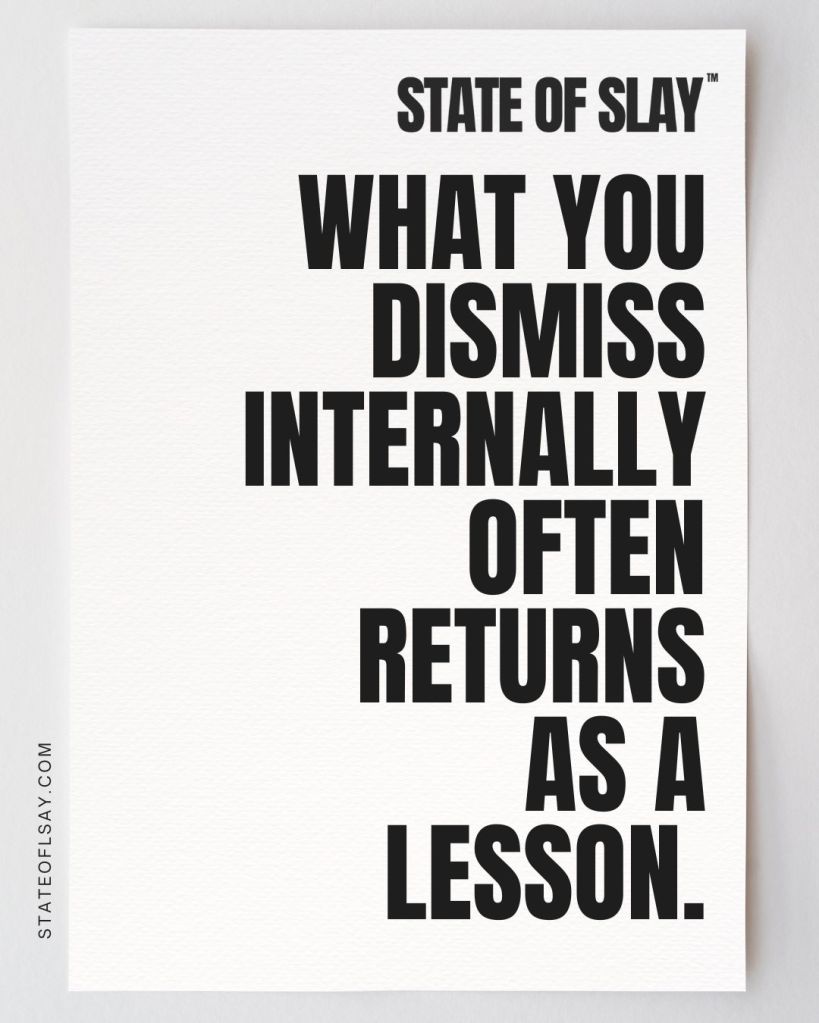
Wrong Can Lead Us to Right

We don’t like to admit it, but most of us learn far more from what didn’t work than from what did.

From the wrong turns.
The misjudgments.
The relationships that fell apart.
The choices we wish we could redo.

And yet, we spend so much time shaming ourselves for getting it “wrong” that we miss the quiet truth unfolding beneath it:

Wrong can lead us to right.

Not because the wrong was meant to hurt us—but because it showed us what alignment is not, which is often the only way we learn what alignment is.


Why We’re Taught to Fear Being Wrong

From an early age, we’re conditioned to believe that being wrong means failing.

Wrong answers are penalized.
Wrong choices are judged.
Wrong paths are labeled mistakes.

So when something doesn’t work out, our instinct is to blame ourselves instead of listening to the lesson.

But growth doesn’t happen in perfection.
It happens in contrast.

You don’t learn what peace feels like until you’ve lived without it.
You don’t learn your worth until you’ve accepted less.
You don’t learn alignment until you’ve tried to force what never fit.

Wrong isn’t the enemy—it’s information.


The Choices That Didn’t Work Still Worked for You

Think about it honestly.

That job that drained you.
That relationship you stayed in too long.
That version of yourself you outgrew.

None of it was wasted.

Each experience clarified something essential:

  • What you won’t tolerate again
  • What you need to feel safe and whole
  • What values matter more than comfort
  • What parts of yourself you abandoned—and why

Wrong choices don’t erase progress.
They refine it.

And often, the clarity you have now wouldn’t exist without the confusion you walked through then.


Wrong Often Means You Were Brave Enough to Try

Here’s something we don’t say often enough:

You can’t get it wrong if you never risk anything.

Wrong means you showed up.
Wrong means you chose movement over stagnation.
Wrong means you were willing to step forward instead of staying frozen.

Staying stuck can feel safer—but it teaches you nothing.

Growth comes from movement, even imperfect movement. And wisdom is built by experience, not avoidance.

So instead of asking, “Why did I mess this up?”
Try asking, “What did this teach me?”


When Wrong Breaks You Open

Some “wrong” experiences don’t just redirect us—they crack us open.

They expose where we were living out of fear.
They reveal patterns we didn’t want to see.
They force us to confront truths we were avoiding.

Those moments are painful—but they’re also catalytic.

They end pretending.
They demand honesty.
They strip away illusions.

And once that happens, the right path becomes harder to ignore.


Right Rarely Looks the Way We Expected

Here’s the part no one prepares you for:

The right path doesn’t always look like success at first.

Sometimes it looks like loss.
Like walking away.
Like starting over.
Like being misunderstood.

Right often feels quieter than wrong. Less dramatic. Less validating. But it feels true.

Right brings peace instead of chaos.
Clarity instead of confusion.
Alignment instead of performance.

If you’ve lived in wrong long enough, right can feel unfamiliar—even uncomfortable.

That doesn’t mean turn back.
It means you’re changing.


You Are Not Behind—You Are Becoming

If you’re looking back at your past with regret, hear this:

You are not behind.
You are not late.
You are not broken.

You were learning.

The version of you standing here now—with boundaries, discernment, and self-awareness—could not exist without the version who tried, hoped, trusted, and learned the hard way.

Wrong doesn’t delay us.
Often, it prepares us.


Trust the Path Even When It Loops

Growth isn’t linear.

Sometimes lessons repeat.
Sometimes you circle back.
Sometimes you recognize the red flag sooner—and that is progress.

Wrong doesn’t mean you failed the lesson.
It often means you’re closer to mastering it.

And one day, you realize the things that once felt like detours were quietly guiding you exactly where you needed to go.


SLAY Reflection

Let’s reflect, SLAYER:

S: What past “wrong” choice taught you something essential about yourself?
L: Where are you still shaming yourself instead of honoring what you learned?
A: What clarity do you have now because of something that didn’t work out?
Y: How might your life shift if you trusted that wrong can still lead you right?


Call to Action: Join the Conversation

I’d love to hear from you.
What felt wrong at the time but ultimately led you somewhere right?
Share your story in the comments. Let’s cheer each other on.

And if you know someone stuck in regret over past choices, send this to them.
Sometimes, all we need is a nudge.

The First Step Toward Answers Is Being Brave Enough to Ask the Question

There’s a moment — quiet, subtle, easy to miss — when your life begins to shift.
It’s the moment you finally stop pretending you already know. The moment you stop running from the truth. The moment you decide that not knowing is no longer scarier than staying stuck.

That moment is a question.

We don’t talk enough about how much courage it takes to ask one. Because asking a real, honest, soul-level question isn’t just seeking information — it’s opening a door you can’t close again. It’s admitting you want something different. It’s acknowledging that what you’ve been doing is no longer enough.

And for many of us, that is the hardest step of all.


Why We Fear the Questions We Need to Ask

We fear the answers, yes — but often, we fear the asking even more.

Because asking a question means:

  • I might hear something I don’t want to hear.
  • I might have to change.
  • I might be seen.
  • I might learn the truth.

So we avoid it. We distract ourselves. We pretend we’re fine. We convince ourselves we already know how it will go.

But avoidance is its own kind of prison.
And silence is its own kind of answer.

When we refuse to ask the questions that could heal us, save us, free us, or grow us, we stay stuck in a life that feels too small for who we are becoming.


The Questions That Change Everything

Real transformation doesn’t come from having all the answers.
It comes from being willing to ask the uncomfortable questions — the ones that scrape at the truth.

Questions like:

  • What am I afraid to admit?
  • What is this really about?
  • What am I pretending not to know?
  • What do I need?
  • What would I choose if I believed I deserved better?

These are the questions that crack things open.
These are the questions that stop the cycle.
These are the questions that begin your becoming.

And yes — they require courage.
But courage isn’t the absence of fear. Courage is asking the question while your voice trembles.


Answers Don’t Arrive Without an Invitation

There’s a spiritual truth that I learned early in my healing journey:

You cannot receive answers to questions you’re too afraid to ask.

Life will not force clarity on you.
Healing will not push its way in.
Growth will not drag you forward.

You have to invite it.

You have to ask:

  • Why does this pattern keep repeating?
  • What part of me still needs to be healed?
  • What is this trying to teach me?

When you ask the question, the universe, your intuition, your higher self — whatever language you use — finally has somewhere to deliver the answer.

Asking the question is the knock on the door.
The answer is what steps through.


Bravery Looks Like Curiosity, Not Certainty

We think bravery requires confidence.
But most of the bravery in my life came in moments where I didn’t feel certain at all.

Bravery looked like:

  • sitting with someone and saying, “I don’t know how to fix this — can we talk?”
  • looking in the mirror and whispering, “Why do I keep hurting myself this way?”
  • asking for help long before I believed I deserved it
  • admitting I didn’t have control — and never really did

Questions are not weakness.
Questions are self-respect.
Questions are the beginning of wisdom.

The bravest people I know aren’t the ones with the answers — they’re the ones willing to keep asking.


You Deserve the Life That Lives Beyond the Question

There is a version of you waiting on the other side of one brave question.

A more grounded you.
A more peaceful you.
A more aligned, self-aware, self-honoring you.

But you cannot reach her — cannot step into her — if you’re unwilling to ask what needs to be asked.

Whether it’s a question about love, healing, boundaries, forgiveness, purpose, or truth, your life expands the moment you become brave enough to be curious.

Asking the question doesn’t guarantee the answer will be easy.
But not asking guarantees nothing will change.

SLAYER, don’t let fear keep you from the clarity that could change your entire life.

Ask.
Be curious.
Be brave.

Your answers are waiting.


SLAY Reflection

  1. What important question have you been avoiding — and why?
  2. What fear shows up when you imagine asking it?
  3. How might your life shift if you allowed yourself to seek clarity?
  4. What question could help you break a repeating pattern in your life?
  5. What small act of courage can you take this week to open the door to the answers you need?

  • S – Seek clarity instead of avoiding discomfort
  • L – Let curiosity lead you toward truth
  • A – Ask bravely, even when you’re afraid
  • Y – Yield to the wisdom that arrives when you open the door

Call to Action: Join the Conversation

I’d love to hear from you.
What question are you finally brave enough to ask yourself?
Share your story in the comments. Let’s cheer each other on.

And if you know someone who’s been afraid to seek the truth, send this to them.
Sometimes, the right question is the beginning of a new life.

Slay Say

THE WHISPER OF DESTINY

Some moments feel different. A place you can’t explain feels like home, a person feels familiar even though you’ve just met, or an opportunity seems to call your name. That pull isn’t random—it’s alignment.

These are the moments where your soul recognizes something your mind hasn’t caught up to yet. You don’t have to chase them or force them—they’re already written into your story, waiting for you to step into them.

Trust the pull. Trust the timing.

This is your reminder: not every connection needs logic—some need only recognition.

SLAY on!