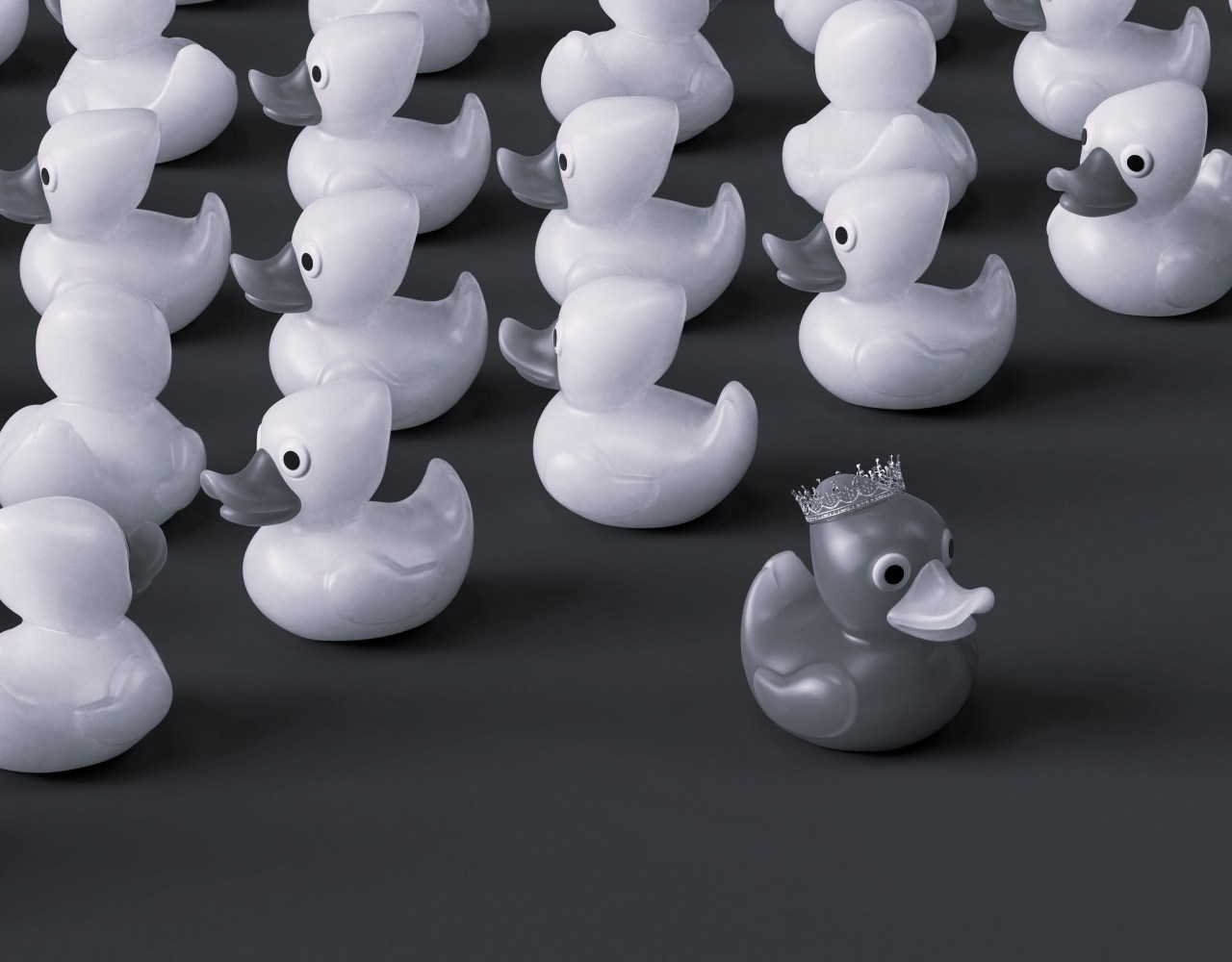
Never Assume That Loud Is Strong And Quiet Is Weak

We live in a world that often equates volume with power.

The loudest voice in the room is frequently seen as the most confident, the most capable, the most dominant. Meanwhile, quieter people are sometimes misunderstood as unsure, passive, or lacking strength.

I used to believe that too.

For a long time, I thought strength meant being the one speaking up first, taking control, proving my presence. And yet, some of the strongest people I have ever known were the quiet ones. The observers. The steady forces who did not need attention to validate their worth.

That realization changed how I saw strength entirely.

Because true strength is not about how loudly you show up. It is about how solidly you stand.


Prefer to listen? The Audio Blog version is available here.


Quiet Strength Is Often The Deepest Strength

Quiet does not mean weak.

It often means thoughtful. Grounded. Observant. Emotionally aware.

Some people process internally before speaking. Some prefer listening over dominating conversations. Some carry enormous resilience without needing external validation.

And that restraint can be incredibly powerful.

Strength sometimes looks like patience. Sometimes, like composure. Sometimes, like choosing peace over proving a point.

Not everything strong needs to be loud.


Loud Does Not Always Equal Confidence

Volume can sometimes mask insecurity.

I have seen people speak loudly not because they were certain, but because they needed reassurance. Because silence felt uncomfortable. Because control felt safer than vulnerability.

And honestly, I have been that person too at times.

When we are unsure, it can feel safer to fill space with words than to sit with uncertainty. But real confidence rarely needs to announce itself constantly.

It simply exists.

Confidence often shows up quietly through consistency, integrity, and calm presence.


Learning To Value Different Forms Of Strength

One of the biggest mindset shifts for me was realizing there is no single blueprint for strength.

Some people inspire through bold leadership. Others inspire through quiet steadiness. Some motivate through speaking. Others through listening.

Both matter.

Both are needed.

When we stop comparing styles of strength, we start appreciating the diversity of how people show up in the world.

And that appreciation builds stronger connections.


My Own Journey With Volume And Silence

Earlier in my life, I sometimes believed I had to be louder to be heard. I thought visibility required performance. I thought speaking first meant being stronger.

But healing taught me something else.

Stillness can be powerful. Reflection can be transformative. Silence can create clarity.

And ironically, the more comfortable I became with quiet confidence, the more people actually listened when I did speak.

Because it came from authenticity rather than urgency.

That shift changed everything for me.


Listening Is A Superpower

Quiet people often notice what others miss.

They pick up emotional cues. Subtle shifts. Underlying meaning.

Listening deeply is a rare skill today. And it is one of the strongest forms of communication there is.

It builds trust. It fosters understanding. It strengthens relationships.

Being heard matters.

But making others feel heard is equally powerful.


Strength Comes From Alignment

True strength is not volume. It is alignment.

Alignment between who you are, what you value, and how you live.

When those things match, you do not need to prove yourself constantly. Your presence speaks for itself.

Some days that presence may be bold. Other days it may be quiet. Both are valid.

Strength adapts.

And that flexibility is part of what makes it real.


Redefining Strength On Your Terms

You do not need to become louder if quiet feels authentic.

And if you are naturally expressive, you do not need to shrink either.

The goal is not to change your nature. It is to understand it. Honor it. Use it intentionally.

Strength is personal.

And the most powerful version of you is the one that feels genuine.


SLAY Reflection

Let’s reflect, SLAYER:

S: Do you tend to associate loudness with confidence or strength? Why?

L: When have you witnessed quiet strength in yourself or someone else?

A: Are there moments where you speak louder than you feel because you think you should?

Y: How can you honor your natural communication style while still showing up authentically?


Call to Action: Join the Conversation

I’d love to hear from you.
Do you identify more with quiet strength or expressive strength, and how has that shaped your journey?
Share your story in the comments. Let’s cheer each other on.

And if you know someone who needs reassurance that strength does not have to be loud, send this to them.
Sometimes, all we need is a nudge.
Slay Say

Clarity Changes Everything

There is a shift that happens when you stop wishing vaguely and start seeing specifically. Direction becomes easier. Decisions feel lighter. Doubt has less room to negotiate.

When you know what you are moving toward, your energy stops scattering and starts aligning. Progress rarely begins with perfection. It begins with clarity.

This is your reminder to let your vision guide your choices instead of letting uncertainty lead.

Slay on.

I Am No Longer Available for People or Things That Make Me Feel Bad

There was a time in my life when I stayed available to everything.

People who drained me.
Situations that unsettled me.
Conversations that left me questioning myself.
Expectations that did not belong to me.

I told myself it was kindness. Loyalty. Patience. Love.

But if I am honest, much of it was fear.

Fear of disappointing others.
Fear of conflict.
Fear of being misunderstood.
Fear of not being liked.

And while I was busy protecting everyone else’s comfort, I was slowly abandoning my own.

That realization changed everything.


Prefer to listen? The Audio Blog version is available here.


Learning That Availability Is a Choice

For a long time, I believed being a good person meant always being accessible. Always accommodating. Always understanding. Always giving the benefit of the doubt, even when my intuition was quietly telling me something was off.

I thought boundaries made me difficult.
I thought saying no made me selfish.
I thought protecting my energy made me cold.

Now I see it differently.

Availability is not a personality trait. It is a choice. And I get to decide where my energy goes.


Not Everything Deserves Access to You

This was a hard truth for me.

Just because someone wants your time does not mean they deserve it.
Just because something once fit your life does not mean it still does.
Just because you can tolerate something does not mean you should.

Growth has taught me that protecting my peace is not selfish. It is necessary.

When something consistently makes me feel small, anxious, depleted, or unsettled, I pay attention now. I no longer override those signals.

My nervous system is wise.
My intuition is wise.
My emotional well-being matters.


Choosing Peace Over Approval

There was a version of me that wanted everyone to understand me.

To approve of me.
To agree with me.
To be comfortable with my choices.

That version of me worked very hard. And she was very tired.

Today, I am less concerned with approval and more committed to alignment.

Peace feels better than permission.
Clarity feels better than constant compromise.
Authenticity feels better than acceptance built on pretending.

And the people meant for me respect that shift.


Walking Away Is Not Failure

One of the biggest lessons I have learned is that leaving something that harms you is not failure. It is wisdom.

It does not mean you did not try.
It does not mean you did not care.
It does not mean you gave up too easily.

Sometimes it means you finally chose yourself.

I used to stay far longer than I should have. In relationships. In environments. In conversations. In expectations.

Now I listen sooner.
I trust myself sooner.
I choose peace sooner.

That is growth.


What This Looks Like in Real Life

Being unavailable for what harms you does not always mean dramatic exits.

Sometimes it looks quiet.

Less explaining.
Less engaging.
Less overextending.
Less tolerating what feels wrong.

Sometimes it is simply choosing not to participate.

That quiet shift can be powerful.


This Is Not About Becoming Hard

Choosing peace does not make you cold.
Having boundaries does not make you unkind.
Protecting your energy does not make you distant.

If anything, it allows you to show up more fully where it matters.

When I stopped pouring energy into what drained me, I had more to give to what nourishes me. More presence. More patience. More authenticity.

That feels like love, not withdrawal.


Your Peace Is Worth Protecting

You do not have to justify wanting to feel safe in your own life.

You do not have to explain why something does not feel right.

You do not have to keep proving your worth by enduring discomfort.

You are allowed to choose environments, relationships, and commitments that support your well-being.

That is not selfish.

That is self-respect.


I Am No Longer Available

I am no longer available for constant tension.
For unnecessary drama.
For energy that feels heavy.
For situations that make me doubt myself.

I am available for growth.
For peace.
For honesty.
For relationships rooted in respect.

And most importantly, I am available for myself.


SLAY Reflection

Let us reflect SLAYER:

S: Where in your life do you feel drained or unsettled
L: What signs has your body or intuition been giving you
A: What is one boundary you could gently introduce
Y: How might your life shift if you prioritized peace over approval


Call to Action: Join the Conversation

I would love to hear from you.
What is one thing you are no longer available for in your life
Share your story in the comments. Let us cheer each other on.

And if you know someone learning to protect their peace, send this to them.
Sometimes all we need is a reminder that we are allowed to choose ourselves.

Intercept Anxiety with Gratitude

Anxiety used to hit me fast.

Sometimes without warning.
Sometimes without a clear reason.
Sometimes before I even realized what I was thinking.

My body would react before my mind could catch up. Tight chest. Racing thoughts. A sense that something was wrong even when nothing actually was.

For a long time, I tried to fight anxiety head-on. I tried to reason with it. Silence it. Control it. Push it away.

What I learned is this: anxiety does not respond well to force.

But it does respond to redirection.


Prefer to listen? The Audio Blog version is available here.


How I Learned to Interrupt the Spiral

Anxiety feeds on anticipation.

What if this goes wrong?
What if I fail?
What if I cannot handle it?
What if something bad happens?

Once that loop starts, it gains momentum quickly.

I needed a way to interrupt it before it took over.

That is when I began practicing gratitude. Not as a cure. Not as denial. But as an intercept.

Gratitude gave my mind something else to focus on before anxiety could run the show.


Gratitude Does Not Deny Reality

Let me be clear. Gratitude does not mean pretending everything is fine.

It does not mean ignoring pain.
It does not mean minimizing fear.
It does not mean forcing positivity.

For me, gratitude became a grounding tool. A way to come back into the present moment.

Anxiety lives in the future.
Gratitude lives in the now.

When I name what I am grateful for, my body settles. My breath slows. My nervous system gets a signal that I am safe in this moment.


What This Looks Like in Real Life

When anxiety starts to rise, I pause and ask myself one simple question.

What is real and good right now

Sometimes it is something small.
A warm cup of tea.
A quiet room.
My breath.
My dog at my feet.

Sometimes it is bigger.
My health.
My support system.
The fact that I have survived harder moments than this one.

I do not wait until anxiety is overwhelming. I intercept it early.

That is the key.


Why Gratitude Works When Anxiety Is Loud

Gratitude shifts attention without resistance.

Instead of arguing with anxious thoughts, I redirect my focus. Instead of feeding fear, I feed awareness.

Gratitude reminds my body that I am not in danger right now. That I am here. That I am supported. That I am capable.

It does not erase anxiety.
But it softens its grip.

And that is often enough.


This Is a Practice Not a Perfection

I do not do this perfectly.

There are days anxiety still wins.
There are moments I forget to pause.
There are times I spiral before I remember I have tools.

But I practice anyway.

Each time I intercept anxiety with gratitude, I build trust with myself. I remind my nervous system that I can respond instead of react.

That matters.


Choosing Presence Over Panic

Anxiety will always try to pull you out of the moment.

Gratitude brings you back.

Back to what is real.
Back to what is steady.
Back to what you can handle.

It does not fix everything.
But it creates space.

And sometimes space is all you need to breathe again.


SLAY Reflection

Let us reflect SLAYER:

S: When does anxiety tend to show up for you?
L: What thoughts usually trigger it?
A: What are three things you can name when anxiety starts rising?
Y: How might your day shift if you intercepted anxiety early instead of fighting it?


Call to Action: Join the Conversation

I would love to hear from you.
What is one thing you are grateful for right now that helps you feel grounded?
Share your story in the comments. Let us cheer each other on.

And if you know someone who struggles with anxiety, send this to them.
Sometimes all we need is a reminder that we have tools.

Slay Say

There will always be forces
that benefit from your forgetting.
From your shrinking.
From your silence.

Choosing to remember who you are
is not selfish.
It’s not loud.
It’s not for show.

It’s coming home.

This is your reminder:
Reclaiming yourself is a quiet power.
Staying rooted in who you are
is how you stand without permission.

Slay on.

Slay Say

There will always be people who follow similar paths.
Who build similar things.
Who walk in similar spaces.

But no one carries your history.
Your voice.
Your perspective.
Your lived experience.

What makes you powerful isn’t the direction you take —
it’s the story you bring with you when you take it.

Authenticity isn’t branding.
It’s alignment.
It’s presence.
It’s living from truth instead of performance.

You don’t have to protect your originality.
You just have to live it.

This is your reminder:
Your value isn’t in being different —
it’s in being real.

Slay on.

Talk Doesn’t Cook Rice

We live in a world full of talk.

Big plans.
Big promises.
Big visions.
Big intentions.

People talk about healing.
Talk about change.
Talk about growth.
Talk about becoming better versions of themselves.

But here’s the truth:

Talk doesn’t cook rice.

Words alone don’t transform lives.
Intentions alone don’t create change.
Awareness alone doesn’t produce growth.

Action does.


Prefer to listen? The Audio Blog version is available here.


Why We Mistake Intention for Transformation

It feels productive to talk about change.

It gives us the illusion of movement.
The comfort of progress.
The sense that we’re “doing something.”

But talking about healing isn’t the same as doing the work.
Planning growth isn’t the same as practicing it.
Wanting change isn’t the same as choosing it.

Intentions are powerful — but they are not enough.

Without action, they stay ideas.


Growth Is Built in the Doing

Real change happens quietly.

In daily choices.
In uncomfortable conversations.
In boundaries that are enforced.
In habits that are practiced.
In consistency that no one applauds.

Growth isn’t dramatic — it’s disciplined.

It’s choosing differently when no one is watching.
It’s doing the hard thing instead of the easy thing.
It’s showing up even when motivation fades.

This is where transformation lives.


Why Action Feels Harder Than Talk

Because action requires accountability.

It requires discomfort.
Consistency.
Commitment.
Ownership.

Talking keeps us safe.
Doing makes us vulnerable.

Talk lets us imagine change.
Action forces us to embody it.

And embodiment is always more demanding than intention.


Alignment Is Action, Not Language

People often say they want peace —
but live in chaos.

They say they want healing —
but avoid truth.

They say they want growth —
but resist change.

Alignment isn’t what you say you value.
It’s what you practice daily.

Your life reflects your actions, not your affirmations.


Small Actions Create Big Shifts

Change doesn’t require perfection.

It requires participation.

One boundary.
One honest conversation.
One healthy choice.
One brave decision.
One consistent habit.

You don’t need to overhaul your life overnight —
you need to start moving.

Progress compounds.


Discipline Is a Form of Self-Love

Choosing action over talk is not punishment.

It’s care.

It’s choosing the future over comfort.
The long-term over the short-term.
The truth over the story.

Discipline isn’t harsh — it’s protective.

It keeps you aligned when motivation fades.


You Don’t Become Different by Declaring It

You become different by living differently.

Not by announcing change.
Not by explaining it.
Not by justifying it.

But by practicing it.

Transformation is quiet.
Consistency is powerful.
Movement creates momentum.


If You Want Change, Start Moving

Ask yourself:

Where am I talking instead of doing?
Where am I planning instead of acting?
Where am I waiting instead of choosing?

Because nothing changes until something changes.

And talk doesn’t cook rice.


SLAY Reflection

Let’s reflect, SLAYER:

S: Where in your life have you been talking about change instead of acting on it?
L: What fear has been keeping you in planning mode?
A: What is one small action you can take today instead of waiting?
Y: How would your life shift if you committed to movement over conversation?


Call to Action: Join the Conversation

I’d love to hear from you.
Where in your life do you know it’s time to stop talking and start moving?
Share your story in the comments. Let’s cheer each other on.

And if you know someone who keeps waiting for the “right time,” send this to them.
Sometimes, all we need is a nudge.
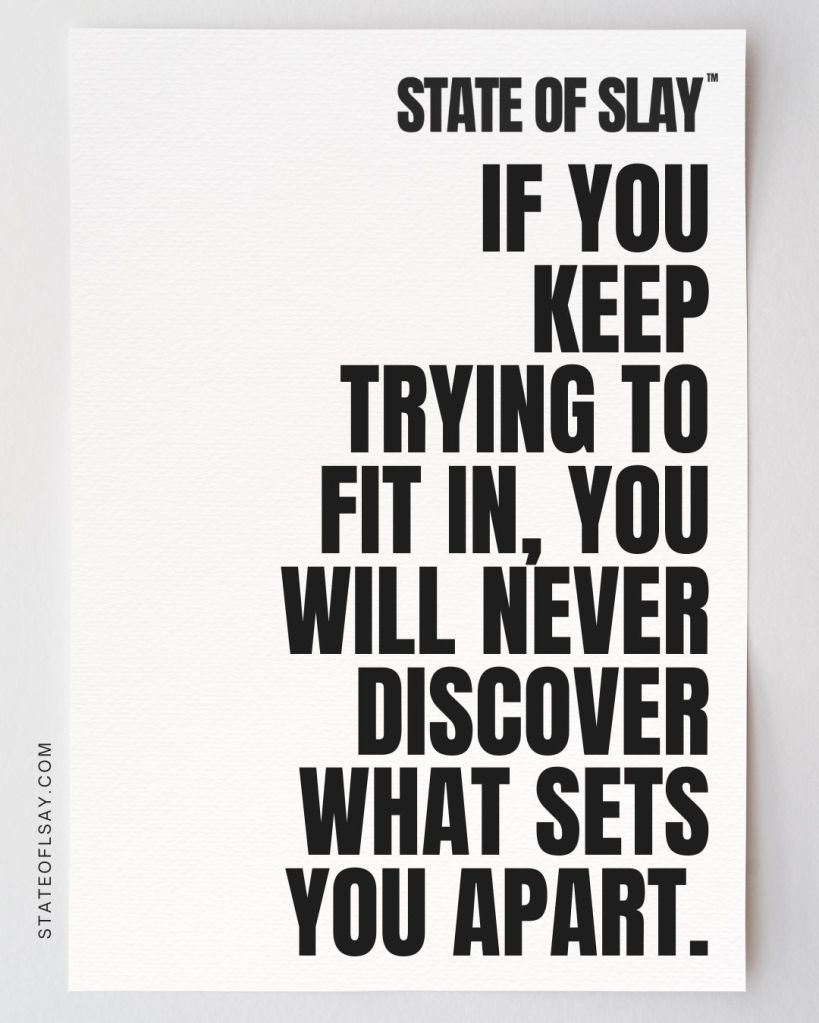
Slay Say

Fear doesn’t always arrive as chaos.
Sometimes it shows up quietly — in overthinking, in hesitation, in the stories you tell yourself about what might happen.

You don’t stop living because something is happening.
You stop living because you imagine it might.

And over time, those imagined outcomes begin to shape your choices, your risks, your voice, and your freedom.

Not every thought deserves authority.
Not every fear deserves belief.
Not every worry deserves a vote in your future.

This is your reminder to question the thoughts that limit you,
challenge the fears that confine you,
and choose movement over mental captivity.

Slay on.

Individually We Are a Drop, But Together We Are the Ocean

On our own, we can feel small.

One voice.
One story.
One person trying to make sense of a big world.

It’s easy to believe that what we do doesn’t matter.
That our pain is too personal.
That our growth is too private.
That our voice is too quiet.

But the truth is this:

Individually we are a drop. But together, we are the ocean.


Prefer to listen? The Audio Blog version is available here.


The Power of One Still Matters

A single drop doesn’t look powerful on its own.

But every ocean begins with one.

One act of courage.
One honest conversation.
One person choosing healing.
One decision to grow.
One moment of compassion.

No movement starts as a movement.
It starts as a choice.

Your choice.


Connection Is Where Strength Multiplies

Isolation weakens us.

Connection strengthens us.

When people heal alone, they survive.
When people heal together, they transform.

Community doesn’t just comfort — it multiplies impact.

Shared truth creates safety.
Shared growth creates momentum.
Shared courage creates change.

Together, we move faster.
Together, we move deeper.
Together, we create waves.


Why We’re Conditioned to Believe We’re Alone

So many of us were taught to handle things quietly.

Don’t burden others.
Don’t speak too loudly.
Don’t make waves.
Don’t need too much.

So we learned to carry things alone.

But healing was never meant to be a solo journey.

Strength isn’t isolation.
Resilience isn’t silence.
Growth isn’t loneliness.

We weren’t built to evolve in isolation — we were built to evolve in relationship.


Shared Stories Create Shared Healing

When one person speaks, it gives others permission to breathe.

When one person heals, it shows others what’s possible.

Your story doesn’t just belong to you.

It becomes a bridge.
A mirror.
A lifeline.
A lighthouse.

This is how oceans form — one drop at a time, moving in the same direction.


Unity Doesn’t Erase Individuality

Being part of something bigger doesn’t make you smaller.

It makes you stronger.

You don’t lose your identity in community — you bring it.

Every voice matters.
Every experience adds depth.
Every perspective adds current.

An ocean isn’t made of identical drops — it’s made of many.

Different paths.
Different stories.
Different struggles.
Same direction.


Collective Growth Creates Collective Change

Healing doesn’t just change individuals — it changes systems.

Families shift.
Communities evolve.
Cultures transform.

When people rise together, standards rise.
Boundaries rise.
Truth rises.
Compassion rises.

This is how generational patterns break — not through one person alone, but through many choosing differently.


You Are Not Too Small to Matter

If you’ve ever felt insignificant, remember this:

Oceans don’t come from force.
They come from accumulation.

Your kindness matters.
Your growth matters.
Your voice matters.
Your healing matters.

Not because it’s loud —
but because it’s added.


We Rise Faster Together

Growth is possible alone.

But it’s sustainable together.

Support creates endurance.
Community creates resilience.
Unity creates momentum.

We are stronger in alignment.
Braver in connection.
More powerful in unity.


SLAY Reflection

Let’s reflect, SLAYER:

S: Where in your life have you tried to grow alone instead of together?
L: Who feels safe for you to connect with in your healing or growth journey?
A: What part of your story could help someone else feel less alone?
Y: How would your life shift if you allowed yourself to be supported?


Call to Action: Join the Conversation

I’d love to hear from you.
Who has been part of your ocean — the people who helped you heal, grow, or rise?
Share your story in the comments. Let’s cheer each other on.

And if you know someone who feels alone in their journey, send this to them.
Sometimes, all we need is a nudge.
Shed Your Shell

There comes a moment in growth when what once protected you starts to restrict you.

The shell that kept you safe.
The space that helped you survive.
The role that made sense for who you were.

At some point, it stops fitting.

Nature offers us a powerful metaphor for this: turtles don’t stay in the same shell forever. The shell grows with them. And in the in-between — the moment when one shell no longer fits and the next is forming — there is vulnerability.

Exposure.
Uncertainty.
Risk.

But there is also expansion.

And the question becomes: Is it time for you to shed a space you’ve outgrown?


Prefer to listen? The Audio Blog version is available here.


When Protection Becomes Confinement

Most of us build shells for a reason.

We create emotional armor to survive pain.
We stay in environments that once felt safe.
We cling to identities that kept us accepted.

Those shells serve a purpose — until they don’t.

What once protected you can begin to suffocate you.
What once felt like safety can start to feel like stagnation.

And when growth begins pressing from the inside, the shell cracks.

Not because you’re failing — but because you’re expanding.


The In Between Is the Scariest Part

Shedding a shell doesn’t mean instantly stepping into something new and perfect.

There is often a space in between.

A season where you don’t quite know who you are yet.
Where the old no longer fits and the new hasn’t fully formed.
Where you feel exposed, tender, and unsure.

This is the part most people try to avoid.

They rush to replace what they’ve outgrown.
They stay longer than they should.
They squeeze themselves back into something familiar, even when it hurts.

But growth doesn’t happen by retreating.

It happens by trusting the in-between.


Vulnerability Is Not Weakness It’s Transition

The time between shells feels vulnerable because it is.

But vulnerability is not failure.
It’s movement.

It’s the space where truth gets clearer.
Where alignment becomes non-negotiable.
Where you stop pretending you still fit somewhere you don’t.

You are not meant to stay exposed forever — but you are meant to pass through this phase honestly.

Avoiding vulnerability delays expansion.


Outgrowing Spaces Is a Sign of Growth

We often shame ourselves for wanting more.

More room.
More truth.
More alignment.

But outgrowing a space doesn’t mean it was wrong.
It means it worked — and now you’ve grown.

You can be grateful for what once held you and still release it.

Growth doesn’t erase the past.
It builds on it.


You Can’t Move Into a Bigger Shell While Clinging to the Old One

This is the part that requires courage.

You cannot expand while holding onto what no longer fits.

You can’t grow into a larger life while shrinking yourself to stay comfortable for others. You can’t access your next level while insisting on staying in the same environment, relationship, or role that limits you.

Letting go doesn’t mean you know exactly what’s next.

It means you trust that what’s next requires more room than what you’re in now.


Discomfort Is Often the Doorway

The urge to shed your shell usually arrives as discomfort.

Restlessness.
Irritation.
A quiet knowing that something is off.

Instead of asking, “What’s wrong with me?”
Try asking, “What no longer fits?”

Discomfort is often the signal that growth is already happening.


You Are Allowed to Choose Expansion

You don’t need permission to grow.

You don’t need everything figured out before you move.
You don’t need certainty to trust yourself.

You only need honesty.

If the space you’re in feels tight, limiting, or misaligned — it may be time to shed it.

Not recklessly.
Not impulsively.
But intentionally.

Growth asks us to release what’s too small so we can step into what’s next.


The Bigger Shell Is Waiting

The next shell doesn’t appear while you’re clinging to the old one.

It forms as you grow.

As you trust yourself.
As you tolerate vulnerability.
As you honor the truth that you are no longer who you were.

You were never meant to stay the same size forever.


SLAY Reflection

Let’s reflect, SLAYER:

S: What space in your life feels tight, limiting, or outgrown?
L: What shell have you been holding onto because it once kept you safe?
A: What fears come up when you imagine letting it go?
Y: What might be possible if you trusted the in-between and allowed yourself to expand?


Call to Action: Join the Conversation

I’d love to hear from you.
Is there a space in your life you know you’ve outgrown — and what’s holding you back from shedding it?
Share your story in the comments. Let’s cheer each other on.

And if you know someone standing at the edge of growth, send this to them.
Sometimes, all we need is a nudge.