
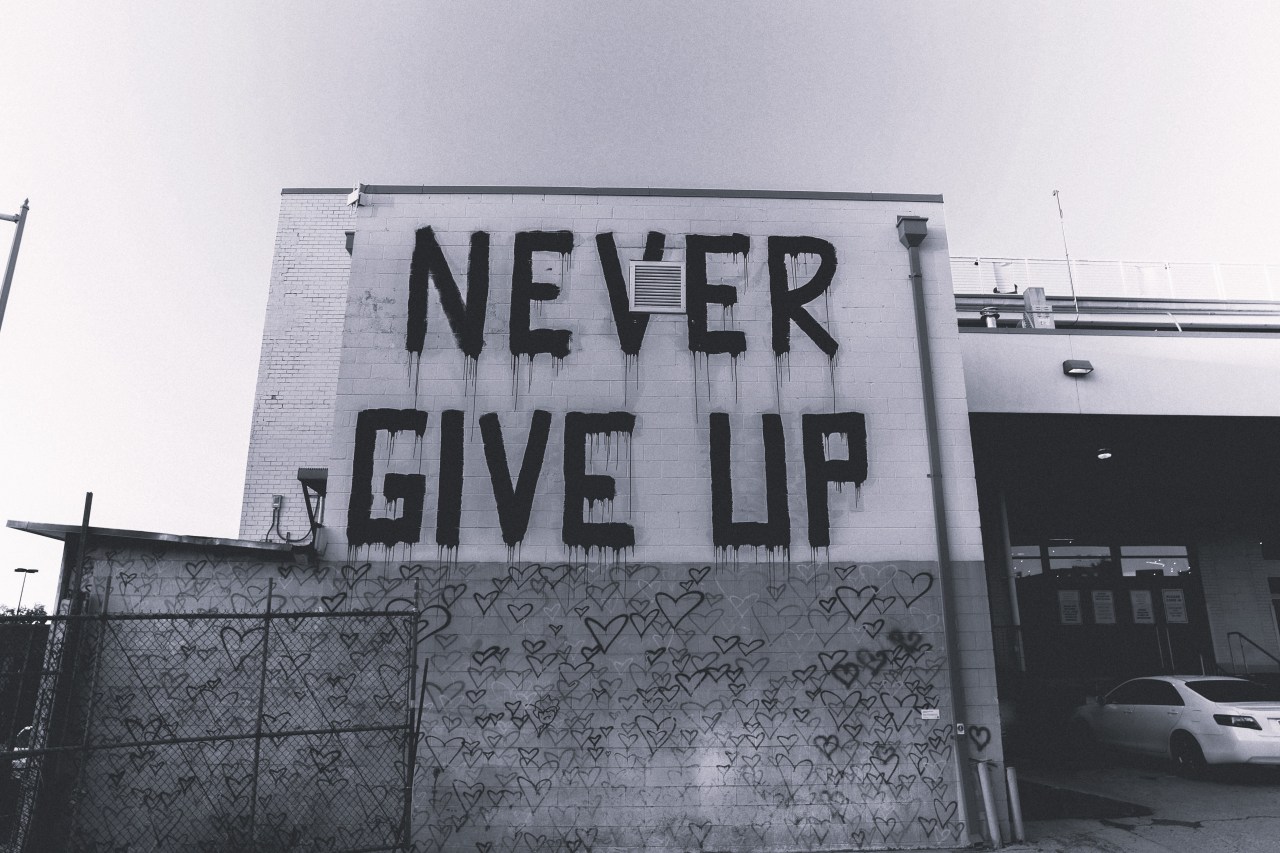
Perseverance

I used to think perseverance was only for certain things—like career goals or material achievements. But when it came to my mental health, I was quick to throw in the towel. The moment a setback occurred, my inner critic would scream, “Why bother? You’ll fail anyway.” And too often, I listened.

But I learned something: true perseverance—the kind that transforms you—isn’t about pushing through only when it’s easy or convenient. It’s about showing up for yourself, even when the path is rocky, the finish line invisible, and the negative voices loud.

There were times I clung to perseverance for external wins but abandoned it for the internal work—the work that mattered most. I believed the lie that I didn’t deserve good things. But when I finally committed to my recovery, I discovered that same perseverance, channeled into my healing, could produce powerful results.


The Power of Persistence

When you ask most successful people their secret, they’ll likely tell you: perseverance. They didn’t give up. It seems like common sense, but how often do we stop just shy of the finish line? Or give up before the miracle happens?

There’s no published timeline for how long we have to keep going without seeing results. That’s where many falter. But if you can’t stop thinking about it—if giving up feels like losing a part of yourself—then keep going. That’s your sign.

Sometimes, perseverance isn’t about bull-headedness. It’s about flexibility, too. If a particular path isn’t working, the lesson might be to pivot. But often, it’s about staying the course—especially when it comes to your own well-being.


Lessons Learned

Before recovery, I used perseverance to chase things that didn’t nourish me. Now, I channel it into what matters: my mental, emotional, and spiritual health. It’s not easy. There are still days when the voices of doubt and fear creep in. But I’ve learned to keep going, to fight for the life I want, and to trust that even the smallest steps count.

The finish line may be hidden, but it’s there. The only way to see it is to keep moving forward. Don’t let the setbacks define you. Let your perseverance become your strength.


SLAY OF THE DAY: Reflect & Rise

  • Would you say you have perseverance?

  • Write out some examples of when you’ve shown perseverance. What was the result?

  • Do you consistently have perseverance, or only in certain areas?

  • What stops you from persevering?

  • When have you failed to persevere? Why?

  • What can you do to cultivate perseverance in those areas?

  • What challenges do you face in maintaining perseverance?

  • How can you channel it into things that nurture your growth and healing?


Call to Action: Join the Conversation

I’d love to hear from you.
What’s one thing in your life you’re determined to keep going for, no matter what?
Share your story in the comments. Let’s lift each other up.

And if you know someone who’s struggling to stay the course, send this to them.
Sometimes, all we need is a reminder that perseverance is worth it.

It’s OK Not To Be OK

After a challenging week, I realized I needed a mental health break. And maybe you do too. So, here’s something I want to share with you again: It’s OK not to be OK.

Living Behind a Mask

For most of my life, I was an expert at pretending everything was fine. I stuffed down my feelings and convinced myself that showing emotion was a sign of weakness. Even when I was falling apart inside, I smiled and put on a brave face. I believed that if I pretended everything was OK, no one would ask questions. And I was right—until I couldn’t pretend anymore.

I surrounded myself with people who were emotionally unavailable, people who wouldn’t ask too many questions. If someone did get too close, I’d quietly phase them out. I believed that admitting I wasn’t OK would push people away. What I didn’t realize was that hiding my truth was isolating me—and killing me from the inside out.

The Moment of Truth

Everything changed the day I finally reached out for help. In a place of desperation, I said the words that had been trapped inside me for so long: “I’m not OK, and I don’t know what to do about it.” To my surprise, the world didn’t fall apart. Instead, it opened up. People I expected to retreat actually drew closer. They offered support, love, and understanding. My honesty became a bridge—connecting me to others who were also struggling, or who had found their way to the other side.

That moment wasn’t just about seeking help. It was about reclaiming my power. Speaking my truth loosened the shame that had gripped me for so long. Instead of feeling weak, I felt strong. Instead of feeling alone, I felt connected. And for the first time in a long time, I felt hope.

The Strength in Vulnerability

No one is OK all the time. No one. Yet we hold ourselves to impossible standards, expecting to be strong, unshaken, and fine—even when we’re anything but. When we keep our struggles hidden, they grow heavier. They fester. They become harder to carry.

Sharing your truth doesn’t make you weak. It makes you brave. It doesn’t push people away—it invites them in. And it creates space for healing, connection, and community. I know because I’ve lived it.

A New Kind of Courage

I’m not saying it’s easy. The first time I admitted I wasn’t OK, it was terrifying. But with each honest conversation, it got easier. Over time, I discovered that vulnerability was not my enemy—it was my greatest ally. It connected me to a SLAYER army of people who understood, who had been there, and who were ready to stand beside me as I fought my way back to the light.

You’re Not Alone

If you’re reading this and feeling like you’re the only one struggling—hear me now: You’re not alone. We all have days when we’re not OK. And when those days come, it’s not a failure. It’s a sign to reach out, to lean on others, and to remember that you don’t have to carry it all by yourself.

Speak your truth. Share your struggle. And know that in doing so, you’re taking the first step toward healing.

SLAY on.


SLAY OF THE DAY: Reflect & Rise

  • When you’re not OK, do you share that with others?

  • If you don’t, why not? What are you afraid of?

  • Are these fears based on facts, or imagined outcomes?

  • Who in your life do you trust to share your truth with?

  • Think of a time when you shared your truth. How did it feel?

  • If you’ve never shared, I challenge you to start today.

  • Remember: It’s OK not to be OK, and just saying so gets you on the road to recovery. Take that step, SLAYER.


Call to Action: Join the Conversation

I’d love to hear from you.
What has helped you feel more comfortable sharing when you’re not OK?
Share your story in the comments. Let’s cheer each other on.

And if you know someone who needs this reminder, send this to them.
Sometimes, knowing they’re not alone makes all the difference.

Your Problem Isn’t The Problem, It’s Your Reaction To The Problem

There are so many things in life we have no control over.
But one thing we always have control over is how we react.

Before I started this journey, I didn’t believe that. I saw life as something that was constantly happening to me. I felt like I was always on the wrong side of good—piled under problems that felt too big, too unfair, and way too overwhelming to change.

What I couldn’t see at the time was that many of those problems were the result of my own choices.
And even when I wasn’t in control of what happened, I had still made a choice somewhere along the line—choosing the person, the situation, or the behavior that led me there.

It was easier to blame someone else.
But the truth? The finger I was pointing should’ve been aimed right back at me.


Prefer to listen? The Audio Blog version is available here.


The Power of Radical Responsibility

When I finally got honest with myself—rigorously honestI had to take a hard look at my role in the chaos.
And it was tough.
It’s not easy to admit that you’ve been the architect of your own pain.

But with that realization came something surprising: freedom.
Because if I was the one who got myself into it…
I could be the one to get myself out.

Owning my choices gave me power.
And from there, I could start making better ones.


Every Situation Is a Choice Point

We don’t get to control what life throws at us.
But we do get to choose how we respond.

Sometimes the best reaction is not reacting at all.
Sometimes it’s walking away.
Sometimes it’s taking a breath and choosing to show up in a way that honors your values—not your emotions in the moment.

That’s how we reclaim our power.
Even in the hardest moments, we are not powerless when we’re clear on what’s best for us—mentally, emotionally, and spiritually.

We always have a choice.
And that choice becomes the difference between staying in the problem and moving toward the solution.


The Problem vs. The Solution

When I started to shift my mindset this way, life got easier.
That’s not to say I never get frustrated or upset—of course I do. But now I ask myself:

  • Did I invite this in?
  • Can I disinvite it now?
  • What choice will move me forward instead of keeping me stuck?

That’s what it means to get into the solution.

Because staying in the problem only creates more problems.
But the solution?
That’s where problems go to die.


Clearing the Path Forward

I’ve learned that when I make decisions from a place that aligns with who I am—and who I’m becoming—I stop visiting the places that pull me back into chaos.

I stop letting problems define me.
I stop reacting from fear or ego.
And I start creating space for new energy, new opportunities, and new peace to enter my life.

So when the next problem pops up—and it will—ask yourself:

What’s the right reaction… for me?

That answer will always lead you toward your highest good.


SLAY Reflection: What’s Your Reaction Telling You?

  1. Do you let problems define your mood or your day?
    How often are you reacting instead of responding?
  2. How many of your current problems are tied to past choices?
    What patterns can you begin to shift?
  3. What small choices can you make today to create fewer problems tomorrow?
    Where can you be more intentional?
  4. How can you take your power back in difficult situations?
    What boundaries or truths are you avoiding?
  5. What does the “right reaction” look like for you?
    Is it silence, compassion, honesty, or stepping away?


    Call to Action: Join the Conversation

    I’d love to hear from you.
    What’s one situation or relationship where choosing not to engage helped you protect your energy?
    Share your story in the comments. Let’s cheer each other on.

    And if you know someone who’s caught in a cycle of reacting or proving their point, send this to them.
    Sometimes, all we need is a nudge.