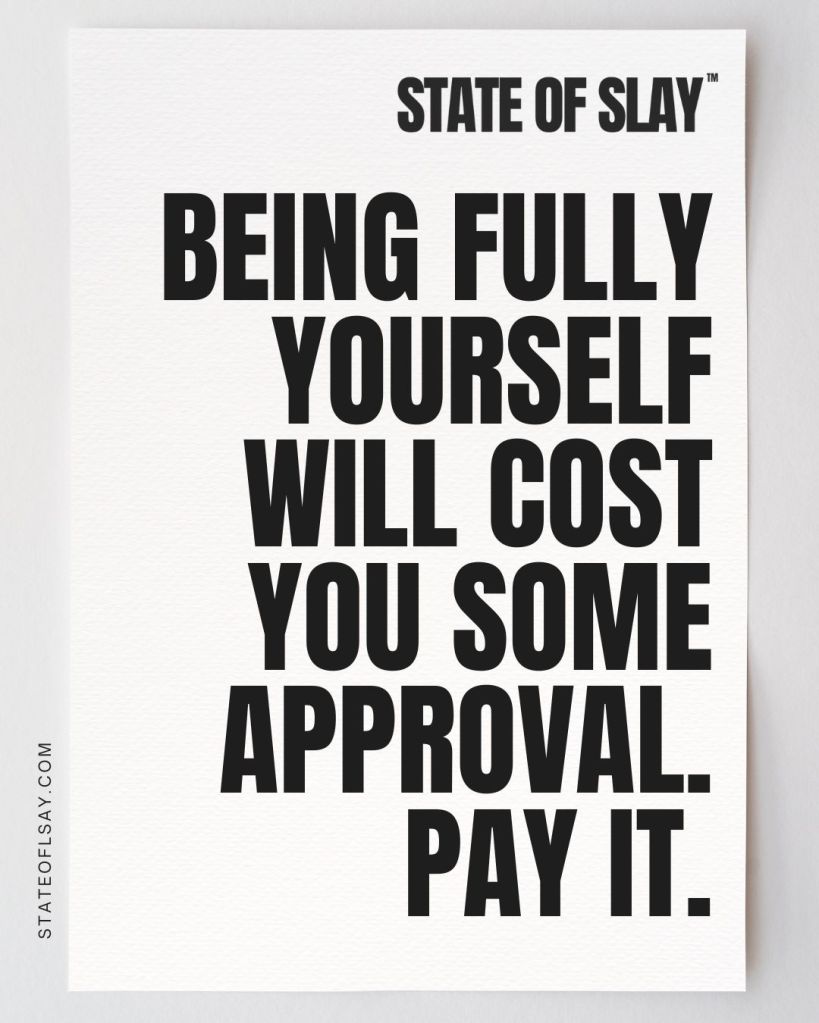
We can be remarkably patient with other people while giving ourselves almost none of the same grace.
We understand when someone else is struggling.
We remind them that change takes time.
We tell them one mistake doesn’t define them.
We encourage them to keep going when they stumble.
But when it’s us?
Suddenly the rules change.
We criticize the body we’re trying to care for.
We shame ourselves for choices we made when we didn’t know better.
We replay mistakes as evidence of everything that’s wrong with us.
We compare ourselves to who we think we should already be.
And somewhere along the way, we convince ourselves that being harder on ourselves will somehow make us better.
If I hate this part of myself enough, maybe I’ll finally change it.
If I criticize myself enough, maybe I’ll become more disciplined.
If I keep reminding myself of everything I’ve done wrong, maybe I won’t do it again.
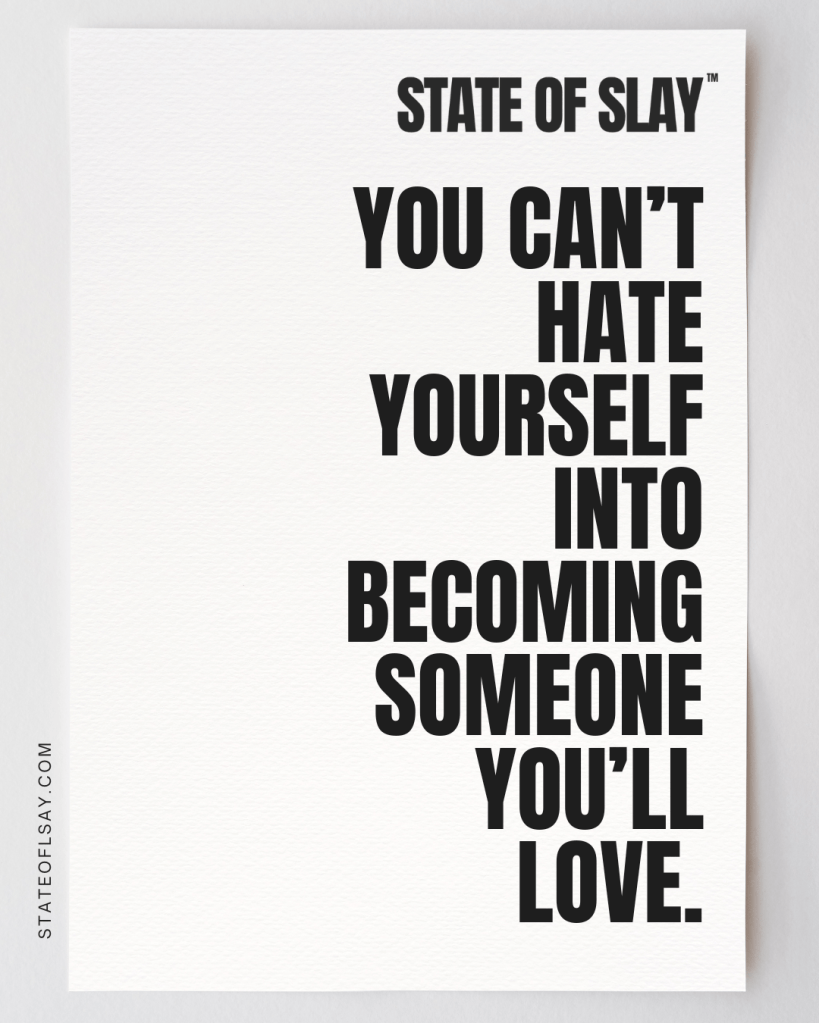
But shame is a terrible architect.
It may motivate you for a moment, but it’s difficult to build a healthy relationship with yourself on a foundation of constant rejection.
Growth requires accountability.
It requires honesty.
Sometimes it requires admitting that you’ve hurt people, made poor choices, ignored what you knew, or stayed somewhere long after you should have left.
Self-love doesn’t mean pretending those things didn’t happen.
It means refusing to use them as weapons against yourself forever.
There is a difference between saying, I need to change this, and saying, There is something wrong with me.
One creates possibility.
The other turns growth into punishment.
You are allowed to want more for yourself without despising who you are today.
You can work on your habits without hating the person who developed them.
You can regret a decision without turning that regret into an identity.
You can recognize where you’ve fallen short while still believing you are worthy of patience, care, and another chance.
Because the person you’re trying so hard to become is still going to be you.
And if every step toward that person is fueled by rejection, there will always be another flaw to find, another standard to miss, another reason to postpone loving yourself.
Maybe the goal isn’t to finally become good enough to deserve your own love.
Maybe part of becoming who you want to be is learning to stop withholding it.
This is your reminder:
You don’t have to love everything about yourself to stop treating yourself like someone you’re trying to defeat.
It can remind us to notice what is good instead of constantly focusing on what is missing.
It can bring perspective.
It can help us recognize how much we have, how far we’ve come, and how many people and experiences have contributed to our lives.
But somewhere along the way, many of us learned to turn gratitude into a contract.
If we’re grateful for something, we think we’re supposed to keep wanting it.
If something has been good to us, we’re supposed to remain loyal to it.
If someone gave us an opportunity, we’re supposed to stay.
If a relationship once made us happy, questioning it can feel like a betrayal of everything it gave us.
And if our life looks good from the outside, wanting something different can feel almost embarrassingly ungrateful.
So we start arguing with our own desires.
What more could I possibly want?
Maybe that’s the wrong question.
Because gratitude tells you how you feel about what you’ve received.
It doesn’t necessarily tell you what you want next.
Prefer to listen? The Audio Blog version is available here.
GRATITUDE IS NOT A CONTRACT
Being grateful for something does not obligate you to keep choosing it forever.
You can be grateful for a job that gave you stability when you desperately needed it and eventually realize you want to do something else.
You can appreciate a friendship that carried you through a difficult period and recognize that the relationship has changed.
You can love the home where you built years of memories and still decide it’s time to move.
You can appreciate what someone has done for you without owing them permanent access to your life.
Gratitude acknowledges what something has meant to you.
It doesn’t sign away your right to change.
Sometimes we confuse appreciation with obligation because leaving feels as though we’re declaring that what came before wasn’t good enough.
But that’s not what change means.
Something can have been wonderful.
And you can still be finished with it.
DIFFERENT DOESN’T ALWAYS MEAN BETTER
We often talk about change as though we’re trying to upgrade our lives.
A better job.
A better relationship.
A better home.
A better version of ourselves.
But what if you don’t want better?
What if you simply want different?
That’s an important distinction.
You don’t have to prove that your current life is terrible before you’re allowed to imagine another one.
You don’t have to turn your job into the villain of the story before you’re allowed to leave it.
You don’t have to compile a list of someone’s faults to justify changing the relationship.
You don’t have to discover something wrong with where you are before you can become curious about somewhere else.
Sometimes change isn’t an indictment.
It’s movement.
And sometimes the pressure to prove that the next thing will be better is exactly what keeps us from exploring what might simply be more appropriate for who we are now.
A GOOD THING CAN STILL HAVE AN ENDING
This can be one of the hardest truths to accept.
We’re comfortable leaving things that are obviously bad for us.
At least then we have a reason.
But what about something that was good?
Something that worked?
Something we loved?
We tend to believe good things should continue indefinitely.
So when we begin wanting something different, we search for a problem to explain it.
Maybe nothing went wrong.
Maybe nothing needs to.
Not every ending is evidence of failure.
Some experiences belong to a particular period of our lives.
They give us something.
We give something to them.
And eventually the relationship between who we are and what they provide changes.
We don’t have to rewrite the past to make leaving the present acceptable.
WANTING MORE DOESN’T MEAN YOU HAVE LESS
There is a strange guilt that can come with wanting.
Especially when you know you’re fortunate.
You look around and see things you once hoped for.
Things other people would love to have.
Things you’ve worked hard to create.
And then another desire appears.
Immediately, we can begin policing ourselves.
Shouldn’t this be enough?
Enough is a complicated word.
Because something can be enough and still not be everything you want.
You can have enough love and still want more connection.
You can have enough success and still want a different challenge.
You can have enough security and still crave adventure.
You can have enough stability and still feel curious about change.
Wanting something else doesn’t erase what is already there.
Desire isn’t always evidence of dissatisfaction.
Sometimes it’s information.
BE CAREFUL WHEN GRATITUDE BECOMES GUILT
Gratitude says:
I appreciate this.
Guilt says:
Because I appreciate this, I’m not allowed to leave.
Those are very different things.
Guilt can make us stay long after our desire has gone quiet.
We think about the person who gave us our first chance.
The partner who stood beside us during a difficult time.
The friend who was there when nobody else was.
The family member who sacrificed for us.
And those things matter.
But gratitude becomes unhealthy when it requires you to build the rest of your life around repayment.
You can appreciate what someone gave you without handing them ownership of what comes next.
You can honor someone’s place in your story without giving them control over the remaining chapters.
SOMETIMES THE LIFE YOU WANTED STOPS FITTING
There are things we work incredibly hard to get.
And then we get them.
That can make changing our minds particularly difficult.
Because now we’re not only leaving something behind.
We’re confronting the person we once were who wanted it so badly.
You may have spent years building a career you no longer want.
You may have fought hard for a relationship that no longer feels right.
You may have sacrificed to create a lifestyle that now feels restrictive.
And part of you may think:
After everything I did to get here, how can I possibly walk away?
But your past desire doesn’t get permanent authority over your future.
You made choices based on who you were, what you knew, and what you needed at the time.
You are allowed to receive what you once wanted and eventually discover something about yourself you couldn’t have known before you had it.
That’s not ingratitude.
That’s new information.
YOU DON’T HAVE TO MAKE THE PAST WRONG
Sometimes we make change unnecessarily painful because we think we need to justify it.
So we start editing the story.
We focus on everything that wasn’t perfect.
We magnify frustrations.
We search for reasons something wasn’t actually as good as we thought.
We make people wrong so leaving them feels easier.
But what if you didn’t have to do that?
What if you could say:
That mattered to me.
That was good for me.
I’m glad I experienced it.
And I don’t want it anymore.
There is something freeing about allowing the past to remain good.
You don’t have to destroy your memories to earn permission to create new ones.
GRATITUDE LOOKS BACK. CHOICE LOOKS FORWARD.
Maybe this is the distinction we forget.
Gratitude asks:
What has this given me?
Choice asks:
What do I want from here?
One question doesn’t answer the other.
You can look backward with enormous appreciation while looking forward with completely different desires.
In fact, sometimes gratitude makes change easier because you no longer need to leave angry.
You don’t have to slam the door.
You don’t have to convince yourself that everything was terrible.
You don’t have to carry resentment into whatever comes next.
You can acknowledge what was good.
Take what you learned.
Keep what mattered.
And still go.
YOU ARE ALLOWED TO WANT SOMETHING DIFFERENT
Maybe your life is good.
Maybe there isn’t a dramatic problem to solve.
Maybe nobody did anything wrong.
Maybe you’re not unhappy.
Maybe you simply feel something changing inside you.
We often wait for unhappiness to give us permission to change.
But curiosity can be a reason too.
Growth can be a reason.
A shifting priority can be a reason.
A desire you can’t quite explain can be worth listening to.
You don’t have to immediately act on every feeling or blow up a perfectly good life because you woke up restless on a Tuesday.
But you can listen.
You can get curious.
You can ask yourself what the desire is trying to tell you without immediately shaming yourself for having it.
Because gratitude and desire can occupy the same space.
You can love what was and wonder what’s next.
You can appreciate where you are and imagine somewhere else.
You can be thankful for everything that brought you here without deciding that here is where you must remain.
Sometimes the most respectful thing you can do with a good chapter is let it be good without forcing it to become the entire story.
SLAY REFLECTION
S — SEE WHAT YOU APPRECIATE What in your life are you genuinely grateful for right now?
L — LISTEN TO WHAT YOU WANT Is there something different you’ve been wanting but dismissing because you think you should be satisfied?
A — ASK WHAT’S KEEPING YOU THERE Are you choosing something because you still want it, or because leaving would make you feel guilty or ungrateful?
Y — YOUR NEXT STEP Give yourself permission to explore what you want without requiring yourself to make an immediate decision. Sometimes acknowledging the desire is the first step.
CALL TO ACTION: JOIN THE CONVERSATION
I’d love to hear from you.
Have you ever felt guilty for wanting something different because what you already had was good?
Did you stay because you thought being grateful meant you weren’t allowed to change your mind?
Share your thoughts in the comments. Your experience may help someone else realize they don’t have to make something bad before they’re allowed to choose something different.
And if you know someone who is struggling with wanting change in a life they are genuinely grateful for, send this to them.
Some people are very good at loving us when we’re struggling.
They show up when we’re hurting.
They listen when everything is falling apart.
They encourage us when we’ve lost confidence in ourselves.
They help us survive chapters we weren’t sure we would make it through.
And sometimes, those relationships become deeply important because of it.
But something interesting can happen when we begin to heal.
We stop needing the same reassurance.
We make different choices.
We establish boundaries where there used to be none.
We become more confident.
We start saying no.
We take chances.
We build lives that require us to become people we’ve never been before.
And suddenly, a relationship that felt perfectly comfortable during our struggle begins to feel different.
Not because anyone necessarily did something wrong.
Sometimes relationships are built around a particular dynamic.
One person needs.
The other feels needed.
One person struggles.
The other knows exactly how to support them.
One person doubts themselves.
The other becomes the voice reminding them who they are.
There can be genuine love inside that dynamic.
But healing changes roles.
When you begin trusting yourself, you may stop asking for permission.
When you become stronger, you may stop accepting behavior you once tolerated.
When your world expands, you may have less room for relationships that only worked when you stayed small.
And not everyone will know how to meet you there.
Some people will.
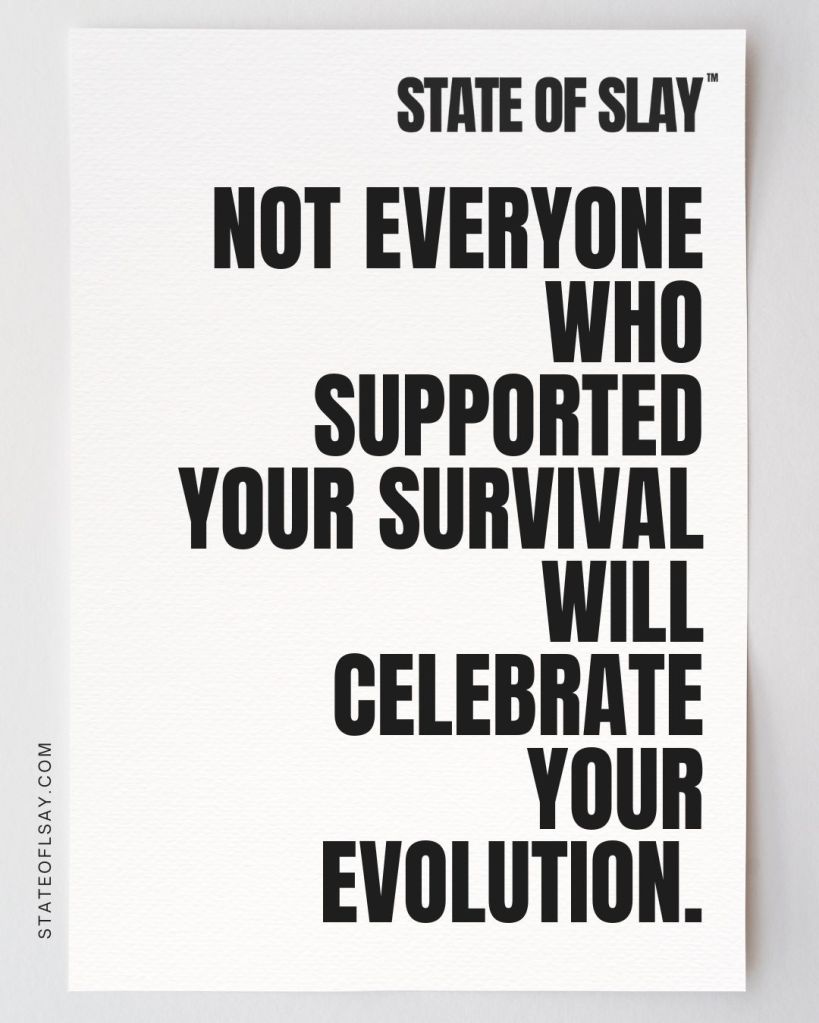
They’ll celebrate the confidence they once helped you find.
They’ll make room for the person you’re becoming.
They’ll allow the relationship to evolve instead of demanding that you return to an older version of yourself.
Others may resist the change.
Your boundaries may suddenly feel like rejection to them.
Your independence may feel like distance.
Your confidence may be interpreted as arrogance.
Your new priorities may be taken personally.
That doesn’t mean your growth is wrong.
And it doesn’t automatically mean they’re bad people.
Sometimes two people can care deeply about each other and still discover that the relationship they built belongs to a version of themselves that no longer exists.
That realization can hurt.
Especially when someone stood beside you during some of your hardest moments.
Gratitude can make us believe we owe people permanent access to us.
We don’t.
You can appreciate who someone was in your life without promising to remain who you were when you needed them.
You can honor what a relationship gave you without forcing it to survive every version of you.
And you can grieve someone who helped you through the darkness but couldn’t follow you into what came next.
This is your reminder:
The people meant to grow with you won’t require you to become smaller so the relationship can stay the same.
And once in the version where a particular person is there to see them.
The person who doubted you.
The person who underestimated you.
The person who walked away.
The person who made you question yourself.
Maybe you’ve imagined them seeing what you’ve accomplished.
Seeing how much you’ve changed.
Seeing that you survived without them.
Seeing that you became everything they didn’t believe you could become.
There is nothing unusual about wanting to be seen.
Recognition feels good.
But sometimes the desire to be seen becomes something else.
We start needing another person’s recognition to confirm something we already know.
And without realizing it, we make them the witness to our worth.
But a witness doesn’t make something true.
They only see what is already there.
Prefer to listen? The Audio Blog version is available here.
SOMETIMES WE DON’T WANT VALIDATION FROM EVERYONE
There may be a hundred people who believe in you.
And somehow, the opinion of the one person who doesn’t can become the loudest.
That’s because validation isn’t always about quantity.
Sometimes it’s about who we want it from.
We want the parent who rarely offered praise to finally say they’re proud of us.
We want the person who rejected us to realize they misjudged us.
We want the boss who overlooked us to see what we’ve accomplished somewhere else.
We want the friend who underestimated us to discover that we were capable all along.
We tell ourselves we don’t care.
And maybe most of the time we don’t.
But somewhere inside us can be a tiny courtroom where the case is still being argued.
See? I told you I could do it.
See? I wasn’t the problem.
See? I was worth believing in.
The problem is that the verdict we’re waiting for may never come.
And even if it does, it may not give us what we thought it would.
PROVING YOURSELF CAN KEEP YOU ATTACHED
We usually think of attachment as missing someone.
Wanting them back.
Thinking about the good times.
But there are other ways to remain attached to people.
Trying to prove them wrong is one of them.
You can leave someone physically and still organize part of your life around their opinion.
You can stop speaking to someone and still imagine their reaction to what you’re doing.
You can move forward while occasionally looking over your shoulder to see if they noticed.
That’s an invisible connection.
And sometimes it lasts much longer than the relationship itself.
There can even be motivation in it.
I’ll show them.
I’ll become successful.
I’ll get stronger.
I’ll build something better.
I’ll be happier without them.
That energy can move us for a while.
But eventually, it becomes exhausting to keep building a life with someone else’s disbelief sitting in the audience.
At some point, the life has to become yours.
BE CAREFUL WHO YOU ASK TO CONFIRM YOUR VALUE
Sometimes the person whose validation we want most is the person least qualified to give it.
Think about that.
We can spend years wanting recognition from someone who consistently failed to recognize us.
We want emotional understanding from someone who repeatedly dismissed our feelings.
We want accountability from someone who avoids looking at themselves.
We want encouragement from someone who felt threatened by our growth.
We want someone who couldn’t see our value then to finally confirm our value now.
Why?
Their inability to recognize something does not determine whether it exists.
You wouldn’t ask someone who can’t read music to tell you whether a symphony is good.
Yet emotionally, we sometimes hand the score to people who have never understood the language and wait anxiously for their review.
Not everyone is qualified to evaluate you.
And not every opinion deserves the authority you have given it.
GROWTH DOESN’T NEED AN AUDIENCE
Some of the most important changes you make will happen quietly.
There may be no dramatic reveal.
No applause.
No one saying, “Look how far you’ve come.”
Maybe you respond differently to something that once would have sent you spiraling.
Nobody notices.
Maybe you don’t send the message you would have sent a year ago.
Nobody knows.
Maybe you walk away from something you once would have chased.
Nobody sees.
Maybe you keep a promise to yourself.
Maybe you stop abandoning yourself to keep someone else comfortable.
Maybe you finally believe something about yourself that you’ve spent years needing other people to tell you.
These moments rarely look impressive from the outside.
But they can represent enormous change.
Growth isn’t less real because nobody witnessed the moment it happened.
Sometimes the quiet victories are the ones that change us most.
YOU DON’T NEED THEM TO REGRET LOSING YOU
There is a particular fantasy that can linger after rejection.
One day they’ll realize.
One day they’ll see what they lost.
One day they’ll regret how they treated me.
Maybe they will.
Maybe they won’t.
But if your healing depends on someone eventually regretting losing you, part of your worth is still waiting inside their realization.
You don’t need to become unforgettable to someone who didn’t know how to value you.
You don’t need them comparing everyone else to you.
You don’t need the apology years later.
You don’t need the message saying they made a mistake.
And you don’t need their regret to turn what happened into justice.
Sometimes people lose wonderful things and never understand what they lost.
That doesn’t make those things less wonderful.
Their regret is not the receipt for your value.
NOT EVERYTHING MEANINGFUL GETS APPLAUSE
We live in a world where so much of life is visible.
Accomplishments are announced.
Milestones are photographed.
Good deeds are shared.
Transformations have before-and-after pictures.
It can quietly teach us to associate significance with recognition.
But some of the most meaningful things you will ever do may receive almost none.
You may help someone who never tells you how much it mattered.
You may choose integrity when nobody would have known if you hadn’t.
You may start over without anyone understanding how much courage it required.
You may take care of yourself in ways that don’t produce anything impressive enough to announce.
You may do the right thing and receive absolutely nothing for it.
No praise.
No credit.
No acknowledgment.
That doesn’t reduce its value.
There is something powerful about becoming a person you respect even when nobody is watching.
Because then your choices aren’t performances.
They’re character.
YOU ARE ALLOWED TO OUTGROW THE NEED TO BE UNDERSTOOD
Sometimes we aren’t trying to prove our success.
We’re trying to prove our story.
We want someone to understand why we made the decision we made.
Why we left.
Why we changed.
Why something hurt us.
Why we couldn’t continue the way things were.
We think that if we could explain it perfectly enough, they would finally understand.
And then perhaps our decision would feel justified.
But there are people who will never understand a choice they would not have made themselves.
There are people who will interpret your boundary through the inconvenience it causes them.
There are people who benefited from the version of you that had fewer boundaries.
Their confusion doesn’t make your decision wrong.
You can understand your reasons without convincing everyone else of them.
Your life is not a case you have to win.
LET SOME PEOPLE HAVE THE WRONG VERSION OF YOU
This may be one of the harder things to accept.
Some people are going to misunderstand you.
Some will remember a version of you that no longer exists.
Some will tell a story about you that leaves out important pieces.
Some will believe they know why you did something when they don’t.
Some may never see how much you’ve changed.
And you may never get the opportunity to correct the record.
There is tremendous freedom in realizing that you don’t have to.
You cannot spend your life running from room to room correcting every conversation you’re not in.
You cannot manage every version of yourself that exists in someone else’s mind.
And you don’t need unanimous agreement to know who you are.
Let some people be wrong.
You have a life to live.
YOUR WORTH DOESN’T NEED A WITNESS
A witness can acknowledge something.
A witness can celebrate it.
A witness can appreciate it.
But a witness cannot create it.
Your growth happened whether the person who doubted you ever saw it.
Your healing matters whether the person who hurt you understands it.
Your success counts whether anyone who underestimated you is impressed.
Your boundary is valid whether someone agrees with it.
Your kindness matters even when nobody thanks you.
Your integrity matters even when nobody knows what it cost you.
And the person you are becoming does not require approval from the people who only knew who you used to be.
Maybe there will always be moments when we want someone to notice.
We’re human.
Being seen can be beautiful.
But being seen and being worthy are not the same thing.
You don’t have to turn your life into evidence.
You don’t have to make your happiness convincing.
You don’t have to become successful enough, healed enough, attractive enough, accomplished enough, or different enough to finally win someone’s approval.
You can stop presenting the evidence.
You can close the case.
Your life was never on trial.
SLAY REFLECTION
S — See Who You’re Still Trying to Convince Is there someone whose recognition, regret, approval, or understanding still feels unusually important to you?
L — Look at What You’re Trying to Prove What do you wish this person would finally understand about you? What would their acknowledgment seem to confirm?
A — Ask Who Gave Them That Authority Why does this person’s opinion carry so much weight? Are they actually qualified to determine the thing you’re asking them to validate?
Y — Your Life Is the Evidence Choose one thing you know to be true about yourself without requiring anyone else to confirm it. Let that knowledge be enough.
CALL TO ACTION: JOIN THE CONVERSATION
I’d love to hear from you.
Have you ever realized you were still trying to prove something to someone who was no longer part of your life?
What changed when you stopped needing them to see, understand, or acknowledge who you had become?
Share your thoughts in the comments. Your experience may help someone else realize that being overlooked, misunderstood, or underestimated doesn’t diminish what they know to be true about themselves.
And if you know someone who is still waiting for the wrong person to finally see their worth, send this to them.
Sometimes freedom begins when you stop waiting for someone else to confirm what you already know.
We have a habit of reaching one destination and immediately looking for the next one.
The promotion happens, and we start thinking about the next level.
We finally build something we’re proud of, and almost immediately notice everything that still needs work.
We create the stability we once craved, then wonder why life doesn’t feel more exciting.
We reach a milestone and barely give ourselves time to stand there before asking, What’s next?
There’s nothing wrong with wanting more.
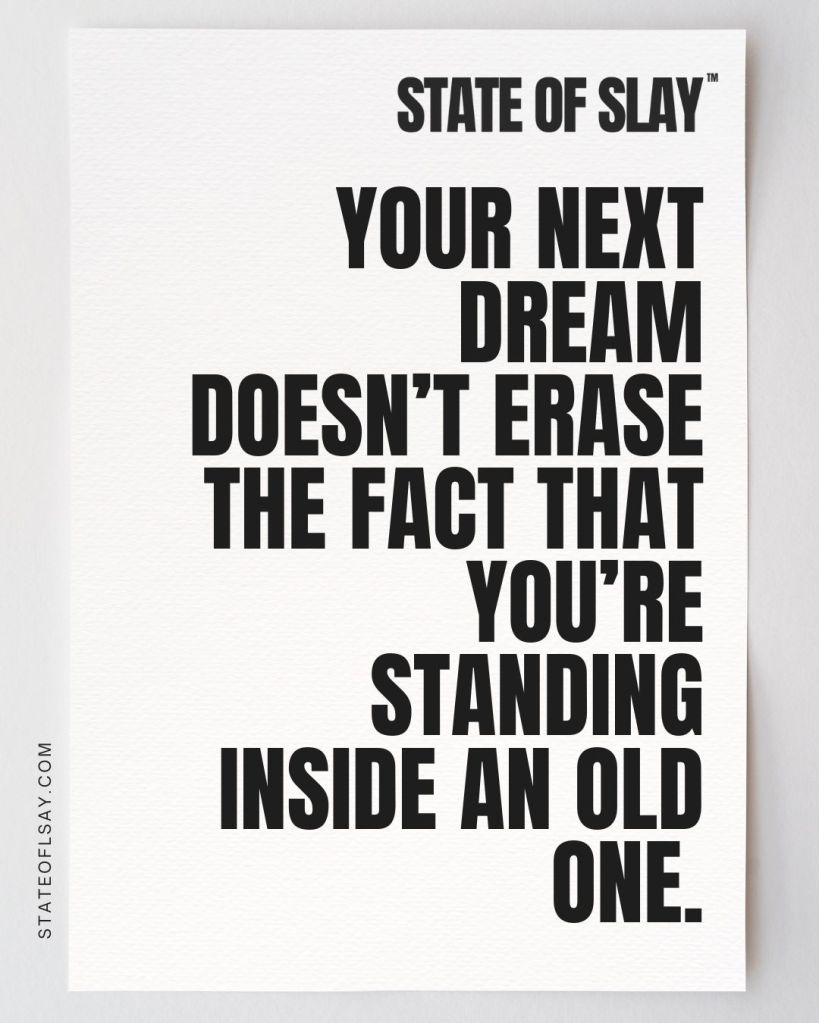
Dreams are supposed to evolve as we do. New possibilities appear because we’ve grown enough to see them. What once felt like the destination can eventually become the starting point for something bigger.
But sometimes, in our eagerness to keep moving, we forget to look around.
There may be things in your life today that an earlier version of you desperately wanted.
A relationship you once hoped you would find.
A career you weren’t sure you could build.
A home that once existed only in your imagination.
Peace you fought hard to create.
Boundaries you never thought you’d have the courage to set.
Confidence that arrived so gradually you barely noticed it becoming yours.
What once felt extraordinary can become ordinary simply because we’ve lived with it long enough.
That’s one of the strange things about progress.
We adapt.
The impossible becomes possible. The new becomes familiar. The achievement becomes part of everyday life.
And suddenly, instead of seeing how far we’ve come, we’re focused entirely on the distance still ahead.
Wanting more doesn’t make you ungrateful.
But constantly measuring your life against what you haven’t reached yet can make you overlook everything you already have.
You are allowed to have another dream.
You are allowed to want the next chapter.
You are allowed to keep building, stretching, changing, and imagining something beyond where you are today.
Just don’t let tomorrow steal your appreciation for today.
Every once in a while, turn around.
Look at the ground you’ve covered.
Remember the things you once hoped would happen that eventually did.
Remember the version of you who wondered whether you would ever make it this far.
There will always be another horizon if you keep looking for one.
But life isn’t only happening somewhere ahead of you.
Some of it is happening in the very place you once worked so hard to reach.
This is your reminder:
You don’t have to stop reaching for what’s next to appreciate how much of what you once wanted is already here.
There is a strange comfort in knowing what comes next.
Even when what comes next isn’t particularly good for us.
We know this person will disappoint us.
We know this job will drain us.
We know this friendship will leave us feeling like an afterthought.
We know this habit will make us feel worse tomorrow.
And yet, there can be something strangely reassuring about returning to what we already know.
Because familiarity has its own kind of gravity.
We know the rules there.
We know who we are there.
We know how to survive there.
And sometimes we mistake that recognition for a sign that something belongs in our lives.
But familiar doesn’t mean right.
Sometimes it just means we’ve been there before.
Prefer to listen? The Audio Blog version is available here.
YOUR BRAIN LIKES TO KNOW WHAT COMES NEXT
We tend to think we make decisions based entirely on what we want.
But predictability has tremendous power.
When we know how something works, we don’t have to spend as much energy figuring it out.
Even an unpleasant pattern can offer that predictability.
You know which subjects not to bring up.
You know when someone is likely to withdraw.
You know how much of yourself to reveal.
You know when to apologize, smooth things over, work harder, stay quiet, or make yourself useful.
You may not be happy.
But you know the choreography.
That can create an illusion of comfort.
Not because the situation is actually comfortable, but because you have become skilled at navigating it.
There is an important difference between feeling safe and feeling competent at surviving something.
We don’t always recognize that difference.
WE CAN MISTAKE RECOGNITION FOR CONNECTION
Have you ever met someone and immediately felt like you had known them forever?
Sometimes that’s wonderful.
Sometimes it deserves a closer look.
Because what exactly are you recognizing?
Maybe you recognize their humor.
Their energy.
Their values.
Their openness.
But sometimes what feels instantly familiar is a dynamic you’ve experienced before.
Someone emotionally unavailable can feel compelling if you’ve spent much of your life trying to earn closeness.
Someone who needs constant help can feel strangely attractive if being needed has always made you feel valuable.
Someone unpredictable can create an intensity that feels like chemistry when what you are actually recognizing is uncertainty.
The feeling is real.
Our interpretation of the feeling isn’t always accurate.
“I know this feeling” can easily become “This must be right.”
Those are two very different statements.
SOMETIMES WE KNOW EXACTLY WHO TO BE IN THE WRONG PLACE
There is another reason familiar situations can be difficult to leave.
They give us a role.
Maybe you’re the fixer.
The peacemaker.
The responsible one.
The one who never needs anything.
The one who keeps everyone laughing.
The one who absorbs everyone else’s emotions.
The one who proves their worth by being indispensable.
You may have played that role for so long that it no longer feels like something you do.
It feels like who you are.
Then something changes.
You enter a relationship where nobody needs rescuing.
You find friends who don’t require you to perform for your place in the group.
You work somewhere that doesn’t expect you to sacrifice your life to prove your commitment.
Suddenly, an unexpected question appears:
Who am I if nobody needs me to be that person anymore?
Sometimes we miss the old dynamic not because it was good for us, but because we understood ourselves inside it.
HEALTHY CAN FEEL STRANGE AT FIRST
We often imagine that when something healthier enters our lives, we’ll immediately recognize it.
Finally.
This is what I’ve been waiting for.
Sometimes.
Other times, healthy feels surprisingly uncomfortable.
Consistency can make you suspicious when you are accustomed to unpredictability.
A relationship without constant conflict can feel strangely quiet.
Someone respecting your boundaries can initially feel like they don’t care enough to fight for access to you.
A friendship without competition can make you wonder what the other person really wants.
A workplace that doesn’t expect you to answer emails at all hours can leave you feeling guilty when you close the laptop.
Rest can feel irresponsible.
Peace can feel boring.
Receiving can feel selfish.
And none of those feelings necessarily mean something is wrong.
Sometimes they mean something is new.
DISCOMFORT ISN’T ALWAYS A WARNING
We are often encouraged to trust our feelings.
And we should listen to them.
But listening to a feeling doesn’t mean automatically obeying the conclusion we attach to it.
Discomfort can tell us something is wrong.
It can also tell us something is unfamiliar.
Those require very different responses.
If you’ve spent years saying yes when you wanted to say no, setting a boundary may feel terrible.
That doesn’t mean the boundary is wrong.
If you’re accustomed to explaining yourself until everyone approves of your decisions, saying, “This is what I’ve decided,” and leaving it there may feel almost unbearable.
That doesn’t mean you owe another explanation.
If you have always measured your value through productivity, taking an afternoon off may make you restless.
That doesn’t mean you should get back to work.
Sometimes discomfort is an alarm.
Sometimes it is simply the sensation of stepping outside an old pattern.
Learning to tell the difference is part of growth.
DISTANCE CAN EDIT OUR MEMORY
There is another trick our memory can play on us.
Once we get far enough away from something, we can begin remembering it selectively.
We remember the good conversations and forget how anxious we felt waiting for the next one.
We remember the laughter and forget how often we cried.
We remember belonging and forget how much of ourselves we had to edit to belong.
We remember what the job gave us and forget what it took from us.
We remember the comfort of the habit and minimize the consequences.
Distance can soften sharp edges.
That isn’t necessarily a bad thing. We don’t need to carry every painful detail forever.
But nostalgia is not always an accurate historian.
Missing something doesn’t automatically mean you should return to it.
Sometimes you miss something because it was important.
Sometimes because there were genuinely beautiful parts of it.
And sometimes because your mind knows exactly where everything is in that old room.
That still doesn’t mean you should move back in.
THE UNKNOWN DOESN’T HAVE A TRACK RECORD YET
There’s another unfair advantage the familiar has over the new.
The familiar has evidence.
You know what happened before.
The unknown has nothing.
You don’t know whether the new relationship will work.
You don’t know whether the career change will be worth it.
You don’t know whether you’ll find your people somewhere else.
You don’t know who you’ll become when you stop doing what you’ve always done.
So we sometimes compare the certainty of something mediocre with the uncertainty of something potentially better.
Of course, certainty can win that contest.
It arrives carrying receipts.
The unknown arrives empty-handed.
But uncertainty is not evidence that something will go badly.
It is simply the absence of evidence about what comes next.
There are possibilities we cannot discover while insisting that the future prove itself before we are willing to leave the past.
YOU MAY NEED TO GIVE GOOD THINGS TIME TO BECOME FAMILIAR
We talk a lot about letting go of what no longer serves us.
We talk less about what happens afterward.
Because there can be an awkward stretch between leaving an old pattern and feeling at home in a new one.
You may question yourself.
You may miss what you left.
You may wonder why something supposedly healthier doesn’t feel natural yet.
Maybe it isn’t supposed to.
You had years to learn the old pattern.
You knew its shortcuts, warning signs, hiding places, and exits.
You knew your lines.
Something new doesn’t have any of that history yet.
You are learning it.
And perhaps one of the most overlooked parts of changing your life is giving yourself enough time for healthier experiences to stop feeling foreign.
For peace to become recognizable.
For mutual support to become normal.
For boundaries to stop feeling mean.
For rest to stop feeling lazy.
For being loved without performing for it to stop making you wonder what the catch is.
Eventually, what once felt unfamiliar can become the new familiar.
FAMILIAR DOESN’T MEAN RIGHT
When you find yourself being pulled toward an old person, pattern, behavior, or version of yourself, it may be worth asking a different question.
Not:
Why do I still want this?
But:
What about this do I recognize?
Maybe you recognize being needed.
Maybe you recognize chasing approval.
Maybe you recognize instability.
Maybe you recognize overworking.
Maybe you recognize putting yourself last.
Maybe you simply recognize the person you used to be when you were there.
Recognition can be powerful.
But it isn’t destiny.
You are allowed to stop choosing something simply because you know how to survive it.
You are allowed to become unfamiliar with an old version of your life.
And you are allowed to feel awkward, uncertain, or even uncomfortable while something better slowly becomes recognizable.
Because sometimes the thing that feels strange isn’t wrong.
It’s just new.
And sometimes the thing that feels like home isn’t where you belong anymore.
SLAY REFLECTION
S — Spot the Familiar Where in your life are you repeatedly drawn toward a person, situation, habit, or dynamic that you already know doesn’t work for you?
L — Look Beneath the Feeling What feels familiar about it? Is it the person or situation itself, or the role you know how to play within it?
A — Allow the Unfamiliar Is there something healthier in your life that you may be resisting simply because it doesn’t feel natural yet?
Y — Your New Normal Choose one healthy experience you want to give yourself enough time to become familiar with instead of retreating to what you already know.
CALL TO ACTION: JOIN THE CONVERSATION
I’d love to hear from you.
Have you ever had something healthier feel uncomfortable at first because it was new?
Share your thoughts in the comments. Your experience may help someone else recognize when they’re choosing what they know instead of what they truly want.
And if you know someone who keeps finding their way back to the same people, patterns, or situations, send this to them.
Sometimes what feels like home is simply a place we’ve been before.
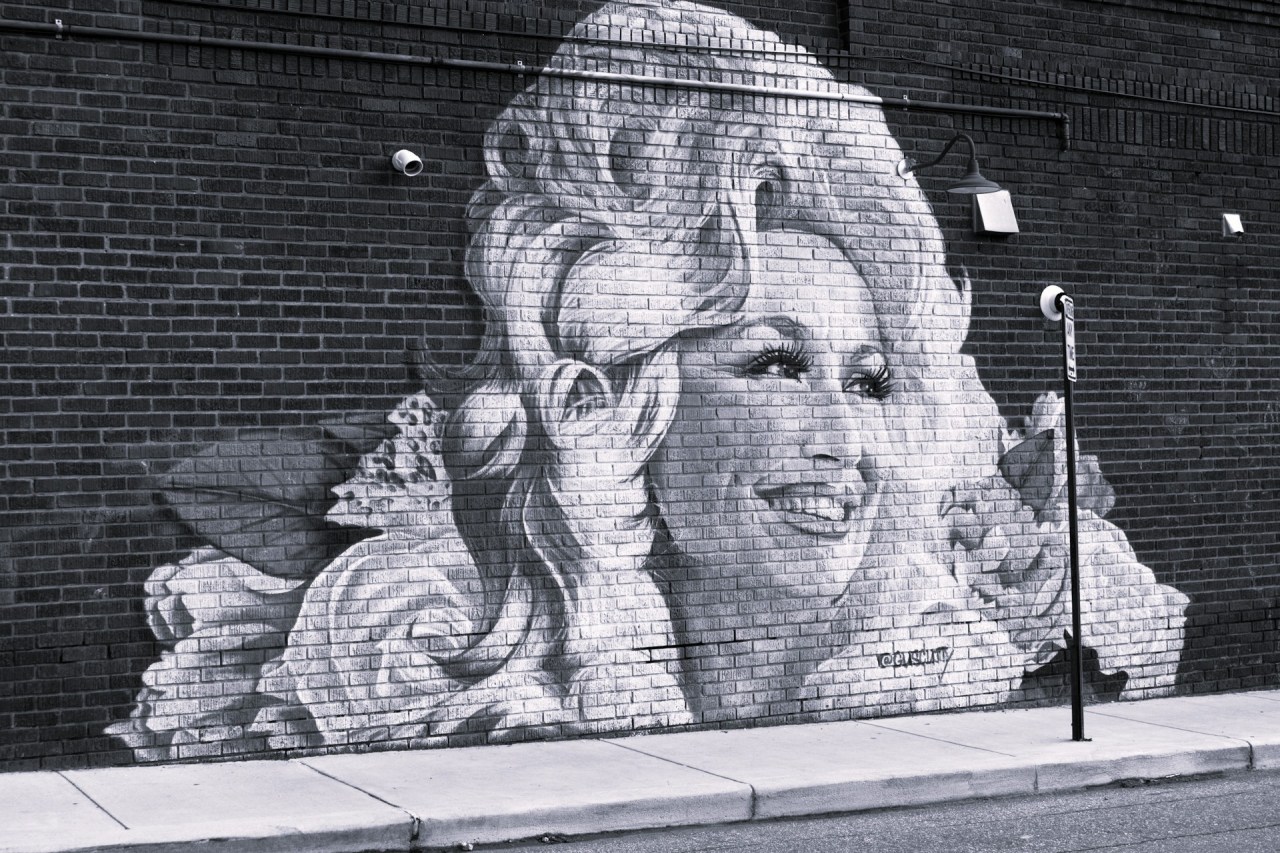
There are some people whose absence seems to change the atmosphere.
Dolly Parton was one of those people.
When news of her passing came, the grief extended far beyond country music.
People who had never met her felt as though the world had lost something.
Something warm.
Something hopeful.
Something good.
Of course, Dolly left behind an extraordinary body of work. Songs that became part of our lives. Movies. Businesses. Awards. A career that spanned generations.
But as people began talking about her life, something else seemed to rise above all of it.
They talked about her kindness.
Her generosity.
Her humor.
Her ability to remain unmistakably herself.
They talked about the children who received books because she believed literacy could change a life. The families she helped after disasters. The medical research she supported. The community she never forgot after the rest of the world learned her name.
And perhaps most remarkably, people from vastly different backgrounds and beliefs felt connected to her.
She seemed to understand something we desperately need to remember.
You don’t have to become harder because the world is hard.
You don’t have to become cruel because cruelty exists.
You don’t have to dim someone else’s light for yours to shine.
You can simply decide that wherever you go, whatever you have, and whoever you encounter, you will try to leave things a little better than you found them.
That may be one of the most meaningful legacies any of us can leave.
Prefer to listen? The Audio Blog version is available here.
WHEN SOMEONE LEAVES, WE LEARN WHAT REALLY MATTERED
Death has a strange way of editing a life.
Suddenly, so many things we spend our days worrying about become very small.
The disagreements.
The mistakes.
The things we owned.
The status we chased.
The opinions we tried so hard to control.
What remains are the stories.
Someone remembers that you encouraged them when they were struggling.
Someone remembers that you made them laugh.
Someone remembers that you showed up.
Someone remembers that you believed in them before they believed in themselves.
Someone remembers how you treated them when there was absolutely nothing you could gain from being kind.
That is the part of us that continues traveling after we leave the room.
And eventually, after we leave this life.
KINDNESS IS NOT THE SAME AS WEAKNESS
Somewhere along the way, kindness began to be mistaken for softness.
As though strong people must be hardened.
As though success requires ruthlessness.
As though having boundaries and having compassion cannot exist in the same person.
Dolly Parton certainly challenged that idea.
She built an enormous career and became a formidable businesswoman while maintaining a public identity rooted in warmth, humor, and generosity.
She didn’t have to make herself smaller to be kind.
And neither do we.
You can be ambitious and compassionate.
You can have boundaries and still have empathy.
You can stand up for yourself without tearing someone else down.
You can disagree without becoming cruel.
Kindness doesn’t require surrendering your strength.
Sometimes kindness is how you choose to use it.
YOU DON’T NEED A FORTUNE TO BE GENEROUS
It is easy to look at someone with enormous resources and think generosity belongs to people who have something substantial to give.
But money is only one form of generosity.
You can be generous with your time.
Your attention.
Your patience.
Your encouragement.
Your knowledge.
Your forgiveness.
Your connections.
Your willingness to listen.
Your willingness to notice.
Sometimes generosity is recommending someone for an opportunity.
Sometimes it’s checking on the friend who has gone unusually quiet.
Sometimes it’s letting someone merge into traffic.
Sometimes it’s telling a stranger you love their shoes because you thought it and decided not to keep the kindness trapped inside your head.
You don’t need a foundation to change someone’s day.
You just have to recognize that you have something to give.
WHAT YOU PUT INTO PEOPLE TRAVELS
We rarely get to see the full reach of what we give another person.
That’s one of the beautiful mysteries of kindness.
Dolly started the Imagination Library in her home county in Tennessee because her father couldn’t read or write.
That deeply personal act grew far beyond the place where it began. By the time of her death, the program had distributed hundreds of millions of books to children around the world.
One idea traveled.
Our smaller acts travel too.
Maybe you encourage someone who was about to give up.
They keep going.
Years later, they encourage someone else.
Maybe you show compassion to someone during the worst period of their life.
They remember what that felt like and offer it to another person when they’re struggling.
We may never meet the people ultimately affected by the kindness we give today.
That doesn’t make the impact any less real.
YOU CAN DISAGREE WITHOUT BECOMING CRUEL
We could use this reminder right now.
We live in a culture that increasingly encourages us to see people as teams.
Agree with me, and you’re good.
Disagree with me, and you’re bad.
And once we’ve decided someone belongs to the wrong category, we begin giving ourselves permission to treat them in ways we would otherwise recognize as cruel.
But another person’s beliefs do not determine our character.
We do.
Compassion does not require agreement.
Kindness does not require endorsement.
Decency does not require sameness.
You can stand firmly in what you believe without celebrating another person’s pain.
You can challenge someone’s ideas without trying to destroy their humanity.
You can refuse to add more cruelty to a world already overflowing with it.
That choice belongs to you.
LOOK FOR THE LIGHT WITHOUT DENYING THE DARK
Choosing light doesn’t mean pretending darkness isn’t there.
It isn’t toxic positivity.
It isn’t ignoring suffering.
It isn’t smiling through something that needs to be confronted.
Sometimes the people who choose light most deliberately are the people who understand darkness very well.
They’ve experienced loss.
Disappointment.
Fear.
Heartbreak.
Failure.
They simply decided those experiences would not determine what they contributed to the world.
You can acknowledge everything that is wrong and still participate in what is right.
You can grieve and still love.
You can be disappointed and still hope.
You can know exactly how cruel people can be and decide you will not become one of them.
Looking toward the light doesn’t mean you don’t see the darkness.
It means you have decided which direction you want to walk.
YOUR COMMUNITY IS PART OF YOUR LEGACY
We often think about legacy as something grand.
Something reserved for famous people.
A building with your name on it.
A foundation.
A body of work.
Something history remembers.
But most legacies will never appear in a history book.
They live in families.
Friendships.
Neighborhoods.
Workplaces.
Communities.
They live in the people who encountered us.
You are creating your legacy every time you walk into a room.
Every time you decide whether to encourage or discourage.
Every time you have the opportunity to help.
Every time someone trusts you with their vulnerability.
Every time you decide what kind of energy you will add to a difficult situation.
You don’t have to change the entire world.
You can change your corner of it.
And if enough people did that, imagine what kind of world those corners would create.
HOW YOU MAKE PEOPLE FEEL MATTERS
We spend so much of our lives thinking about what we are accomplishing.
What are we building?
What are we earning?
Where are we going?
What comes next?
Those things matter.
But there is another question worth asking.
How do people feel after they’ve been around you?
Do they feel seen?
Encouraged?
Safe?
Inspired?
Lighter?
Or do they leave feeling smaller than when they arrived?
None of us will get this right every time.
We have bad days.
We lose patience.
We say things we regret.
We are human beings learning as we go.
But we can become conscious of what we leave behind in people.
Because long after someone forgets the details of a conversation, they may remember what happened inside them because of it.
LEAVE PEOPLE BETTER THAN YOU FOUND THEM
You will not be able to help everyone.
You won’t always know what someone needs.
And sometimes the healthiest thing you can do is walk away.
Leaving people better doesn’t mean rescuing them.
It doesn’t mean sacrificing yourself.
It doesn’t mean tolerating behavior that hurts you.
It means that whenever possible, you don’t deliberately leave unnecessary damage behind.
You don’t humiliate someone simply because you can.
You don’t use someone’s vulnerability as ammunition later.
You don’t make someone smaller so you can feel bigger.
And when you have the opportunity to offer encouragement, compassion, knowledge, laughter, opportunity or hope, you give what you can.
A meaningful life isn’t measured only by what you accomplish.
It’s also measured by what you leave behind in people.
Dolly Parton left an extraordinary amount behind.
Her music will continue.
Her work will continue.
And perhaps the best way to honor a person whose life reminded so many people of the power of kindness.
We can practice it.
We can become a little more generous.
A little less eager to judge.
A little quicker to encourage.
A little more willing to help.
A little more conscious of what we’re putting into the people around us.
Maybe the greatest tribute we can offer someone who spent a lifetime putting more kindness into the world isn’t simply to mourn that their light is gone.
It’s to pick some of it up and carry it forward.
SLAY REFLECTION
S — See What You Leave Behind
How do you think people feel after spending time with you? What do you want them to feel?
L — Look at What You Have to Give
What do you already have that could make someone’s life a little better? Your time, encouragement, knowledge, attention, resources, or simply your kindness?
A — Add What You Want More Of
What do you wish there were more of in the world? Compassion? Patience? Generosity? Understanding? How can you contribute some of it yourself?
Y — Your Next Step
Choose one deliberate act of kindness this week without expecting recognition or anything in return.
Leave one person, one place, or one small corner of your community better than you found it.
CALL TO ACTION: JOIN THE CONVERSATION
I’d love to hear from you.
What do you hope people remember about the way you made them feel?
And who is someone who left you better than they found you?
Share your thoughts in the comments. Tell us about the person whose kindness, generosity or encouragement stayed with you long after the moment passed.
And if Dolly’s life meant something to you, perhaps the best way to honor what she represented is to carry a little of it forward.
Sometimes the hardest part of being hurt isn’t what happened.
It’s not knowing why.
Why did they do it?
Why did they treat you that way?
Why did they say they loved you and then behave in ways that felt anything but loving?
Why weren’t you enough for them to choose differently?
Why couldn’t they see what they were doing to you?
So we search for answers.
We replay conversations.
We revisit memories.
We analyze their behavior.
We imagine the conversations we wish we could have.
We look for the missing piece that will finally make everything make sense.
Because somewhere along the way, we started believing that understanding why someone hurt us was necessary before we could heal.
It isn’t.
Sometimes there is no explanation that will make what happened feel okay.
Sometimes the person who hurt you doesn’t understand themselves well enough to explain it.
Sometimes they will never take responsibility.
Sometimes the answer you receive creates more questions than it resolves.
And sometimes you will never get an answer at all.
Your healing cannot depend on someone else becoming self-aware.
You don’t have to understand why someone hurt you to heal from what they did.
Prefer to listen? The Audio Blog version is available here.
THE SEARCH FOR WHY CAN BECOME ITS OWN ATTACHMENT
Wanting answers is human.
When something painful happens, our minds naturally try to make sense of it.
We want cause and effect.
We want the pieces to fit together.
We think if we can understand what happened, maybe we can prevent it from ever happening again.
But there comes a point when searching for understanding stops helping us process the experience and starts keeping us connected to it.
You replay the same moments.
Ask the same questions.
Examine the same evidence.
And every road leads back to the same place.
Why?
Eventually, the question itself can become the thing keeping you stuck.
Not because you shouldn’t want answers.
But because your life cannot remain suspended while you wait for them.
SOME PEOPLE CAN’T GIVE YOU AN ANSWER THEY DON’T HAVE THEMSELVES
We often assume the person who hurt us possesses some great explanation for their behavior.
If only they would tell us the truth, everything would finally make sense.
But people don’t always understand why they do what they do.
They act from fear.
Insecurity.
Old wounds.
Patterns they’ve never examined.
Beliefs they inherited and never questioned.
Survival mechanisms they developed years ago.
Sometimes you are asking someone for emotional clarity they simply do not possess.
That doesn’t excuse what they did.
It doesn’t erase accountability.
It simply means you may be waiting for an answer from someone who doesn’t have one.
Their lack of self-awareness does not have to become a roadblock to yours.
AN EXPLANATION DOESN’T UNDO THE EXPERIENCE
Sometimes we imagine there is an explanation powerful enough to change how something felt.
There usually isn’t.
Even if someone tells you exactly why they betrayed you, abandoned you, lied to you, dismissed you, or treated you poorly, you still experienced what you experienced.
The explanation may provide context.
It may create understanding.
It may even inspire compassion.
But it doesn’t rewrite the past.
And understanding someone’s reasons does not require you to minimize their impact.
You can understand that someone was hurting and still acknowledge that they hurt you.
You can recognize their wounds without pretending yours don’t matter.
Explanation and accountability can exist in the same room.
YOU DON’T NEED THEIR SELF-AWARENESS TO FIND YOUR OWN
One of the most frustrating parts of healing can be realizing that you may grow from an experience the other person never examines.
You may spend months questioning your patterns.
Learning.
Reflecting.
Changing.
Meanwhile, they may continue living exactly as they always have.
That can feel deeply unfair.
But your growth does not require their participation.
They don’t have to understand what happened for you to understand what happened to you.
You can recognize what you tolerated.
What you ignored.
What you needed.
What you deserved.
What you will do differently next time.
That knowledge belongs to you.
And nobody has to hand it to you.
CLOSURE ISN’T SOMETHING ANOTHER PERSON OWES YOU
We often picture closure as a conversation.
They finally explain.
They apologize.
They acknowledge everything.
You say what you need to say.
The emotional books balance.
And everyone walks away understanding exactly what happened.
Sometimes that happens.
Often, it doesn’t.
People leave without explaining.
Relationships end with unanswered questions.
Apologies never arrive.
Accountability never comes.
And if closure requires another person to give you something, they continue holding the key to a door you desperately want to close.
Closure can also be something you create.
It can be accepting that you know enough.
You know how the experience made you feel.
You know what it cost you.
You know what you learned.
You know what you will no longer accept.
Sometimes that is enough.
YOU CAN STOP INVESTIGATING THE PAST
There is a difference between processing the past and continually reopening the case.
At some point, you may already have all the information you need.
Maybe you will never understand why they chose someone else.
Why they lied.
Why they changed.
Why they disappeared.
Why they couldn’t love you in the way you needed.
But continuing to search for the missing explanation can quietly keep your attention anchored to a chapter that has already ended.
You don’t have to solve every mystery in your past.
Some questions can remain unanswered.
Some stories can have missing pages.
You can still turn the page.
HEAL WHAT IT DID TO YOU, NOT WHY THEY DID IT
This is where your power returns.
Instead of asking:
Why did they hurt me?
You begin asking:
What did this teach me about myself?
What needs healing now?
What boundaries did I learn I need?
What did I accept that I would no longer accept today?
What part of myself needs compassion?
What do I want to carry forward?
The focus moves away from their psychology and back toward your well-being.
Because their reasons belong to them.
Your healing belongs to you.
And the second one is where your energy can actually create change.
UNDERSTANDING IS NOT THE SAME AS PEACE
Sometimes we believe peace is hiding behind one final answer.
But you can understand every detail of something and still hurt.
And you can have unanswered questions and still find peace.
Peace often comes from acceptance rather than explanation.
Acceptance that it happened.
Acceptance that you cannot change it.
Acceptance that you may never fully understand another person’s choices.
Acceptance that you are still allowed to move forward.
There is freedom in realizing you don’t have to solve the past before you are permitted to have a future.
YOU ARE ALLOWED TO LEAVE SOME QUESTIONS UNANSWERED
There may always be things you wonder about.
That doesn’t mean you haven’t healed.
Healing doesn’t erase curiosity.
It changes your relationship with it.
You can wonder why without needing to know.
You can remember without returning.
You can acknowledge the pain without continuing to live inside it.
And you can reach a point where the unanswered question simply doesn’t have the power it once did.
Maybe you never find out why.
Maybe they never apologize.
Maybe they never understand.
Maybe the story never ends as neatly as you hoped.
You can still heal.
You can still grow.
You can still choose yourself.
You can still build something beautiful from everything you learned.
You do not need someone else to explain your past before you give yourself permission to step into your future.
SLAY REFLECTION
S — See What You’re Still Trying to Solve
What experience from your past are you still trying to understand before allowing yourself to fully move forward?
L — Look at What You Already Know
Even without knowing why someone behaved the way they did, what do you know about how the experience affected you and what it taught you?
A — Accept What May Remain Unanswered
What question might you need to stop requiring an answer to in order to find peace?
Y — Your Next Step
Choose one question you’ve been repeatedly asking about the past and replace it with a question about your future.
Instead of asking, “Why did they do this to me?”
Ask, “What do I need now?”
CALL TO ACTION: JOIN THE CONVERSATION
I’d love to hear from you.
Have you ever had to heal from something without fully understanding why it happened?
What changed when you stopped searching for answers and started focusing on what you needed?
Share your thoughts in the comments. Your experience may help someone else realize they don’t need every answer before they can begin moving forward.
And if you know someone who has been waiting for closure that may never come, send this to them.
Sometimes healing begins when we stop asking the past to explain itself.