
We’re often taught that growth means adding more.
More goals.
More habits.
More productivity.
More people.
More commitments.
So when we feel stuck, our instinct is to pile on — another plan, another promise, another version of ourselves we think we need to become.
But real growth doesn’t usually happen that way.
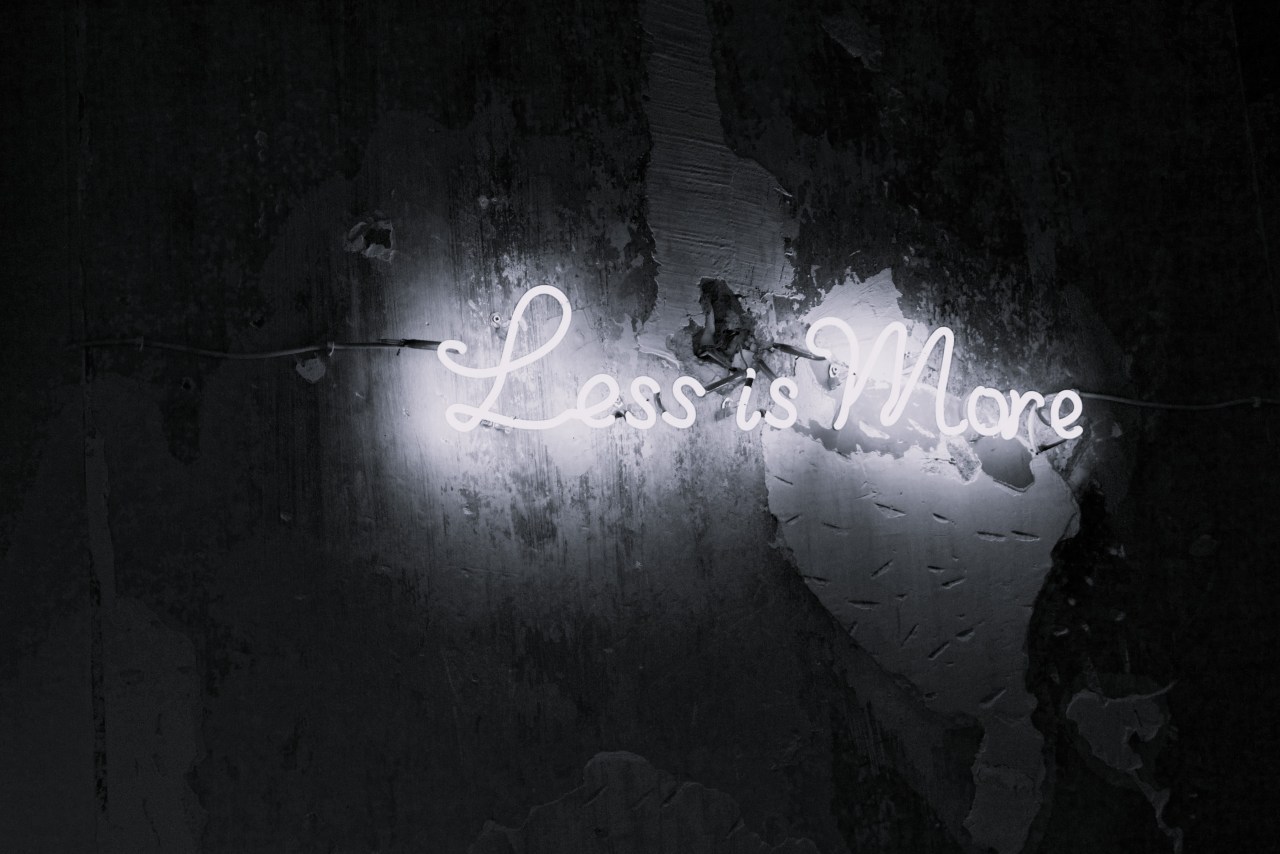
You grow faster by subtraction rather than addition.
By removing what drains you instead of constantly trying to become more.
Prefer to listen? The Audio Blog version is available here.
Why We Think More Is the Answer
From a young age, we’re conditioned to believe that expansion comes from accumulation.
If something isn’t working, we add effort.
If we’re unhappy, we add distractions.
If we’re insecure, we add validation.
But more doesn’t automatically mean better.
More can mean overwhelmed.
More can mean misaligned.
More can mean further away from yourself.
Growth that relies only on addition often ignores the real issue — that something no longer belongs.
Subtraction Creates Space for Clarity
When you remove what isn’t aligned, something powerful happens.
Your energy returns.
Your focus sharpens.
Your nervous system calms.
Subtraction creates space — and space is where clarity lives.
You can’t hear your own voice when your life is too loud. You can’t feel aligned when everything is pulling at you.
Sometimes the most productive thing you can do is let go.
What Subtraction Often Looks Like
Growth by subtraction doesn’t always look dramatic.
It can look like:
- Stepping back from relationships that drain you
- Letting go of habits that numb instead of heal
- Releasing roles you’ve outgrown
- Saying no without overexplaining
- Stopping the pursuit of approval
These choices may feel uncomfortable at first — especially if you’re used to earning your worth through doing or giving.
But discomfort doesn’t mean wrong.
It often means necessary.
Why Letting Go Feels So Hard
Subtraction challenges identity.
When you remove something, you’re forced to ask:
Who am I without this?
That fear keeps many people stuck. They’d rather carry what’s heavy than face the uncertainty of what’s next.
But holding on doesn’t preserve who you are — it prevents who you’re becoming.
Growth requires trust. Trust that what’s meant for you will meet you where you are, not where you were.
Subtraction Is an Act of Self Trust
Every time you let go of something that no longer fits, you’re telling yourself:
I trust my instincts.
I trust my boundaries.
I trust that I don’t need to earn rest, peace, or alignment.
Subtraction isn’t quitting.
It’s refining.
It’s choosing quality over quantity.
Alignment over obligation.
Depth over noise.
Growth Isn’t Always About Becoming It’s About Releasing
We romanticize transformation as becoming something new.
But often, growth is about returning to what was already there — buried under expectations, pressure, and self betrayal.
When you subtract what doesn’t belong, you don’t lose yourself.
You reveal yourself.
Less Makes Room for What Matters
When you stop carrying what isn’t yours, you have room for what is.
More presence.
More peace.
More creativity.
More connection.
Not because you chased them — but because you made space for them.
That’s how growth accelerates.
You Don’t Have to Add to Be Enough
If you’re feeling behind, overwhelmed, or disconnected, ask yourself this:
What am I holding onto that I don’t need anymore?
Growth doesn’t always ask you to do more.
Sometimes it asks you to release.
And that release might be the thing that finally lets you move forward.
SLAY Reflection
Let’s reflect, SLAYER:
S: What in your life feels heavy, draining, or misaligned right now?
L: What have you been afraid to let go of — and why?
A: What could shift if you removed one thing instead of adding another?
Y: How might your growth accelerate if you trusted subtraction as part of the process?
Call to Action: Join the Conversation
I’d love to hear from you.
What’s something you let go of that helped you grow faster or feel more aligned?
Share your story in the comments. Let’s cheer each other on.
And if you know someone overwhelmed by “doing more,” send this to them.
Sometimes, all we need is a nudge.
